

School principals said the guidelines provide Gulf schools enough flexibility to continue offering Arabic as the R3 language.
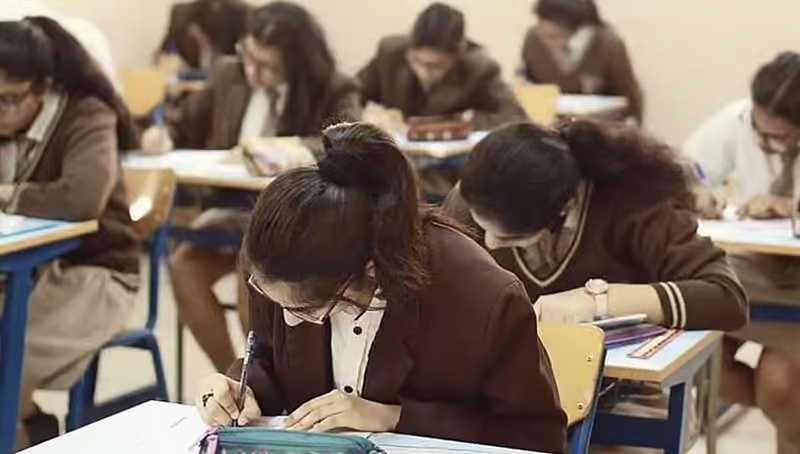
Heads of Central Board of Secondary Education (CBSE)–affiliated schools in the UAE say the board’s revised three-language framework is proving more flexible than initially expected, easing earlier concerns among educators and parents about added academic pressure on students.
The reassurance follows changes to CBSE’s language policy for Classes 9 and 10, which initially raised concerns about how the new requirements would affect thousands of Indian students in UAE schools from the 2026–27 academic year.
Under the revised structure, students entering Grade 9 from July 1, 2026, will study three languages—classified as R1, R2, and R3—as part of reforms aligned with India’s National Education Policy 2020 and the National Curriculum Framework for School Education 2023.
UAE-based CBSE school principals say the revised three-language framework is creating fewer challenges than initially expected, offering greater flexibility for implementation in overseas schools.
Central Board of Secondary Education guidelines now allow Gulf schools to structure languages as R1, R2, and R3, with principals noting that only one Indian language is mandatory for foreign institutions.
Pramod Mahajan, principal of Sharjah Indian School, said there is “no issue for foreign schools” under the revised policy, explaining that R1 can be English, R2 can be Hindi, Malayalam, Urdu or Tamil, and R3 can be Arabic for UAE students. He added that R3 will not be board-examined but will appear on the final marksheet through internal assessment, while only R1 and R2 will be evaluated in Grade 10.
He also noted that CBSE’s global footprint across 26 countries has been considered in the framework, along with exemptions for People of Determination and students transferring between countries.
Relief for foreign schools
Educators said a key concern had been the requirement for two Indian native languages, particularly for non-Indian students in CBSE schools in the UAE. However, schools report that recent clarifications have eased concerns and provided relief, especially regarding implementation flexibility.
Muhammad Ali Kottakkualm, principal of Cosmopolitan International Indian School, said earlier requirements posed challenges, particularly for students of other nationalities. He added that recent clarifications offer relief for foreign schools and students of determination, although further guidance is still awaited on exemptions under CBSE’s evolving global framework.
French challenge remains
While Arabic as R3 is not seen as problematic, some schools have raised concerns about foreign languages such as French. Abhilasha Singh, principal of Shining Star International School, said that while R3 Arabic is manageable and not board-examined, R2 presents challenges for schools offering French. She expressed hope that upcoming global curriculum reforms will eventually accommodate additional foreign languages.

