

Strait of Hormuz reopening with new fees raises concerns over US response.
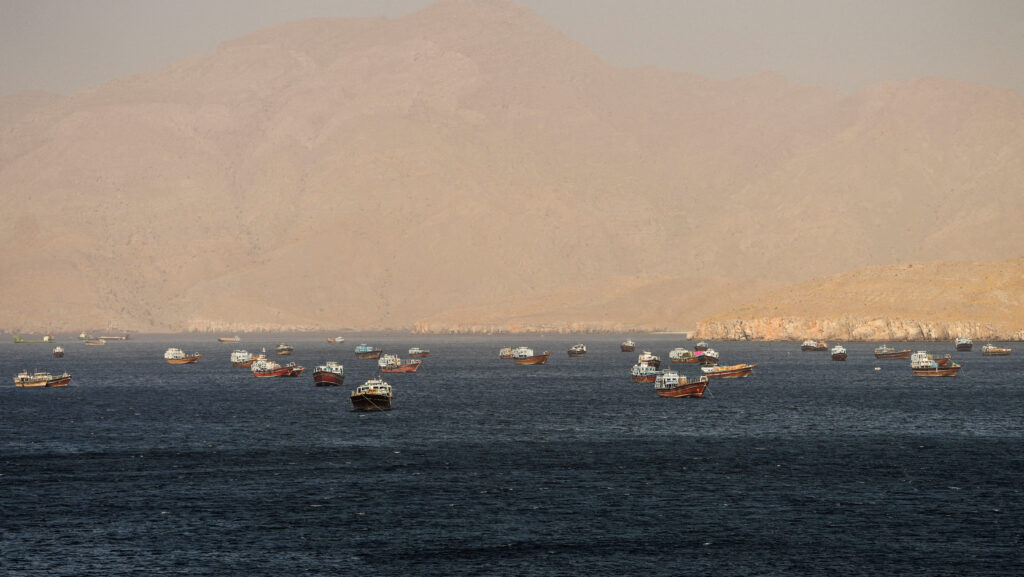
New fees proposed as Strait of Hormuz traffic remains disrupted
Kazem Jalali told the Russian news outlet Izvestia that Iran and Oman would jointly determine conditions for vessels transiting the Strait of Hormuz, including the introduction of transit fees that he described as payment for services provided along the route.
The strait, through which roughly one-fifth of the world’s seaborne oil trade passes, has experienced a dramatic decline in shipping activity since the outbreak of the US-Israel-Iran conflict in early 2026. The sharp reduction in tanker traffic has raised concerns over global energy supplies and contributed to significant disruptions in oil markets.
According to Jalali, the proposed fee system would form part of a broader framework governing maritime transit through the waterway. However, any attempt to impose tolls on one of the world’s most strategically important international shipping lanes is likely to face opposition from the United States, European countries and Gulf states, which generally support freedom of navigation through international waterways.
Jalali also told Tasnim News Agency that Europe should not play a role in negotiations between Tehran and Washington, underscoring Iran’s position that discussions over regional tensions and related issues should remain focused on direct engagement between the two sides.
The proposal comes as oil markets closely monitor developments in the Strait of Hormuz, where any easing of disruptions could help restore global supplies, even as new transit fees risk creating fresh diplomatic and geopolitical tensions.
Kazem Jalali also stressed that Europe has no role in the negotiations between Tehran and Washington aimed at resolving the Middle East crisis, arguing that the talks are fundamentally a matter for Iran and the United States. His remarks reflect Tehran’s long-standing position that European powers should not act as intermediaries or decision-makers in discussions concerning US-Iran relations and regional security issues.
The comments come amid continuing diplomatic deadlock and growing regional tensions, with Iran maintaining that any meaningful progress depends on direct engagement with Washington rather than broader multilateral involvement.
Talal bin Suleiman al-Rahbi has reportedly reassured Washington that Oman opposes the introduction of tolls on ships using the Strait of Hormuz and remains committed to the principle of freedom of navigation, according to reports.
At the same time, Oman has resisted US pressure to distance itself from Iran, maintaining its role as a regional mediator. Muscat has emphasised that its discussions with Tehran focus solely on developing a future management framework for the Strait of Hormuz that complies with international law and preserves the rights of global shipping.
The position underscores Oman’s efforts to balance its strategic relationship with the United States while maintaining diplomatic channels with Iran, a role that has long made the sultanate an important intermediary in regional negotiations and de-escalation efforts.
Oman has indicated that any future management framework for the Strait of Hormuz would be developed in consultation with the International Maritime Organization (IMO), ensuring that any measures adopted are consistent with international maritime law and established global shipping regulations.
The objective, according to Omani officials, is to ensure that any new regime governing the strategic waterway is implemented through a recognised international process, helping to preserve freedom of navigation while maintaining the stability and security of one of the world’s most important energy transit routes.
Traditionally, Oman has maintained a neutral stance in regional disputes, leveraging its position as a long-standing US ally and co-steward of the Strait of Hormuz to serve as a discreet back-channel mediator between rival powers.
At the same time, Muscat has been critical of what it views as violations of international law by Israel, while also condemning Iranian attacks targeting Bahrain and Kuwait, reflecting its efforts to balance relations across the region and promote stability.
A full reopening of the Strait of Hormuz could significantly boost global oil supplies and help ease concerns over shortages that have unsettled energy markets. However, key questions remain over how any new management framework or transit regime would be enforced, leaving uncertainty about the long-term impact on shipping, energy flows and regional security.

