

Vital Gulf shipping lane under pressure as threats and attacks disrupt energy flows.
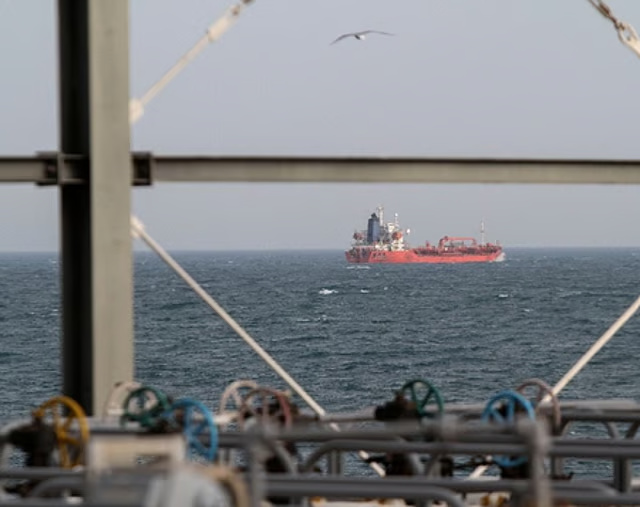
Despite US President Donald Trump expressing confidence that an agreement to ease tensions in the Middle East is within reach, while also insisting he is in no rush to finalise a deal with Iran, negotiations between Washington and Tehran appear increasingly stalled.
The prolonged impasse has heightened concerns among analysts, many of whom argue that both sides may see strategic value in delaying a resolution. However, the uncertainty comes with significant economic risks.
Conflict drags on
Rather than moving swiftly toward a settlement, both the United States and Iran may perceive benefits in extending the standoff, according to analysts. The downside is that continued tensions keep pressure on the Strait of Hormuz, one of the world’s most critical energy transit routes.
Any sustained disruption to shipping through the waterway could tighten global crude supplies, raise transportation costs and push oil prices significantly higher in the months ahead, with ripple effects across fuel, freight and food markets worldwide.
The International Energy Agency has highlighted assessments by strategic analysts who view the Strait of Hormuz as more than just a vital shipping route. Handling around 20% of global oil supplies and a significant share of liquefied natural gas (LNG) trade, the waterway is increasingly seen as a geopolitical “pressure point” that gives Iran substantial leverage over global energy markets.
According to the agency, even without a full-scale blockade, disruptions, security threats or heightened risks to shipping can be enough to trigger widespread economic consequences and unsettle global markets.
Some analysts also argue that Washington’s immediate objective may be to secure a temporary pause in hostilities to ease political pressures at home, rather than achieve a comprehensive and lasting settlement with Tehran.
Meanwhile, Mohammad Alzghool of the Emirates Policy Centre said evolving realities on the ground have altered the region’s “strategic equilibrium”, making the prospects of a swift diplomatic breakthrough increasingly remote.
Risk of confrontation
The evolving regional landscape has renewed concerns about the possibility of a direct US-Iran military confrontation, while prolonging uncertainty over the security of the Strait of Hormuz.
According to Mohammad Alzghool of the Emirates Policy Centre, several factors have contributed to the growing imbalance between Washington and Tehran. These include Iran’s increasing willingness to withstand pressure, its use of the Strait of Hormuz as strategic leverage, its ability to use time to its advantage, and what he describes as the United States’ reduced capacity to mobilise broad international backing.
Alzghool argues that, under such conditions, Washington may favour limited and targeted military actions designed to increase pressure on Iran and strengthen its negotiating position, rather than pursuing a wider military campaign.
Even without an official closure of the waterway, repeated threats, attacks on commercial vessels and elevated security risks have disrupted shipping through the corridor. The resulting uncertainty has increased transportation costs, raised insurance premiums and fuelled concerns about the reliability of future energy supplies.
Diplomatic impasse
The deadlock in negotiations comes as the Trump administration advances a broader geopolitical agenda aimed at reinforcing US influence across the Western Hemisphere while seeking to curb China’s expanding presence in key trade, infrastructure and energy networks.
Against this backdrop, analysts say a rapid diplomatic breakthrough appears increasingly unlikely, leaving global energy markets exposed to prolonged uncertainty and the persistent risk of further disruptions in one of the world’s most strategically important maritime routes.
The ‘Donroe Doctrine’ and its wider implications
Some analysts have labelled the administration’s approach the “Donroe Doctrine” — a term combining the name of US President Donald Trump with the historic Monroe Doctrine.
The concept is used to describe a strategy focused on expanding US influence over critical maritime routes, energy infrastructure and supply chains spanning the Americas and extending into the Indo-Pacific region. Proponents argue the approach is designed to safeguard strategic resources, strengthen US economic and security interests, and limit the ability of rivals such as China and Russia to exert greater control over global trade networks.
Critics, however, contend that a more assertive posture could heighten geopolitical tensions, not only with strategic competitors but also with allies concerned about the broader consequences for international stability and trade.
Effect on oil markets
Against this backdrop, energy markets are becoming increasingly exposed to geopolitical risk. Continued uncertainty surrounding US-Iran relations and the security of the Strait of Hormuz has heightened concerns about potential supply disruptions.
Because a substantial share of the world’s oil and liquefied natural gas shipments passes through the narrow waterway, even limited disruptions can drive up shipping costs, increase market volatility and push energy prices higher. Analysts warn that if tensions persist or escalate, the impact could spread well beyond fuel markets, contributing to higher transportation, manufacturing and food costs around the world.
Oil market buffers coming under pressure
Oil prices have remained relatively stable in recent months, supported by the use of emergency stockpiles and existing inventories to cushion the impact of supply disruptions. However, analysts caution that these protective buffers are gradually weakening.
Commercial crude inventories have fallen across several major economies, while strategic petroleum reserves in some countries remain below the levels recorded before previous energy crises. At the same time, ongoing instability across the Middle East continues to pose risks to both oil production and key transportation routes.
The combination of declining inventories and heightened geopolitical tensions has increased concerns that any significant disruption to supplies could have a more pronounced impact on global energy markets than in recent years.
Iran rejects new sanctions
Amid the continuing tensions, Iran has reaffirmed its position regarding the Strait of Hormuz while condemning new sanctions imposed by the European Union on individuals and entities linked to Tehran’s efforts to assert what it describes as its sovereign rights over the strategic waterway.
Kazem Gharibabadi, Iran’s Deputy Foreign Minister, criticised the measures as a “fraudulent move”, accusing European governments of attempting to increase pressure on Tehran during a period of heightened regional tensions.
The latest developments underscore the growing intersection of diplomacy, energy security and geopolitical competition, with analysts warning that prolonged uncertainty around the Strait of Hormuz could have far-reaching consequences for global oil markets and the wider economy.
Calls for a coordinated strategy
Mohammad Bagher Ghalibaf called for what he described as an “engineered victory” grounded in “authority and rationality”, arguing that Iran’s response to mounting regional pressures should be guided by long-term strategic planning rather than symbolic actions or political rhetoric.
He stressed the importance of a unified national approach, saying military operations, diplomacy, public communication and domestic governance should be treated as interconnected components of a broader strategy.
“Diplomacy cannot be reduced to closed-room talks and diplomatic smiles,” Ghalibaf said, warning that such an approach would be insufficient to address the country’s challenges amid growing geopolitical tensions.
Global inflation concerns
For global markets, the greatest concern is that prolonged disruptions in the Middle East could coincide with shrinking emergency reserves and tighter energy supplies.
Analysts warn that if instability around the Strait of Hormuz persists through the second half of the year, oil prices could face renewed upward pressure as governments and producers exhaust available buffers. Higher energy costs would likely ripple through the global economy, increasing transportation and manufacturing expenses and ultimately pushing up prices for consumer goods and food.
With energy markets already sensitive to supply risks, traders say continued uncertainty in the Gulf could amplify inflationary pressures worldwide, particularly if shipping disruptions become more frequent or severe.
Rising oil prices could fuel global inflation
A prolonged increase in oil prices could reignite inflationary pressures around the world, driving up costs across sectors ranging from transportation and manufacturing to power generation.
Higher energy prices would also pose a challenge for central banks, potentially limiting their ability to cut interest rates and stimulate economic growth. Policymakers could face renewed pressure to balance inflation control with support for slowing economies.
For consumers, the impact would likely be most visible in higher fuel bills and increased prices for everyday goods and services. As transportation and logistics costs rise, the effects could ripple through global supply chains, making everything from food and household products to air travel more expensive.

