

Crude oil prices ease as global benchmarks pull back after a recent rally loses momentum.
Oil prices fell in Asian trading on Wednesday, reversing a three-session winning streak as markets reassessed demand signals and ongoing concerns about global economic growth.
As of 11 a.m. Tokyo time, both major benchmarks were trading lower as investors weighed mixed economic data alongside geopolitical developments.
The pullback comes after earlier gains this week driven by supply concerns and expectations of steady fuel demand.
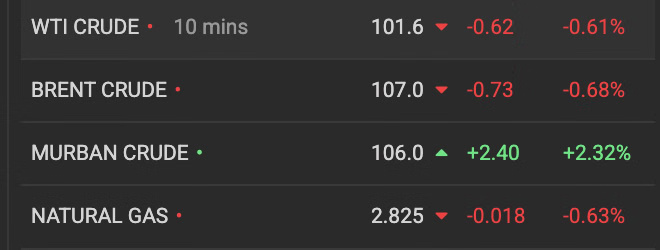
Brent crude futures fell 73 cents, or 0.73%, to $107 a barrel at 0051 GMT, while U.S. West Texas Intermediate (WTI) futures declined 62 cents, or 0.61%, to $101.6 at 11 a.m. Tokyo time on Wednesday (May 13, 2026).
Analysts said the sell-off was driven by multiple factors, including technical profit-taking after the recent rise in oil prices, with both Brent and West Texas Intermediate having climbed steadily in previous sessions.
Analysts also pointed to signs of softer demand in key markets, particularly parts of Asia. Recent data from China — the world’s largest crude importer — indicated slower-than-expected fuel demand growth, prompting traders to reassess near-term consumption forecasts.
They added that mixed inventory signals in the United States, where weekly stockpiles remain above seasonal averages despite draws in some categories, reduced urgency around expectations of tighter supply linked to OPEC+ production discipline.
Geopolitical conditions were described as broadly steady, with ongoing tensions in the Middle East and other supply-risk regions but no new escalation events to drive prices higher.
While the pullback has pared some of this week’s earlier gains, analysts said the broader outlook for oil prices still leans toward firmness unless demand conditions weaken further.
Oil markets remain highly sensitive to shifts in economic data, currency movements, and geopolitical developments.
Prices continue to experience sharp intraday fluctuations as traders await fresh inventory data later this week and new indicators from major global economic centres.
Hormuz watch: Why crude prices have eased
Energy analysts noted that physical crude premiums have dropped sharply from more than $30 above Brent to near parity. This reflects refiners delaying purchases, drawing down inventories, reducing refinery utilisation, and relying on strategic reserve releases despite ongoing disruptions linked to the Strait of Hormuz.
They also pointed to a decline in China’s crude imports, early seasonal refinery maintenance, and record-high U.S. crude exports, all of which have temporarily eased pressure in physical oil markets.
The relief, however, may be short-lived. Analysts warned that with supply buffers thinning ahead of peak summer demand, there is a growing risk of another sharp spike in both physical and futures oil prices if disruptions in the Strait of Hormuz persist.

