

Sheikh Mohammed bin Zayed Road continues to be the busiest entry route into the emirate.
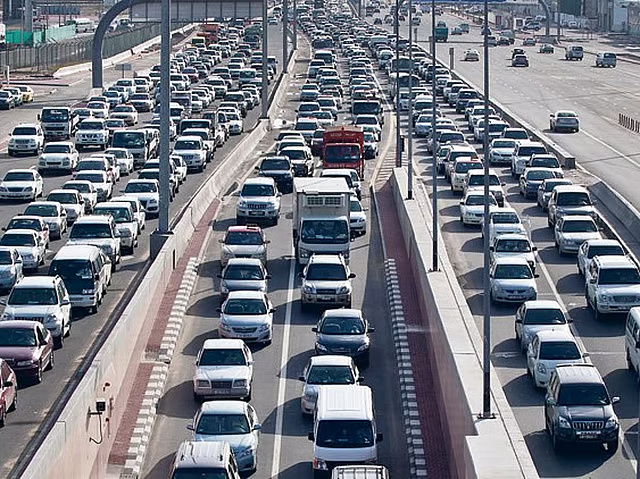
Dubai’s Roads and Transport Authority (RTA) says about 1.2 million vehicles travel daily from Sharjah into Dubai.
This demand is handled through five main entry corridors with a total of 25 lanes, with Sheikh Mohammed bin Zayed Road carrying a major share of the traffic and remaining the busiest route among them.
The authority said the road itself has eight lanes within Dubai, making up around 32% of all lanes used for traffic entering the emirate from Sharjah. As a result, Sheikh Mohammed bin Zayed Road has become one of the most heavily used roads in the country, especially during morning and evening peak hours.
The figures come as motorists increasingly call for long-term solutions to the recurring congestion on Sheikh Mohammed bin Zayed Road, a major link between Dubai and the Northern Emirates.
Commuters regularly report long delays during peak hours, as rising population levels and expanding economic activity continue to push up travel demand between the two emirates.
In response, Dubai’s Roads and Transport Authority (RTA) said it is advancing a range of current and future strategic projects to expand and upgrade alternative and parallel corridors to Sheikh Mohammed bin Zayed Road. The aim is to better distribute traffic across the wider road network and ease pressure on existing routes.
The authority also emphasised that easing congestion is not only about increasing road capacity. It noted that Dubai is developing an integrated transport system that provides viable alternatives to private cars, including public bus services and marine transport links between Dubai and Sharjah.
The RTA added that it is conducting studies and implementing plans to improve road network efficiency while enhancing public transport connectivity between the two emirates, in coordination with relevant authorities and in line with rapid population and urban growth.
It further stated that transport infrastructure remains a strategic priority in Dubai’s long-term development plans, with future efforts focused on expanding road projects, adopting smart mobility solutions, and strengthening public transport to build a more efficient, sustainable, and resilient system for future demand.

