

Mumbai leads NRI property demand, backed by metro expansion, airports and strong rental potential.
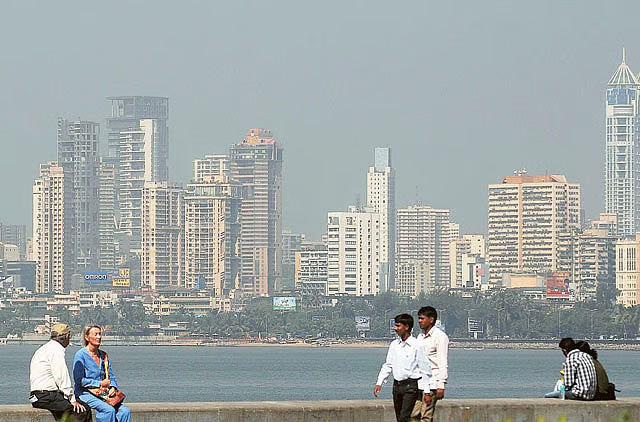
Dubai: A weaker Indian rupee is giving Gulf-based NRIs greater purchasing power in India, prompting many to target property markets anchored by new airports, expanding metro networks, business hubs and neighbourhoods with strong rental demand.
Mumbai and the Mumbai Metropolitan Region (MMR) continue to attract the highest level of NRI interest, followed by Bengaluru, Hyderabad, Pune and Delhi-NCR. Investors are also increasingly eyeing emerging growth corridors such as Navi Mumbai, Panvel and Ahmedabad’s GIFT City, drawn by major infrastructure projects, improving connectivity and long-term appreciation potential.
The focus has shifted beyond established addresses, with investors placing greater emphasis on infrastructure upgrades, employment hubs, rental yields and long-term resale potential.
“NRIs today aren’t chasing a prestigious pin code as much as they’re chasing growth — better infrastructure, a higher quality of life and markets with strong future potential,” said Bhadresh Shah, Managing Director of Today Group.
“Jobs and infrastructure are increasingly driving investment decisions,” Shah said. “In Mumbai, that means Navi Mumbai, Panvel, Kharghar and areas surrounding the upcoming international airport. In Bengaluru, demand is centred on Whitefield and North Bengaluru; in Hyderabad, it’s the Financial District; and in Pune, the western growth corridors are attracting buyers.”
“Across these markets, NRIs are looking for the same fundamentals — strong connectivity, well-planned urban development rather than haphazard expansion, and areas with the potential to generate sustained economic activity.”
Weaker rupee boosts NRI buying power
The continued depreciation of the Indian rupee against the US dollar and the UAE dirham has enhanced the purchasing power of overseas Indians, allowing them to buy more rupees with the same amount of foreign currency.
Santhosh Kumar, Vice Chairman of ANAROCK Group, said the currency advantage is making India’s leading property markets increasingly attractive to overseas buyers.
“The Indian rupee’s continued depreciation against the US dollar and the UAE dirham is boosting NRI purchasing power in India. The currency and yield-gap dynamics are, in fact, an active driver of cross-border capital flows,” he said.
“The Indian rupee’s continued depreciation against the US dollar and the UAE dirham is enhancing NRI purchasing power in India. The currency advantage, combined with attractive yield differentials, is emerging as a key driver of cross-border capital flows,” Kumar said.
He, however, cautioned that investors should look beyond city-level rankings. “Developer credibility can vary significantly across micro-markets, so investment decisions should be based on the quality of the project, location and developer track record, rather than city rankings alone.”
GCC buyers favour premium homes
GCC-based professionals remain among the most active NRI property buyers, according to Parthh K. Mehta, Chairman and Managing Director of Paradigm Realty.
Their investments are largely concentrated in RERA-compliant projects across Mumbai, Bengaluru, Delhi-NCR, Hyderabad and Pune, with demand increasingly shifting towards luxury housing.
Premium homes priced above ₹1 crore accounted for 62% of residential sales across India’s seven largest cities in the first half of 2025, up from 51% during the same period a year earlier, according to JLL India data cited by Mehta.
“The doubling of NRI equity investment limits in listed Indian companies from 5% to 10%, along with the increase in the aggregate cap to 24%, has further strengthened the investment landscape,” Mehta said.
He added that the Union Budget’s introduction of the City Economic Region (CER) framework for ecosystem-based urban planning, coupled with the government’s ₹12.2 lakh crore capital expenditure allocation and the IMF’s projection of 6.4% GDP growth for FY27, has created one of the most favourable environments for NRI real estate investment in the past decade.
Mumbai remains the top destination
Mumbai continues to dominate NRI property demand, although buyers are increasingly splitting their investments between established luxury neighbourhoods and emerging growth corridors.
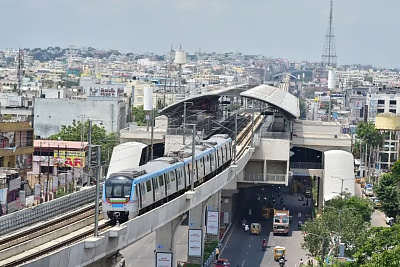
Premium localities such as Khar West, Worli, Lower Parel and Powai continue to attract buyers seeking high-end homes, strong rental demand and proximity to key business districts.
Meanwhile, Pali Hill, Bandra, the Bandra Kurla Complex (BKC) precinct and Mumbai’s coastal belt are drawing investors focused on wealth preservation, capital appreciation and luxury living.
Vishal N. Ratanghayra, Founder and Chief Executive Officer of Platinum Corp, said NRI buyers account for a significant share of high-value property transactions across these prime Mumbai locations.
“NRI buyers currently dominate high-ticket purchases in the luxury segment across these neighbourhoods, combining wealth preservation with prestigious addresses and strong long-term capital appreciation potential,” he said.
Ratanghayra noted that Mumbai’s redevelopment boom has unlocked fresh opportunities by replacing ageing buildings with premium residential projects in some of the city’s most sought-after neighbourhoods.
Demand in Worli and Lower Parel continues to be driven by ultra-luxury developments and sea-facing residences, while Khar West is attracting growing interest for its upgraded lifestyle offerings, strong rental demand and limited supply.
Beyond the city’s traditional luxury hubs, investor interest is also expanding to Chembur, Borivali, and neighbourhoods along the Mumbai Metro Line 3 and Coastal Road corridors, where improving connectivity is expected to support long-term property values.
Navi Mumbai emerges as a long-term investment hotspot
Navi Mumbai, Panvel, Kharghar and Upper Kharghar have become some of the most sought-after destinations for NRIs looking for relatively affordable entry points and strong long-term capital appreciation.
Large-scale infrastructure projects—including the Navi Mumbai International Airport, the Atal Setu, expanding metro networks and improved road connectivity—are transforming the region into a major residential and commercial growth corridor.
Compared with central Mumbai, these emerging suburbs also offer larger homes, master-planned communities and modern amenities, making them increasingly attractive to NRI buyers seeking better value and long-term investment potential.
Bhadresh Shah said ongoing infrastructure development is driving a structural transformation across Navi Mumbai and Panvel, creating an opportunity for investors to enter before these markets fully mature.
“Across the world, real estate values have historically risen alongside infrastructure development, and India is no exception,” he said. “Investing in a market that is still evolving is often far more rewarding than trying to time short-term property cycles.”
Technology hubs continue to attract NRI investors
Employment hubs remain a key factor shaping NRI property investment decisions beyond Mumbai, with cities offering strong job creation and expanding business ecosystems continuing to draw the greatest interest.
In Pune, NRI buyers are gravitating towards Hinjewadi, Baner and Kharadi, driven by the presence of major IT parks, strong office demand and expanding transport infrastructure.

In Hyderabad, demand remains concentrated in Gachibowli, HITEC City, Kokapet and the Financial District, while Whitefield and North Bengaluru continue to attract buyers thanks to their thriving technology hubs and established business ecosystems.
Across Delhi-NCR, Sector 150 in Noida and the Dwarka Expressway corridor are emerging as preferred investment destinations, supported by large-scale infrastructure projects and improved connectivity to the upcoming Noida International Airport at Jewar.
Meanwhile, GIFT City near Ahmedabad is steadily gaining traction among NRIs as its financial services ecosystem expands, strengthening its appeal as a long-term investment destination.
Emerging cities such as Kolkata, Coimbatore, Indore and Visakhapatnam are also attracting NRI investors with their relatively lower property prices and stronger potential for percentage-based capital appreciation. However, these markets generally offer lower resale liquidity than India’s largest metropolitan centres.
Among them, Kolkata stands out for its attractive rental returns, with yields of up to 6.3%, according to ANAROCK.
Check the rules before investing
NRIs are permitted to purchase residential and commercial properties in India, but they are generally not allowed to buy agricultural land, plantation properties or farmhouses under existing regulations.
Property payments must be made through approved banking channels, including NRE (Non-Resident External) or NRO (Non-Resident Ordinary) accounts, or via foreign remittances routed through authorised banks. Cash transactions are not permitted.
NRIs purchasing property remotely should conduct thorough due diligence by verifying the property’s title, statutory approvals, RERA registration and the developer’s track record for timely project delivery before signing any agreement. A properly executed Power of Attorney (PoA) may also be required if the buyer is unable to complete the transaction in person.
“Location matters, but so does who you’re buying from,” Shah said. “Choose developers with a proven track record of timely delivery and transparent business practices.”
Buyers should also be aware of the tax implications, which may include Tax Deducted at Source (TDS), capital gains tax when selling the property and income tax on rental earnings. Repatriating sale proceeds requires tax clearance and compliance with Reserve Bank of India (RBI) and Foreign Exchange Management Act (FEMA) regulations.
According to ANAROCK, NRIs can generally repatriate up to $1 million per financial year or the sale proceeds from up to two residential properties, subject to applicable RBI rules, documentation requirements and other regulatory conditions.
Property sales set to become simpler for NRI transactions
The Union Budget 2026–27 introduced a measure aimed at streamlining property transactions involving NRI sellers.
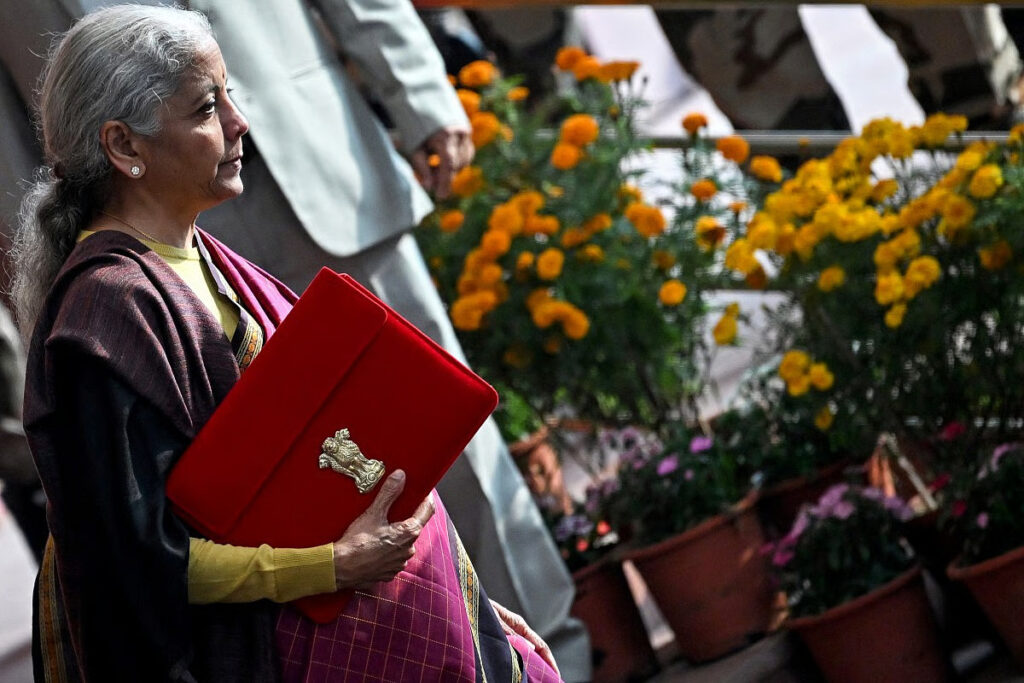
From October 1, 2026, resident buyers purchasing property from an NRI will no longer be required to obtain a Tax Deduction and Collection Account Number (TAN). Instead, they can deduct and deposit the applicable tax using a PAN-based challan, a move expected to reduce paperwork and simplify resale transactions.
India’s new Income-tax Act, which came into effect on April 1, 2026, has also modernised and renumbered several tax compliance forms used for taxation and overseas remittances, further easing procedural requirements.
However, experts caution that favourable currency movements alone should not drive investment decisions.
“NRIs should bear in mind that developer credibility varies significantly across micro-markets, so city rankings should not be the sole investment criterion,” Kumar said.
He added that factors such as rental demand, resale liquidity, clear property titles and the developer’s track record remain critical in determining long-term investment success, even after the initial advantage of a weaker rupee has diminished.

