

Strait of Hormuz security and aviation warnings remain key concerns for UAE residents.
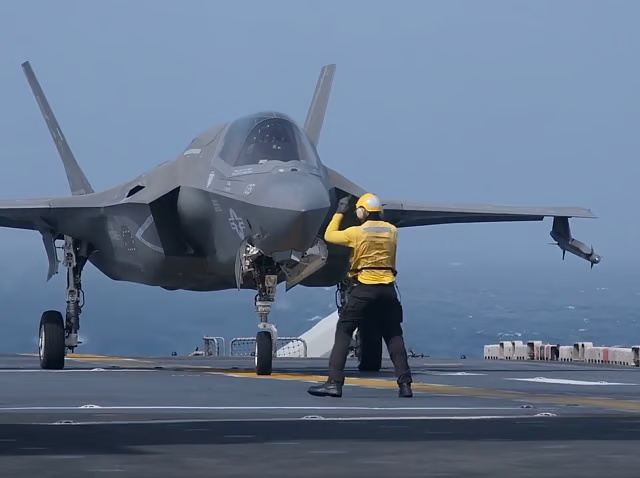
Dubai: Fighting between the US and Iran has entered a more dangerous phase, with fresh US airstrikes, Iranian retaliatory attacks and renewed threats to shipping through the Strait of Hormuz.
Although the conflict remains outside the UAE, its impact is increasingly being felt across the region, with heightened concerns over air travel, energy markets and maritime security prompting residents to closely monitor the latest developments.
US launches ninth consecutive night of strikes
The US military carried out a ninth consecutive night of airstrikes targeting Iranian military facilities, following the death of another American service member in Iraq in an incident that US officials said involved an Iranian drone.
The latest attacks mark a further escalation in the conflict, with Washington saying the strikes are aimed at degrading Iran’s military capabilities while responding to repeated attacks on US personnel and interests in the region.
The latest US strikes targeted Iranian missile sites, Islamic Revolutionary Guard Corps (IRGC) infrastructure and other military facilities, as Washington vowed to continue operations until it achieves its stated objectives.
Iran says it struck ‘enemy’ command centre in Syria
Iran’s Islamic Revolutionary Guard Corps (IRGC) said it had launched a strike on what it described as an “enemy” command centre in Syria, calling the attack retaliation for recent US military operations.
The announcement marks another escalation in the conflict, with both sides continuing to exchange strikes across the region amid growing concerns that the fighting could spread beyond their borders.
The IRGC’s claim could not be independently verified, and US officials had not immediately commented on the reported strike.
Flights from the UAE: Check before you travel
Most flights to and from the UAE continue to operate normally, although several airlines have adjusted schedules and flight paths to avoid conflict zones.
Some services to Kuwait and parts of Saudi Arabia have experienced delays, cancellations or diversions, while a number of international carriers have extended the suspension of selected routes across the Gulf.
Passengers are advised to check the latest flight status with their airline before travelling to the airport, as schedules may change at short notice in response to the evolving security situation.
Oil prices climb above $90 a barrel
Brent crude climbed above $90 a barrel for the first time in weeks as markets reacted to the escalating US-Iran conflict and ongoing concerns over shipping through the Strait of Hormuz.
The strategic waterway handles roughly one-fifth of the world’s oil supply, and analysts warn that any prolonged disruption could drive energy prices even higher.
Shipping through the Strait of Hormuz remains under pressure
Maritime security concerns continued to mount after a military report, cited by the UK Maritime Trade Operations (UKMTO), said a vessel was seen burning off Kumzar, near the Strait of Hormuz.
The incident comes amid heightened tensions between the United States and Iran, with the vital shipping corridor remaining under close watch as the conflict escalates.
Shipping through the Strait of Hormuz remains disrupted
Commercial traffic through the Strait of Hormuz remains significantly reduced as US naval forces continue enforcing restrictions around Iranian ports, while Tehran has maintained warnings against vessels it says violate its maritime regulations.
Maritime security concerns have also intensified following a series of recent incidents in the region. These include attacks on the UAE-linked tankers MT Al Bahiyah and MT Mombasa in the southern shipping lane of the Strait of Hormuz within Omani territorial waters, which resulted in fires and casualties. A Cypriot-flagged cargo vessel, GFS Galaxy, was also reportedly attacked near the strategic waterway, leading to the death of an Indian marine engineer.
The disruption has heightened concerns over global energy supplies, shipping costs and the security of one of the world’s busiest maritime trade routes.
UAE continues to call for de-escalation
The UAE has repeatedly urged all parties to exercise restraint and pursue a diplomatic resolution to the conflict, while closely monitoring developments affecting regional security, maritime trade and commercial aviation.
Authorities have also advised the public to rely on official sources for updates and avoid sharing unverified information.
Aviation warnings remain in place
European aviation regulators continue to advise airlines to avoid parts of the Gulf region, including airspace over or near the UAE, Bahrain, Kuwait, Qatar and the Gulf of Oman, citing the potential risks posed by missiles, drones and ongoing military activity.
What UAE residents should do
Airlines continue to review flight schedules and routes on a day-to-day basis as the regional security situation evolves.
- Check your flight status with your airline before leaving for the airport.
- Follow updates issued by your airline and UAE authorities for the latest travel guidance.
- Expect longer journey times on some routes as airlines reroute flights to avoid conflict zones.
- Keep an eye on fuel prices, which could remain volatile if tensions in the region continue to escalate.
- Rely on official government and airline announcements for accurate information, and avoid sharing or acting on unverified social media posts.

