

Leading supermarket chains and food distributors have come under increasing strain in recent months.
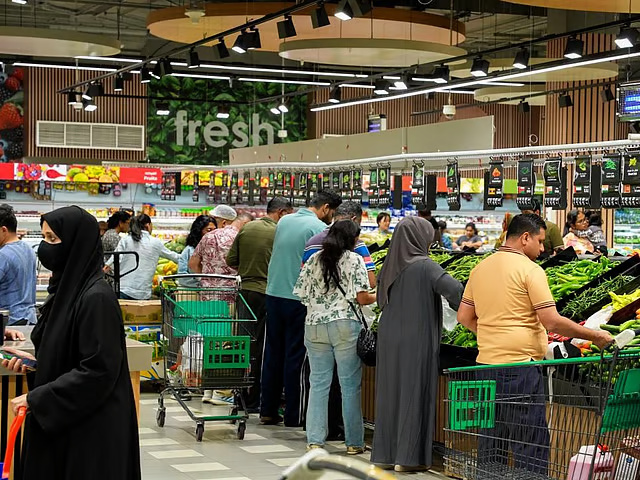
Dubai: UAE residents are already facing higher fuel prices, and retailers warn that grocery costs could also rise if ongoing geopolitical tensions continue to disrupt regional trade routes and energy markets.
Industry players say the increase in fuel costs is placing additional pressure on supply chains and transportation expenses, raising concerns that these higher operating costs may eventually be passed on to consumers through increased prices for everyday grocery items.
Major supermarkets and food distributors have faced growing pressure since the escalation of conflict in the Middle East, as supply chains contend with higher freight rates, longer shipping routes and rising fuel costs linked to the regional crisis.
Retailers have spent recent weeks adjusting procurement and logistics strategies in an effort to shield consumers from immediate price increases. However, industry executives say it is becoming increasingly challenging to absorb mounting costs, with some product categories now more vulnerable to price hikes as pressures continue to build across the supply chain.
“Fuel prices have a direct impact on the entire supply chain, particularly in the food and grocery sector, where transportation and logistics are critical components,” said Dhananjay Datar, Chairman and Managing Director of Al Adil Trading.
The warning comes as inflationary pressures continue to build across Dubai, with consumers already experiencing the effects of rising transportation and food-related expenses. Industry experts say sustained increases in fuel and logistics costs could place further upward pressure on household spending in the months ahead.
Transport costs ripple through supply chains
The latest increase in fuel prices is affecting almost every stage of the food distribution network, from imported goods arriving at ports to refrigerated trucks transporting fresh produce to supermarket shelves.
Products that depend heavily on transportation, cold-chain logistics and imports are expected to face the greatest cost pressures. According to Al Adil Trading, the categories most exposed to rising costs include:
- Fresh fruits and vegetables
- Dairy products
- Frozen foods
- Imported fast-moving consumer goods (FMCG)
Beyond transportation, retailers are also grappling with higher packaging, warehousing and distribution expenses.
“Packaging and distribution costs have also gone up, which eventually impacts retail pricing,” said Dhananjay Datar.
The impact is particularly significant for food retailers because many grocery items pass through multiple stages of transportation before reaching consumers. As a result, even relatively small increases in fuel prices can compound across the supply chain, adding to the overall cost of getting products onto store shelves.
Food inflation concerns grow
Food inflation concerns grow
The concerns come amid a broader rise in global food prices, with the Food and Agriculture Organization reporting a third consecutive monthly increase in world food commodity prices, driven in part by higher energy costs and supply disruptions linked to regional conflicts.
According to the FAO Food Price Index, average global food prices increased by 1.6 per cent month-on-month and were 2 per cent higher than a year earlier. Vegetable oils recorded one of the sharpest gains, rising 5.9 per cent from the previous month to their highest level since July 2022. The increase was driven by higher prices for palm, soy, sunflower and rapeseed oils.
“Vegetable oil prices rose due to stronger demand from the biofuel sector and elevated energy prices,” said Máximo Torero.
He added that localized production challenges, transport disruptions and trade tensions continue to pose risks to global food security, highlighting the vulnerability of food supply chains to geopolitical and economic shocks.
For import-dependent markets such as the UAE, sustained increases in global food and energy prices could add further pressure to retailers already grappling with higher logistics and distribution costs.
The agency also reported higher prices for wheat, maize and rice, with elevated crude oil costs contributing to increased production and transportation expenses in exporting countries.
While dairy and sugar prices declined globally, meat prices continued to climb, with the Food and Agriculture Organization Meat Price Index reaching a record high in April.
Fuel spike raises inflation risks
Recent food price pressures are closely tied to developments in global energy markets. The conflict involving Iran, Israel and the United States has driven oil prices higher at various points, raising concerns about rising costs across energy-intensive industries and global transportation networks.
Higher oil prices extend beyond fuel costs alone. They increase shipping and logistics expenses, trucking and cold-chain operations, and agricultural production costs, creating inflationary pressure across the entire food supply chain and ultimately influencing consumer prices worldwide.
Economists have repeatedly warned that prolonged disruptions in the Strait of Hormuz—one of the world’s most critical energy transit routes—could have far-reaching implications for global food prices.
Dubai inflation accelerates
The impact is already visible in recent inflation data, with Dubai’s annual inflation rate rising to 4.8 per cent in April, up from 3.8 per cent in March, according to figures from the Dubai Data and Statistics Establishment.
On a monthly basis, consumer prices increased by 1.3 per cent in April, compared with 0.9 per cent in March. Transport costs were the main driver of the rise.
The transport category—accounting for nearly 12 per cent of Dubai’s consumer price basket—jumped 11.1 per cent year-on-year and 9.2 per cent month-on-month, as higher fuel and freight costs fed through the economy.
Food prices also rose by 1.5 per cent month-on-month, according to Emirates NBD, reflecting higher shipping and transportation costs linked to ongoing regional tensions. Restaurants and hotels recorded a 1 per cent monthly increase, while insurance costs edged up by 0.4 per cent.
Analysts said the inflationary impact of the conflict has been most evident in sectors heavily dependent on oil prices and shipping routes through the Strait of Hormuz. For consumers, higher grocery bills and fuel costs have become some of the clearest signs of these pressures filtering into everyday spending.
Recent purchasing managers’ surveys cited by Emirates NBD indicate that businesses are increasingly passing higher operating costs on to consumers through increased selling prices, widening inflationary pressures across the economy.
Grocery prices to rise further
Against this backdrop, retailers expect food prices to remain under upward pressure if fuel costs stay elevated. “The increase may not be drastic immediately, but grocery prices could gradually rise by around 3 to 8 per cent if fuel prices continue to remain high over a sustained period,” said Dhananjay Datar.
The extent of price increases is expected to differ across product categories, depending on import reliance and exposure to supply-chain costs. Fresh produce, imported food items and refrigerated goods are likely to remain the most vulnerable to upward pressure, while locally sourced products may be comparatively insulated from transportation-related cost increases.
For now, retailers are continuing to absorb part of the higher costs. However, if fuel prices remain elevated and regional supply-chain disruptions persist, consumers may gradually see these pressures reflected in supermarket prices over the coming months.
Economists remain cautiously optimistic that inflation could moderate later in the year. Emirates NBD projects Dubai’s inflation to peak at around 5.4 per cent before easing in the second half, as fuel prices stabilise and supply chains gradually return to normal.
Until then, higher grocery bills may become another visible consequence of a conflict whose economic effects are extending well beyond the region’s energy markets.
Retailers to shield consumers
Food retailers across the UAE are working to absorb part of the rising costs in an effort to prevent sudden price increases for consumers.
At Al Adil Trading, the company says it is focusing on bulk procurement, improved inventory planning and logistics optimisation to reduce transportation-related expenses. Long-standing supplier relationships are also helping negotiate favourable terms and offset some of the operational cost pressures.
“We are trying our best to cushion customers from the immediate impact through efficient inventory planning, bulk procurement and optimized logistics operations,” said Dhananjay Datar. “Our priority is to ensure that essential grocery items remain affordable for consumers.”
Such efforts have helped soften the immediate impact on shoppers, but retailers acknowledge that sustained cost increases are increasingly difficult to absorb over the long term.

