

No preservatives, no shortcuts: How iD Fresh is building a clean-label growth story.
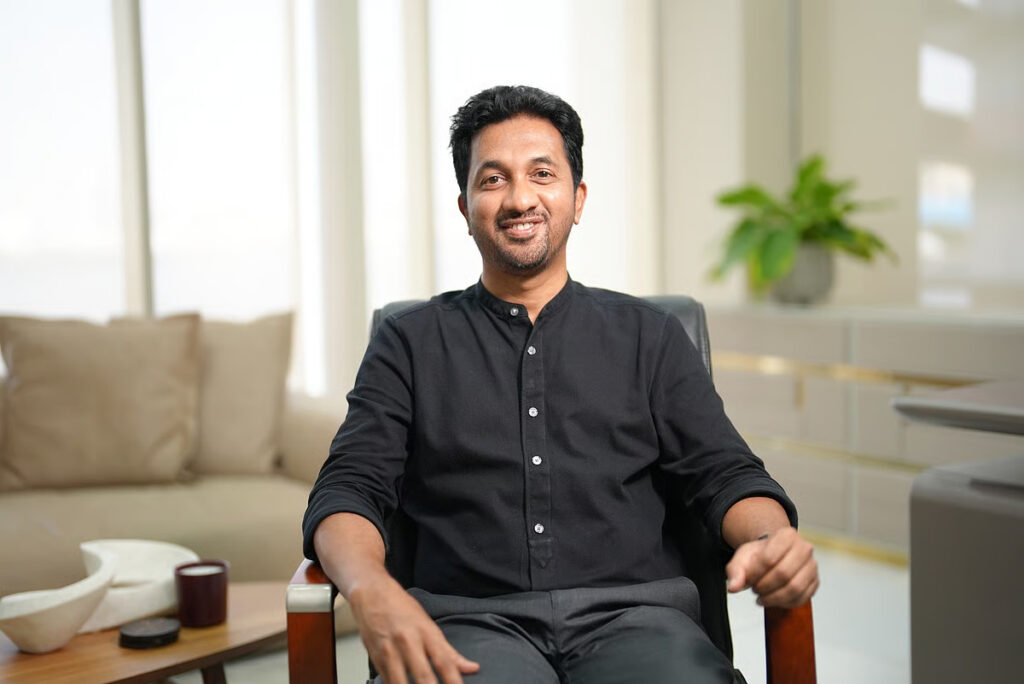
Ajman: iD Fresh Food, known for its ready-to-cook South Indian staples including idli and dosa batter and porotta, is set to open a second factory in Sharjah by the end of this year.
The expansion will double the company’s production capacity in the UAE as it prepares for a planned $1 billion initial public offering (IPO) in India next year.
Chairman and Global CEO PC Musthafa confirmed both developments in an interview with. He said the company remains fully owned by its five founders, with no institutional investors currently holding a stake.
A clean-label philosophy driving expansion
Musthafa’s definition of “clean label” goes beyond ingredients. For him, it covers the entire supply chain — from sourcing and manufacturing to packaging and distribution — and has become the foundation of iD Fresh’s growth strategy.
“Growth at any cost is the philosophy of a cancer cell. I didn’t want to be a cancer cell,” he said, explaining the company’s decision to protect its core principles rather than chase expansion at any price.
He said this approach will guide the company’s next phase in the UAE, where a new Sharjah factory is expected to open nearly a decade after iD Fresh established its first regional production facility in Ajman.
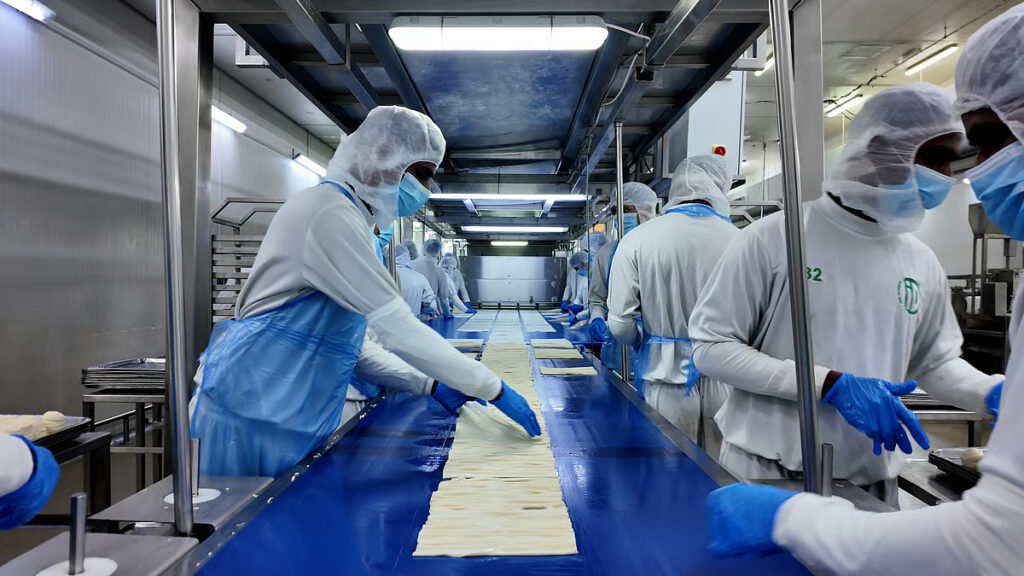
“We are now setting up a new factory. Hopefully, by December, we should be up and running,” Musthafa said during a tour of the iD Fresh assembly line in Ajman. “Demand has risen that much.”
The Sharjah facility will double iD Fresh’s UAE production capacity, helping the company meet growing demand across the Gulf while positioning itself for longer-term expansion.
“We got this factory around 10 years back. At that time, we thought the market was this size. Now the market is already much bigger. We have to look at what the market will be in the next 10 years,” he said.
Billion-dollar IPO plans
The UAE expansion comes as the Bengaluru-headquartered fresh food company prepares for a planned $1 billion IPO in India next year.
“We are looking at a billion-dollar IPO in October in India, one year from now,” Musthafa said.
He said the listing is not mainly intended to raise new capital but will allow some existing shareholders to explore a secondary exit.
“We are not looking at any revenue fundraising, but we have a lot of shareholders who might be looking at some secondary exit. Plus, it was more like a childhood dream,” he said.
Musthafa confirmed that preparations for the listing are underway but did not disclose which stock exchange the company plans to use.
Building a fresh-food empire
Despite wider concerns around geopolitical uncertainty, economic pressures and market volatility, Musthafa said iD Fresh’s long-term fundamentals remain strong.
Founded in 2005, the Bengaluru-based company has grown from a ₹50,000 start-up into one of India’s largest fresh food brands, with operations in more than 100 cities across 10 countries.
The company employs around 2,700 people and Musthafa said its products reach more than three million consumers daily.
According to India CEO Rajat Diwakar, who spoke to The Economic Times in April, iD Fresh reported revenue of around ₹680 crore (approximately $78 million or Dh287 million) in FY2025 and has recorded a compound annual growth rate (CAGR) of around 20 per cent over the past five years.
Betting on the UAE while expanding globally
iD Fresh is preparing to enter Singapore, the UK and parts of the US with its fresh food range this financial year, adding to international markets where its frozen parathas and coffee decoctions are already available.
Despite its global ambitions, Musthafa remains particularly optimistic about the UAE market.
“UAE is my Sehwag,” he said, referring to the explosive former Indian cricketer Virender Sehwag. “Every time there’s a target, we make it up from the UAE market.”
He said the company does not view established food brands as its main competitors.
“I don’t look at local players as competition,” Musthafa said. “Grinders at home are my competition.”
A business built on refusing shortcuts
iD Fresh’s journey began with ₹50,000 and a single grinder, when Musthafa and his cousins set out to address a hygiene concern they had identified in unbranded idli batter being sold in plastic pouches on the streets.
The team spent nine months perfecting the recipe and nearly another year to sell their first 700 packets.
“Anything in a packaged form is considered an unhealthy range,” Musthafa said, describing the early hesitation among consumers. In many households, idli and dosa batter had traditionally been prepared at home.
Instead of reducing costs by compromising on ingredients, the company chose to maintain its standards. That decision, Musthafa said, has remained central to iD Fresh’s identity as it has expanded.
Quality control, the iD Fresh way
Musthafa remains highly particular about the ingredients used in iD Fresh products. The company’s UAE operations in Ajman run across three production lines focused on batter, parathas and chapatis.
“I will not add any ingredients in the food that my mother cannot identify,” he said, outlining the company’s approach to clean-label production. He said iD Fresh avoids preservatives, artificial flavours, coating agents and stabilisers.
Referring to food additives such as E-numbers and reducing agents, Musthafa said: “None of this nonsense.”
The company follows a traditional preparation process involving soaking, stone grinding and natural fermentation.
“The product is exactly the same thing that my grandmother used to make. We do it at a larger scale,” he said.
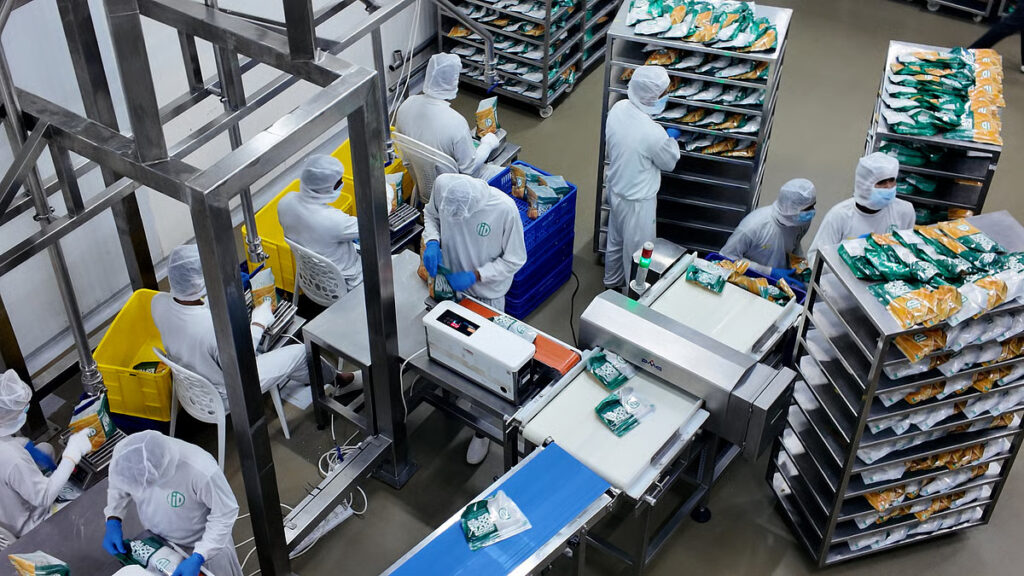
Quality checks begin before ingredients enter the factory, with every raw material tested before production. Finished products then undergo additional checks, including weight verification and metal detection, to reduce contamination risks.
Musthafa said he is also taking the company’s transparency efforts further. On August 3, he plans to take part in a lie detector test in front of a student audience in Bangkok.
“I have nothing to hide,” he said. “You build the factory. You know how to make it.”
Tackling the fresh food industry’s biggest challenge
For fresh food businesses, managing wastage can determine success or failure. iD Fresh experienced this challenge in its early years, at one point losing 90 per cent of the products it sent to market due to unsold inventory.
To address the issue, the company began tracking store-level and product-level sales data more than a decade ago. Today, it uses artificial intelligence to forecast demand with greater accuracy, including predictions for individual delivery routes and retail outlets.
“This month we are running at less than one per cent wastage of the batter,” Musthafa said, referring to a product with a seven- to eight-day shelf life.
“That is the golden target to achieve,” he added.
Scaling further, without cutting corners
The new Sharjah factory will double iD Fresh’s UAE production capacity, helping the company respond to demand that has outgrown its current Ajman facility.
The expansion follows the same approach that shaped iD Fresh’s growth from the beginning: identifying unmet demand and developing the technology needed to scale production while maintaining product standards.
The company has adapted mochi-paste machines from Japan to process batter at commercial scale and uses specialised pastry-making equipment to create layered parathas.
“That really sets us apart,” Musthafa said. “Because we always stay ahead of competition with innovation.”
New product development is also following the company’s clean-label principles. A protein batter made with ragi provides 15 grams of protein in two idlis, which Musthafa said is higher than the protein content of two eggs. A second variant, expected to launch within two months, is designed to provide around 40 grams of protein in two dosas.
Regional preferences are also influencing the company’s product pipeline. Market research showed that 62 per cent of iD Fresh’s paratha customers in Saudi Arabia prefer peri-peri flavours.
Based on that demand, the company plans to launch Peri Peri Parotta and Zaatar Paratha within two months.

