

UAE’s 2026-27 admission rules are changing the school-starting age for some children, leaving parents to consider age, readiness and available places as the new academic year begins on August 31.
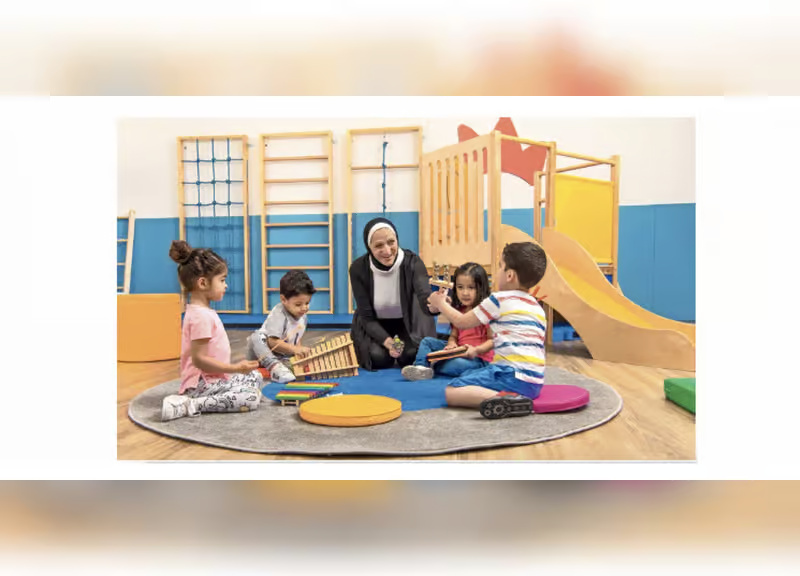
For parents preparing their children for the UAE’s new academic year, one question may loom larger than uniforms and school runs: Is my child ready to start school?
That question is taking on added significance as the UAE’s updated admission-age rules come into effect for new entrants in the 2026-27 academic year.
For schools beginning their academic year in August, children entering Pre-Kindergarten, KG1, KG2 and Grade 1 will be assessed based on a December 31 age cut-off. Schools following an April academic calendar will continue to use March 31.
However, school readiness involves more than a child’s date of birth. The new policy takes into account cognitive, social, emotional, language and motor development, with age serving as just one consideration.
For families, the decision can feel deeply personal. Some parents may welcome the additional time for a young child to develop confidence and independence, while others may find themselves balancing a child’s birth date, developmental readiness and the availability of school places.
Later start gives some children more time to prepare
Syrian expat Mariam Haddad is among those who believes an additional year could benefit her young son, who was born in December. She plans to use his nursery experience to build his confidence before he starts “big school”, while also helping him develop an everyday skill that could make the transition smoother.
“Although eligible, I will be sending my son to big school next year. He is going to nursery this year, and I feel that the preschool exposure will help him become school-ready by next year. I am also toilet-training him at the moment, which I think is important before a child starts school.”
Haddad believes the extra time in an early-years setting could give children a stronger foundation before they move into a more structured school environment.
“I feel parents who wait another year may find that their children are better prepared for school. There may be some age differences initially, but I think these gaps eventually even out as children grow older.”
For UAE national Rawdha Al Qaydi, however, the change has highlighted another challenge: being eligible by age does not necessarily guarantee a school place.
Her son, who was born in September, was eligible to start school this year, but she said she was unable to secure a place when she tried to enrol him. The timing of the policy announcement, she added, meant some families were competing for seats that had already been filled.
“My son, who was born in September, is eligible to enter this year. I tried to enrol him, but the school said there were no empty slots and that I would have to return next year. As the announcement was made in the middle of the year, some students managed to secure places while others could not.”
Al Qaydi said the situation means her son will start school alongside a younger cousin, despite the children being a year apart.
“My son will now enter school with my sister’s son next year, who is a year younger. My son will be five and hers will be four, but they will be in the same class. In Abu Dhabi, we have a different rule, with residential zoning applying to public schools, where admission and registration are determined by geographical zones.”
Meanwhile, the Ministry of Education has clarified that the new policy applies to new admissions for the 2026-27 academic year and does not alter the status of children who are already enrolled. Transitional arrangements are also available for some children who fell outside the previous eligibility window.
Age is only one part of school readiness
For schools, however, readiness is about more than whether a child has reached the required age.
Richard John Drew, Principal of Jumeira Baccalaureate, said early-years education can help children develop the social and communication skills needed for school, but even a few months can make a noticeable difference at this stage.
“A high-quality early years’ environment can be highly beneficial, helping children develop confidence, language, curiosity and social skills through purposeful play. However, a difference of even a few months can be significant at this age, particularly in areas such as emotional regulation, independence and communication.”
He said schools consider a child’s overall development rather than academic ability alone, with the appropriate year group providing an important foundation for future learning.
“For children eligible under the transitional arrangements, this is an important long-term decision. Parents should look beyond whether their child is academically capable and consider whether they are developmentally ready for the expectations of that year group.”
At Nord Anglia International School Abu Dhabi, Head of EYFS Gemma Brown said parents can assess readiness by looking at how their children communicate, interact with others and manage everyday routines.
“Parents can think about whether their child is able to communicate their needs, ask questions, and begin to interact with other children in a group setting. Can they separate from their parent or carer with the understanding that they will return at the end of the day?”
Brown said independence with everyday tasks can also be a useful indicator, while stressing that readiness varies from child to child.
“A lot depends on the individual child, as well as the type of school and curriculum they are entering. For younger children in particular, an environment that is play-based, language-rich, and responsive to children’s interests can be very supportive.”
For parents who remain uncertain, Brown recommends using transition opportunities to see how their child responds outside the familiar home environment.
“If a parent is unsure whether their child is ready to start school, I would always encourage them to speak to an Early Years professional and, where possible, attend a school stay-and-play or transition session.”
What medics say about school readiness
Medical experts also caution parents against treating chronological age as the sole measure of school readiness.
Dr Wasan Sulaiman, Consultant, Family Medicine, Sheikh Sultan bin Zayed Hospital, said children of the same age can be at very different stages of emotional and social development.
“School requires much more than academic skills. A child needs to cope with separation from parents, follow routines and instructions, wait for their turn, interact with other children, communicate their needs and manage frustration. Children who are more developmentally mature may find these demands easier to manage.”
She advised parents to look for signs such as the ability to follow simple routines, communicate basic needs, take turns, focus on age-appropriate activities and develop independence with eating, toileting and dressing.
Importantly, she said parents should not expect complete independence or the total absence of separation anxiety. Development happens progressively, and the school environment itself can play an important role in helping children develop new skills.
“Starting school at a younger age also does not automatically mean a child will have problems. Children develop at different rates. Additionally, the quality and supportiveness of the school environment are extremely important.”

