

UAE official says authorities closely track fake news, misinformation and social media bots, but avoid engaging with provocative false claims.
Social media bots are being used to fuel tensions between countries across the region, a senior UAE official has warned, revealing that more than 11,000 new bot accounts were created in October 2026 alone.
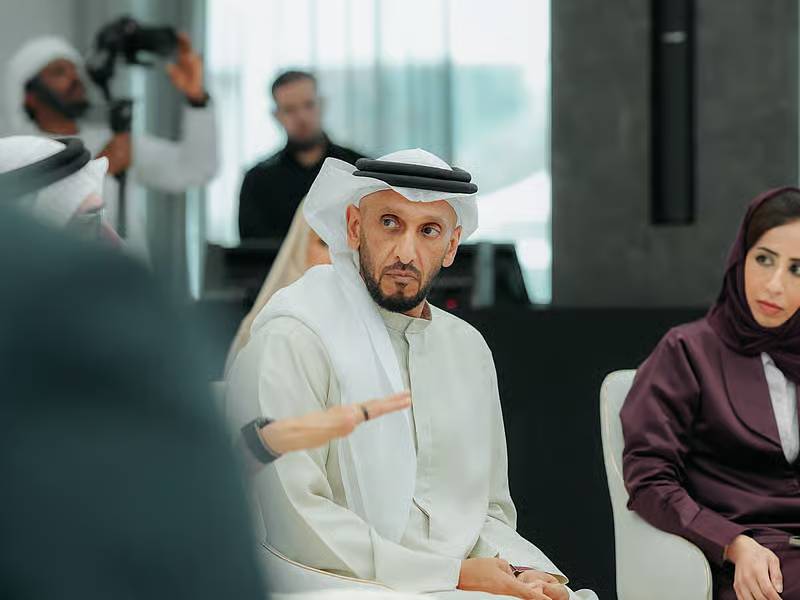
Describing the scale of the activity as “a huge amount, a huge number”, Abdulla bin Mohammed bin Butti Al Hamed, Chairman of the National Media Authority (NMA), said authorities were closely monitoring attempts to manipulate online discussions and strain relations between neighbouring countries.
Speaking at the UAE Correspondents’ Majlis in Dubai, Al Hamed highlighted the growing use of automated accounts to spread misleading narratives and amplify provocative content on social media.
“Everyone knows that there is a lot of fake news, lots of bots that are being used on the social media platforms,” he said.
Social media bots are automated accounts capable of publishing, sharing and amplifying large volumes of content, sometimes creating a misleading impression that a particular opinion or narrative enjoys widespread public support.
Dubai-based cybersecurity expert Rayad Kamal Ayub previously told Khaleej Times that coordinated networks of such accounts could influence online conversations and distribute misinformation on a large scale.
However, Al Hamed did not identify the social media platforms involved or disclose who was responsible for creating or operating the accounts.
UAE removes thousands of harmful social media accounts
UAE authorities have been coordinating with social media platforms to identify and remove automated accounts and other forms of harmful online activity.
According to Al Hamed, much of this work takes place without public announcements as officials continue tracking suspicious activity across digital platforms.
“We are working behind the scenes to do this,” he said.
He explained that monitoring social media activity has been an ongoing priority for authorities, particularly as new bot networks and misleading narratives continue to emerge.
In May 2026, Dr Jamal Mohammed Al Kaabi, Secretary-General of the NMA, disclosed that the authority had removed 10,000 TikTok accounts.
According to Al Kaabi, the accounts were distributing AI-generated videos and other content intended to undermine the UAE’s reputation, circulate false claims about Dubai and other emirates, and promote harmful ideologies.
The disclosure followed an announcement by Al Hamed in April that more than 100 social media accounts had been blocked in recent months for publishing content that incited violence during the Iranian attacks.
Addressing the Gulf Influencers event at the time, he said the accounts had breached a Gulf code of conduct regulating online behaviour.
He also clarified that the blocked accounts were not associated with any single country.
Why UAE authorities do not respond to every fake news report
Al Hamed explained that UAE authorities take a selective approach when deciding whether to respond publicly to misinformation, especially when false claims appear deliberately designed to provoke reactions.
He noted that responding officially to every fabricated report could unintentionally amplify misleading content and give it greater attention or credibility than it would otherwise receive.
Instead, authorities assess whether a claim raises a legitimate issue requiring clarification or is simply an attempt to generate controversy and encourage hostile exchanges.
The approach does not mean that misinformation is being overlooked.
Al Hamed stressed that authorities continue monitoring online platforms, identifying suspicious accounts and coordinating with social media companies to address harmful activity.
He also highlighted the value of maintaining direct communication between government officials and journalists.
According to Al Hamed, stronger relationships with media organisations can help ensure that verified and accurate information reaches the public, reducing opportunities for false narratives to spread.
Although authorities may choose not to issue public responses to every misleading claim, individuals who publish or circulate misinformation can still face serious legal consequences under UAE law.
Under Article 52 of Federal Decree-Law No. 34 of 2021, individuals found guilty of publishing or sharing false news, rumours or misleading information can face a prison sentence of at least one year and a minimum fine of Dh100,000.
The penalties become more severe if the offence takes place during a crisis, emergency or disaster, with imprisonment of at least two years and a minimum fine of Dh200,000.
In February 2026, the UAE Public Prosecution reminded residents that legal responsibility extends beyond those who originally create false content. Individuals who share, forward or repost unverified information may also face legal action.
GCC explores joint measures to combat online misinformation
Efforts to tackle misinformation have also gained attention at the regional level, with Gulf countries discussing closer cooperation to address harmful online activity.
During an extraordinary meeting of GCC information ministers in March, Al Hamed proposed a coordinated regional approach to tackling anonymous social media accounts and the spread of disinformation.
His recommendations included establishing a 24-hour regional monitoring centre powered by artificial intelligence to identify, track and respond to misleading digital content.
The proposal aimed to strengthen cooperation among GCC countries in countering online misinformation and protecting the integrity of information shared across digital platforms.

