

Delivery services accounted for nearly one-third of UAE restaurant orders as consumers increasingly favoured convenience, even as dine-in demand weakened and the overall sector experienced a slowdown.
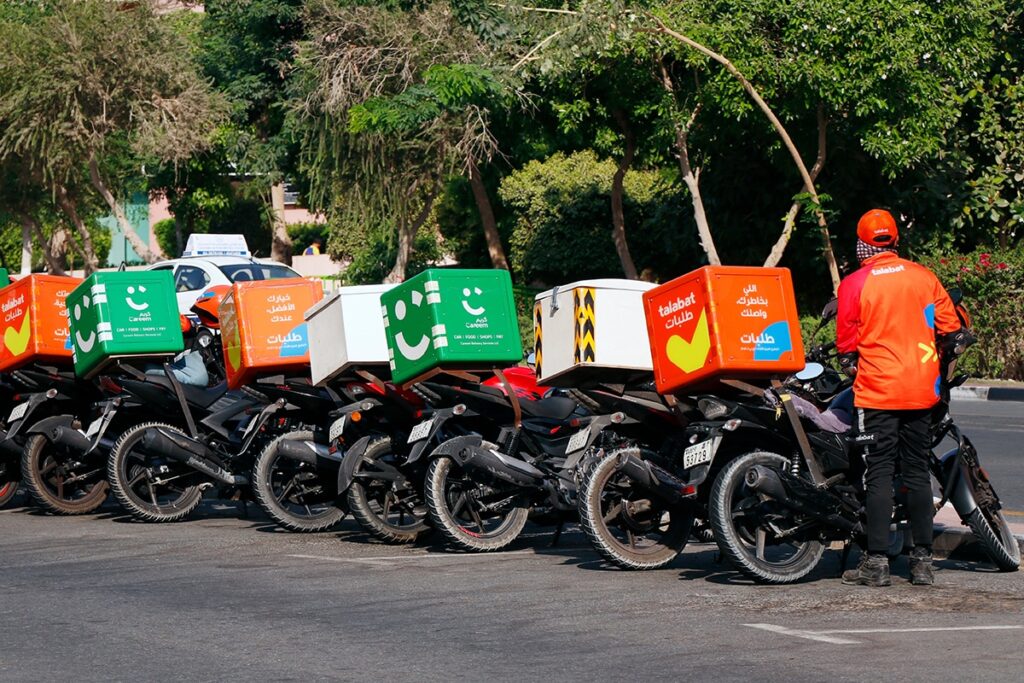
Food delivery continued its upward trend in the UAE during the first half of 2026, with orders increasing 15.2 per cent compared with the previous year, despite a broader decline in restaurant demand, according to a report by restaurant management software provider Syrve MENA.
The report revealed that delivery now represents 30.5 per cent of all restaurant orders processed across Syrve’s network, rising from 25.4 per cent a year earlier, reflecting a growing preference among consumers for convenient dining options.
The growth came despite a 4 per cent decline in total restaurant orders and a 5.5 per cent drop in gross revenue, largely due to a 10.5 per cent decrease in dine-in orders. Syrve said the data was based on the same restaurants operating in both 2025 and 2026, indicating that the broader slowdown in the sector may be more significant.
Delivery emerges as the key growth driver
Restaurants offering delivery recorded an average of 11,642 delivery orders in the first half of the year, equivalent to around 1,940 orders per month. Although the average delivery order value dipped slightly from Dh77.35 to Dh76.97, increased order volumes helped boost delivery revenues. Delivery’s contribution to restaurant revenue also rose from 18.6 per cent to 22.5 per cent.
The report projected that the UAE’s online food delivery market will reach $10.86 billion in 2026 and expand to $22.19 billion by 2034, driven by greater smartphone adoption and the rising use of super apps.
Dine-in demand weakens
While delivery continued to grow, dine-in restaurants experienced a decline in customer visits. Dine-in orders fell 10.5 per cent in the first half of the year, though average spending per visit remained stable, increasing slightly from Dh115.21 to Dh115.81. Across both dine-in and delivery channels, the overall average order value declined by only 1.5 per cent.
The report highlighted a significant shift in market conditions following Ramadan. Restaurant orders started 2026 on a strong note, with volumes between 16 per cent and 26 per cent higher than the previous year during the first seven weeks. However, by mid-February, growth had reversed into a 15 per cent year-on-year decline, worsening to nearly 30 per cent in April before recovering to around previous-year levels by late June.
The slowdown affected 61 per cent of restaurants, with premium and tourism-focused outlets experiencing the biggest impact.
“The H1 2026 results show that delivery is capturing a larger share of restaurant demand, even as the overall market faces weaker volumes,” said Alex Ponomarev, CEO of Syrve MENA.
He added that restaurants that track demand patterns closely and adapt their operations across different sales channels are better equipped to manage changing market conditions.
Looking ahead, Syrve expects the broader GCC foodservice sector to expand from $69.13 billion in 2026 to $122.19 billion by 2031, with delivery services expected to remain a major driver of growth.

