

$100,000 H-1B Visa Fee Faces Uncertainty as Legal Challenges Continue.
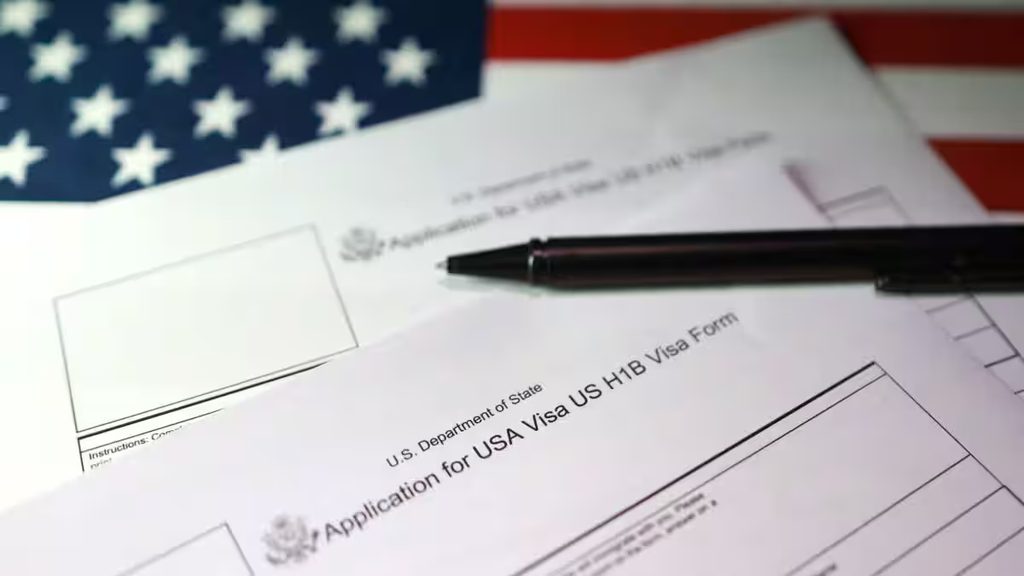
US President Donald Trump has extended for another year an executive order that would impose a $100,000 fee on H-1B non-immigrant visas, the White House said on Friday, according to Reuters.
The measure, initially introduced in September 2025, is intended to reduce US employers’ reliance on lower-paid foreign workers. However, uncertainty remains over its implementation as the proposed fee continues to face a legal challenge.
H-1B fee faces ongoing legal challenge
A federal judge in Massachusetts struck down the proposed $100,000 H-1B visa fee in June 2026, ruling that the requirement constituted an unlawful tax.
The US government has appealed the ruling, with a Boston-based federal appeals court now reviewing the case. Separately, another court is considering a legal challenge filed by the US Chamber of Commerce, the country’s largest business lobbying group.
With multiple legal proceedings still underway, the future and enforcement of the $100,000 H-1B visa fee remain uncertain.
What is the H-1B visa programme?
The H-1B visa programme allows US employers to recruit skilled foreign professionals, including workers in technology and other specialised fields, to work in the United States for several years.
Established by Congress in 1990, the programme has become an important route for US technology companies seeking highly skilled workers from countries such as India and China.
Employers typically pay H-1B-related fees ranging from around $2,000 to $5,000, depending on the circumstances. Trump has criticised the existing programme and has sought to introduce a substantially higher fee.
Who is exempt from the $100,000 fee?
Trump’s original September 2025 order generally did not apply to foreign nationals already living in the United States on student visas, a group that accounts for a significant proportion of new H-1B recipients.
The proposed $100,000 fee also did not apply to routine renewals of existing H-1B visas.
The original order had been scheduled to expire this month but has now been extended for an additional year.
Businesses raise concerns over skilled hiring
The Trump administration has argued that some employers use the H-1B programme to recruit lower-paid foreign workers in place of US employees.
Business groups and companies have pushed back against that argument, saying the visa programme provides access to highly skilled international professionals and helps employers address shortages of qualified workers in certain sectors.
Changes to the scrutiny and processing of H-1B applications have already influenced hiring and expansion strategies at some companies.
Some major users of the H-1B programme, including Google parent Alphabet, have expanded operations in India as businesses adapt to changes in US immigration policy.
Trump administration seeks permanent fee increase
The Trump administration has separately proposed regulations that would make the higher H-1B fee permanent, setting it at $103,265 for new visas subject to the annual cap.
Another executive order calls for increased scrutiny of employers that recruit foreign workers, with particular attention on companies accused of laying off US employees while continuing to use the H-1B programme.
Business groups, including the US Chamber of Commerce, have raised concerns over the measures, arguing that higher costs and tighter restrictions could make it more difficult for US companies to recruit the skilled professionals they need.
The changing immigration landscape has also led some technology companies to reassess their expansion strategies, with businesses considering greater investment and operations outside the United States, including in India, as they evaluate the impact of the evolving H-1B rules.

