

Sharjah’s Smart Ma’man system enables faster emergency response on school bus routes.
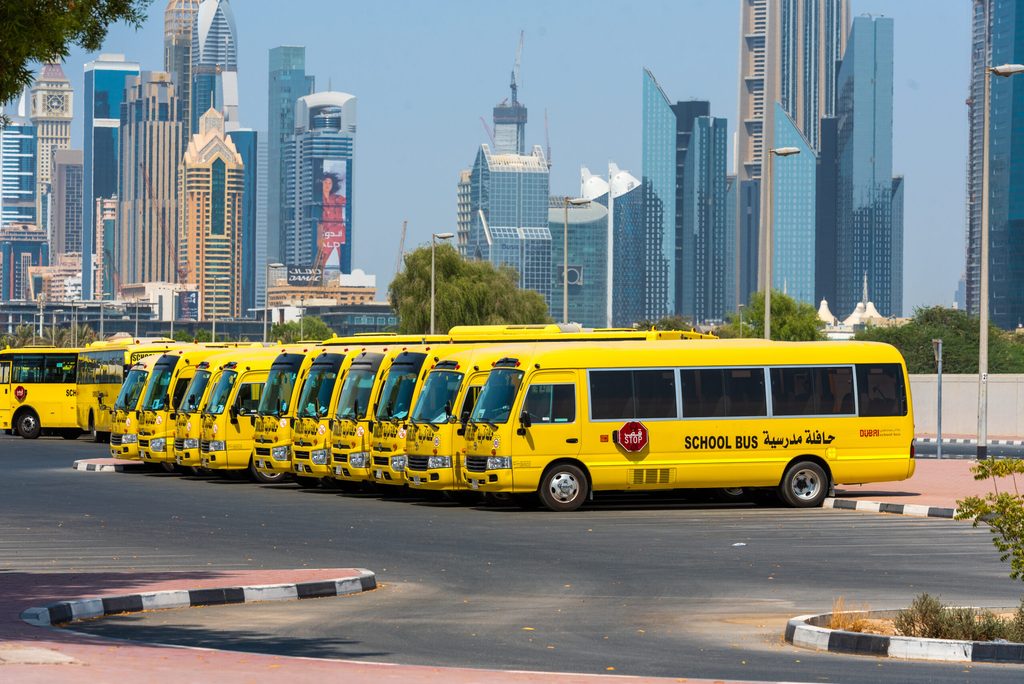
In Sharjah, a single press of an emergency button on a school bus can immediately send key information to Sharjah Police, including the vehicle’s location, identification details and information about the incident. This allows officers to quickly evaluate the situation, communicate with people on board and coordinate an appropriate emergency response.
The technology-based safety system was highlighted during Sharjah Police’s Aman Ya Biladi programme, hosted by Major Saud Al Shaiba and Captain Saud Busim.
The programme examined measures aimed at improving student safety throughout their daily journeys, from the time they leave home for school until they return.
Major Saif Mohammed Al Shaer, Director of the Systems Branch at Sharjah Police, and Abdul Rahman Ibrahim of the Sharjah Private Education Authority discussed key aspects of the school safety system. They highlighted emergency response procedures, awareness initiatives and the collective role of schools, transport operators, drivers, supervisors and families in keeping students safe.
The emergency service operates through the Ma’man platform, which was introduced in 2019 as part of the “Your Children Are Safe” initiative by the Sharjah Private Education Authority. The initiative was launched under the directives of His Highness Dr Sheikh Sultan bin Muhammad Al Qasimi, Member of the Supreme Council and Ruler of Sharjah.
The initiative was designed to address a key challenge in school transport — ensuring authorities receive accurate information without delay when an emergency occurs.
One-button emergency alert
Major Al Shaer explained that the system was introduced after authorities identified delays in accessing critical details during incidents, particularly a bus’s precise location and the nature of the emergency.
If a school bus breaks down, is involved in an accident, or encounters a medical or other emergency, the supervisor can press an emergency button on a tablet linked to the vehicle’s smart-board system.
The alert is immediately transmitted to the Sharjah Police operations centre, providing the bus’s identification details, location and the time the report was made. The supervisor can also specify the reason for triggering the emergency alert, helping police assess the situation and respond accordingly.
Once an alert is received, staff at the operations centre contact the bus driver or supervisor to confirm the details and determine the appropriate level of response. Police can then coordinate with the relevant authorities, dispatch assistance to the location and monitor the situation until it is resolved and the case is officially closed.
Major Al Shaer said the platform gives the operations centre access to essential information while enabling direct communication with people on board the bus.
If communication through the platform is unsuccessful, police can use the contact details registered in the system. A patrol may also be sent to the location to assess the situation directly.
Seven years of development
Ibrahim said the initiative has undergone significant development since it was introduced in 2019, with authorities gradually shifting from conventional monitoring methods to quicker and more efficient digital information-sharing.
One of the early challenges was managing the high volume of school bus trips each day while ensuring that accurate information could be shared quickly whenever an incident occurred.
To address this, a partnership was established with the Sharjah Police operations centre, giving authorities direct access to essential information such as bus locations, vehicle details and information about transport supervisors.
Ahead of the service’s rollout, authorities organised meetings, training programmes and practical drills for bus supervisors. The sessions covered key safety procedures, including managing students as they board and leave buses during morning and afternoon trips.
Training and system testing have continued since then. Sharjah Police and technical teams regularly carry out tests and review past incidents, while feedback from drivers and supervisors is used to identify areas for improvement and further strengthen the system.
The service is currently operational across Sharjah city, while authorities are considering plans to expand it further.
Parents can track school buses in real time
The Ma’man platform goes beyond handling emergencies. Through the broader “Your Children Are Safe” system, parents can track school buses in real time, follow their routes and locations, and receive information on when their children board and leave the bus during morning and afternoon trips.
School buses are also fitted with a range of monitoring and safety technologies, including cameras. Relevant information from these systems can be shared with the concerned authorities and other authorised parties, further strengthening student safety and oversight.
Dr Raed Sobhi, principal of Taryam American Private School, said the platform has helped give parents, students, schools and government authorities greater confidence in the safety of school transport.
He explained that the system provides key details about each bus, as well as information on the driver, supervisor and students on board. Having this information readily available enables schools and authorities to act more quickly in the event of an emergency.
The platform also records student attendance during both the morning journey to school and the afternoon trip home.
What happens when a school bus stops unexpectedly?
If a school bus makes an unplanned stop, authorities can pinpoint its location using the platform’s integrated mapping system.
For minor issues, the bus supervisor can directly contact the school administration for assistance. In more serious situations, such as a road accident or medical emergency, the platform’s emergency alert function can be activated to request immediate support.
The initial priority in any incident is to confirm the safety of all students on board. Parents can then be notified of any disruption or delay, while a replacement bus can be arranged when required.
The live-tracking feature also enables parents to follow the bus’s location in real time and see how close it is to reaching their home.
Drivers and supervisors receive safety training
Officials emphasised that while technology plays an important role in improving school transport safety, it cannot ensure student safety on its own.
Ahead of each academic year, schools, transport operators, drivers and supervisors undergo training on how to use the system effectively. The sessions cover how to identify situations that require an emergency alert and the procedures that should be followed once a report has been submitted.
Schools and transport companies are also responsible for ensuring that buses are properly connected to the system before the new academic year begins.
Ibrahim said schools, drivers and supervisors have shown strong cooperation with the programme, describing them as important partners in its implementation and continued success.
Students are also included in awareness campaigns, which encourage them to avoid distracting drivers, follow safety rules when getting on and off buses, and report any situation that could put their safety or that of others at risk.
Students also play a role in bus safety
Major Al Shaer said students have an important part to play in maintaining safety on school buses. If they notice anything unusual, such as a fellow student falling or suffering an injury, they should immediately inform the bus supervisor.
Minor incidents can usually be handled by the supervisor. However, in more serious situations, the supervisor can alert the operations centre, which will assess the incident and coordinate the necessary response.
Officials said a key advantage of the system is the improved accuracy and speed of information available during emergencies, particularly the precise location of the bus and the exact time an alert is triggered.
What should parents do?
Parents who observe unsafe behaviour involving a school bus are advised against attempting to stop or intercept the vehicle themselves.
Parents can report concerns directly to the school or bus supervisor when contact details are available. They can also contact Sharjah Police on 901 to report unsafe behaviour or other concerns involving school transport.
Major Al Shaer said the police call centre can reach supervisors registered on the Ma’man system and take the necessary steps based on the nature of the report.
Parents are also encouraged to take their children’s concerns seriously, particularly if they say they feel frightened, uncomfortable or unsafe. Any concerns involving bullying, inappropriate behaviour or other safety issues should be brought to the school’s attention.
Dr Sobhi said schools should properly investigate such reports rather than focusing solely on disciplinary action. Schools also organise safety drills, awareness sessions and educational programmes addressing road safety, student conduct and wider security concerns.
School bus safety begins at home
Officials emphasised that parents play a central role in keeping children safe during their daily school journeys.
Children should be encouraged to follow school bus safety rules, respect drivers and supervisors, avoid distracting the driver or interfering with safety equipment, and immediately report anything that makes them feel uncomfortable or unsafe.
Drivers, meanwhile, are expected to comply with road safety regulations and avoid traffic violations. As roadworks and infrastructure projects can affect some school bus routes, drivers are also advised to monitor road conditions and take alternative routes when necessary.
“The partnership starts at home,” Major Al Shaer said, highlighting parents’ responsibility in teaching children appropriate behaviour on school buses, encouraging respect for drivers and supervisors, and reporting any safety concerns.
Officials said the overall goal is simple: to make every school journey as safe as possible and ensure that every student returns home safely.
Key points for parents
- Track the bus: Follow the school bus route and check its live location through the Ma’man platform.
- Monitor boarding: Check when your child gets on and off the bus during school journeys.
- Know the emergency system: Supervisors can activate an emergency alert when police or other assistance is required.
- Do not intercept buses: If you witness unsafe behaviour, report it rather than attempting to stop the bus yourself.
- Call 901: Contact Sharjah Police on 901 to report unsafe situations involving school transport.
- Listen to your child: Take concerns about fear, bullying or unsafe behaviour seriously and inform the school when necessary.
- Teach bus safety: Remind children not to distract the driver and to follow safety procedures when boarding and leaving the bus.
- Understand the driver’s role: Drivers must comply with road safety rules and be familiar with procedures for handling emergencies.
- Monitor road conditions: Drivers should stay informed about roadworks and other disruptions and use alternative routes when required.

