

Dubai Police use AI-driven systems to identify accident-prone areas, track dangerous driving behaviour, and accelerate responses to road violations across the emirate.
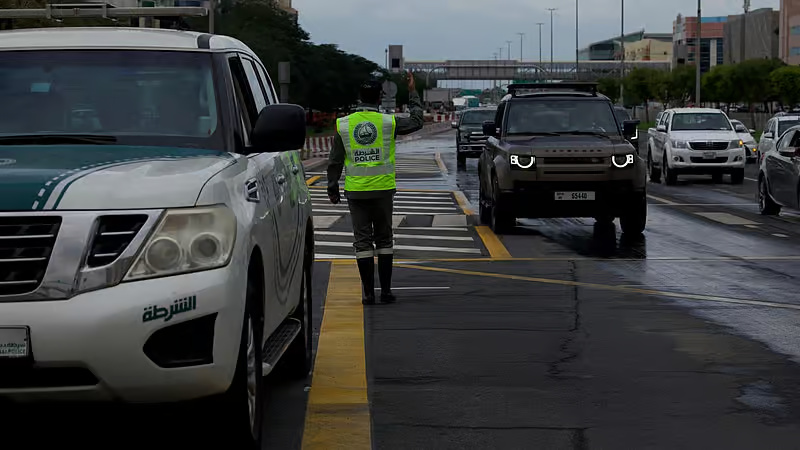
From predicting accident hotspots to detecting speeding vehicles in real time, Dubai Police are increasingly relying on artificial intelligence and smart traffic systems to enhance road safety across the emirate.
By analysing live traffic data, vehicle speeds and driver behaviour, authorities are now able to identify potential risks before they develop into serious incidents, enabling faster and more effective intervention by officers.
Speaking to, Dubai Police said its advanced traffic management system continuously analyses real-time traffic data, including vehicle volumes, speeds, and movement patterns across the emirate.
The authority combines real-time data with historical records to identify high-risk trends and locations that may require intervention, enabling officers to take preventive action before incidents escalate.
“When high speeds are recorded in a specific area, the location can be covered by radar systems and targeted enforcement measures,” Dubai Police said, adding that this approach helps ensure timely intervention and improves road safety.
How do these technologies help monitor traffic?
According to the force, a range of smart technologies now supports traffic monitoring and enforcement. These include predictive systems that provide early warnings of potential road risks, as well as AI-powered platforms that monitor driver behaviour in real time.
Dubai Police said the technology is designed to continuously learn and adapt, allowing authorities to expand its use across different types of traffic violations. The systems have also supported the development of specialised tools to detect vehicles that generate excessive noise and disturbance.
Beyond enforcement, predictive analytics also plays a key role in planning for major events and managing traffic flow. By analysing driver behaviour and traffic patterns, authorities can anticipate congestion, allocate resources more effectively, and improve mobility across the city.
Dubai Police highlighted the close integration between smart technologies and field operations. Traffic patrols are connected to a network of cameras, monitoring systems and command centres, enabling officers to receive instant updates on accidents, violations and congestion.
This allows patrol teams to respond more quickly and efficiently, while the data generated helps direct officers to locations requiring immediate attention.
Why traffic awareness campaigns are important
Dubai Police stressed that awareness campaigns are just as important as enforcement in improving road safety.
“Traffic awareness campaigns help build positive driving behaviour and strengthen understanding of traffic laws, while legal and regulatory measures act as a deterrent against dangerous conduct,” the force said.
Authorities noted that combining education with enforcement delivers the strongest results, encouraging motorists to comply with traffic regulations through both awareness and accountability.
Looking ahead, Dubai Police said future innovations will further expand the use of AI to analyse both historical and real-time traffic data, identify high-risk driving behaviours, and predict locations that may be more vulnerable to accidents.

