

High temperatures can place extra strain on tyres, making a quick check before driving essential, according to Michelin.
Almost every serious crash on UAE roads happens on a clear day.
That finding is contained in Ministry of Interior road safety data for 2024. Of the 384 people killed and 6,062 injured on UAE roads that year, 98 per cent of casualties occurred in good weather and clear road conditions. There was no fog or rain.
The pressure has not eased. Ministry of Interior figures for 2025 show a further rise in major accidents and casualties as the number of vehicles and newly issued driving licences increased.
The problem is rarely the weather. It is preparation. And one of the most useful checks a driver can make takes about five minutes.
Checks that take five minutes
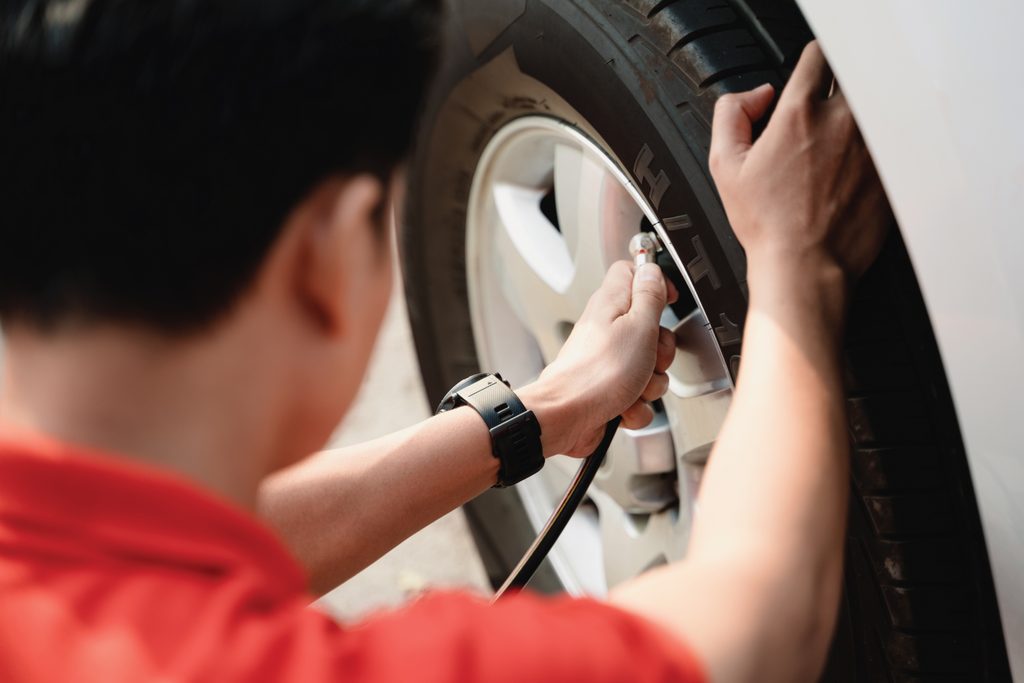
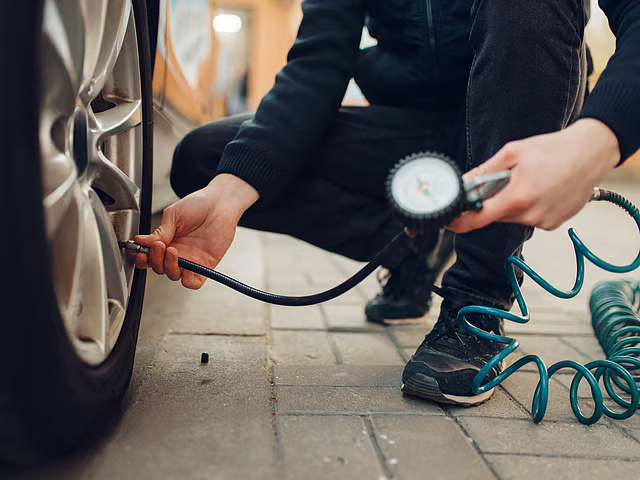
Start with tyre pressure. Check the tyres when they are cold, ideally before driving, and use the recommended pressure listed on the vehicle’s door-jamb sticker. Do not use the figure moulded into the tyre sidewall, which indicates the tyre’s maximum pressure rather than the vehicle’s recommended setting. Remember to check the spare as well.
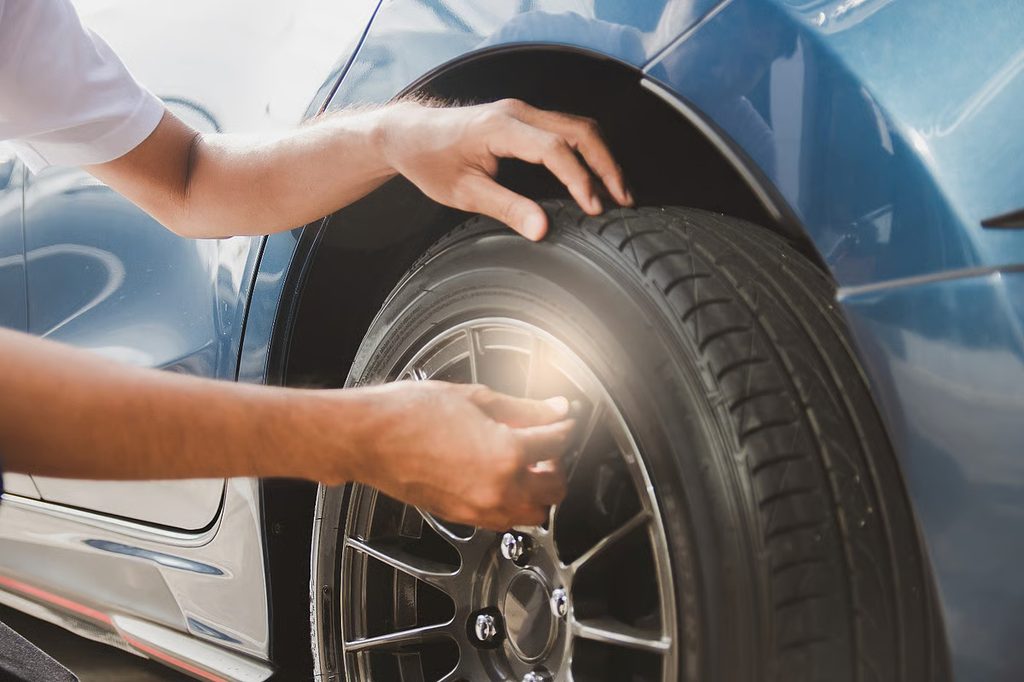
Inspect the sidewalls. Look for cracks, bulges and cuts, as well as uneven tread wear. Uneven wear can indicate problems with wheel alignment or tyre pressure.
Check the tyre’s age. Every tyre carries a four-digit manufacturing code on its sidewall showing the week and year it was made. Rubber hardens and loses elasticity over time, regardless of how much tread remains, meaning a tyre can have legal tread depth but still be past its safe service life. In Abu Dhabi, driving on tyres beyond their expiry date carries a Dh500 fine, four black points and a seven-day vehicle impoundment — the same penalty as driving on bald tyres.
Consider the load. A boot packed for a week away changes the load on the vehicle and may require different tyre pressures. The recommended pressure for a fully loaded vehicle is usually listed alongside the standard figure on the door-jamb sticker.
Why heat makes this urgent
Air expands as it heats up, so a tyre set to the correct pressure at 6am will naturally show a higher reading by midday. Drivers who release air to bring the pressure back down can leave the tyre underinflated — a condition associated with an increased risk of tyre failure. An underinflated tyre flexes more through its sidewall, generating additional heat on top of the heat transferred from the road.
Sharjah Police identify five recurring factors behind summer tyre blowouts: overloading, incorrect tyre pressure, excessive speed, road friction and previous tyre misuse. Four of those factors can be addressed before a vehicle even moves.
Enforcement figures underline the scale of the problem. More than 37,900 drivers across the UAE were fined in 2024 for worn or non-compliant tyres — roughly one every 14 minutes. The penalty was Dh500, four black points and a seven-day vehicle impoundment. In Dubai, police recorded 3,589 vehicle safety violations in the first five months of 2026, including 826 involving expired tyres.
The consequences can be serious. Dubai Police recorded 34 road deaths during the 2024 summer period, up from 27 the previous year. Major General Abdullah Al Ghaithi of Dubai Police has described burst tyres as “the top causes behind traffic accidents in the summer due to the high temperatures”.
What Michelin builds into the tyre
Michelin validates its tyres against the temperatures, road surfaces and long highway distances that define driving in this region, rather than against temperate European conditions.
Three technologies in its current passenger-car range are designed to address the effects of heat and wear on grip. MaxTouch uses a contact-patch design to distribute braking and acceleration forces more evenly across the tread, helping limit localised heat build-up. EverGrip and EverTread govern the tyre’s compound and tread design, helping maintain water evacuation and braking performance as the tyre wears rather than allowing performance to deteriorate sharply towards the end of its life.
Michelin’s current premium touring tyre carries an A rating for wet grip under European labelling rules. It also delivers 4 per cent shorter wet braking distances when new compared with its predecessor, while offering 18 per cent more mileage.
That final figure matters more than it might appear. A tyre that performs well only when new can stop providing the same level of protection midway through its service life — without any dashboard warning to tell the driver.
All that engineering, however, assumes one thing: the tyre is correctly inflated, in good condition and within its service life. That part remains in the driver’s hands. It takes five minutes, once a month, to check — ideally before the day’s heat builds.

