

Emirates to launch second daily A350 service from August 8, replacing Boeing 777 flight.
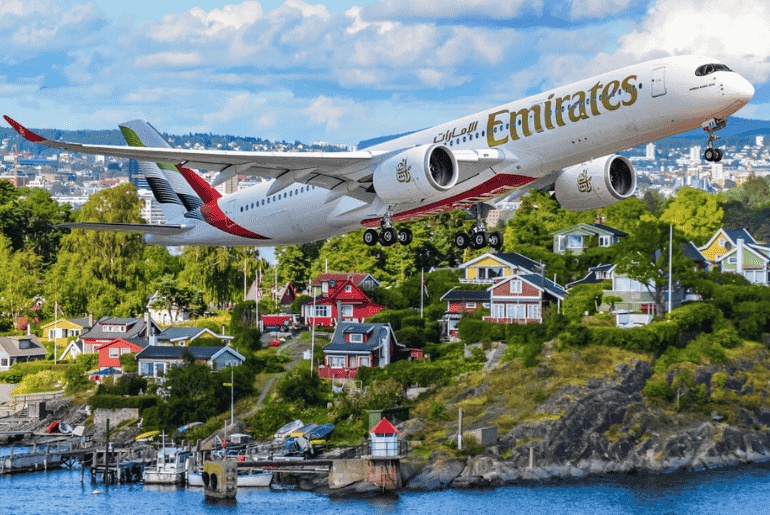
Dubai: Emirates, Dubai’s flagship airline, announced on Wednesday that it will introduce a second Airbus A350 service to Colombo, Sri Lanka.
The additional flight on the popular Dubai-Colombo route will begin operations on August 8, offering travellers more opportunities to experience the airline’s Premium Economy cabin.
The new aircraft deployment will replace the Boeing 777 currently operating flight EK648/649 with an Airbus A350. Emirates currently runs four daily services between Dubai and Colombo, using a combination of Airbus A350 and Boeing 777 aircraft.
The move comes as Emirates continues to expand the deployment of its Airbus A350 fleet across its global network. The airline introduced the A350 on the Colombo route in March 2025, becoming the first to offer its Premium Economy cabin in Sri Lanka.
Flight timings
The new Airbus A350 service will operate as flight EK648, departing Dubai International Airport at 4.10pm and arriving at Colombo’s Bandaranaike International Airport at 10.10pm.
The return service, EK649, will depart Colombo at 2.55am and reach Dubai at 5.50am. All timings are local.
Together with flight EK654/655, the additional service will provide passengers with more choice in travel schedules while increasing the availability of Premium Economy seats on the route.
New aircraft
The Airbus A350 is the latest addition to Emirates’ all-widebody fleet, featuring upgraded cabin interiors, wider aisles, higher ceilings, enhanced Wi-Fi connectivity, and 4K entertainment screens across all classes.
The aircraft’s inflight entertainment system supports multiple languages, including Tamil and Sinhala, providing a more personalised experience for passengers.
Emirates currently operates three daily non-stop flights between Dubai and Colombo, along with one daily service connecting through Malé.
The year also marks 40 years since Emirates launched operations to Colombo. Today, the airline links the Sri Lankan city to nearly 140 destinations across its global network, supporting tourism, trade, and connectivity between the two markets.

