

Middle East crude flows rebound, but shipping disruptions continue.
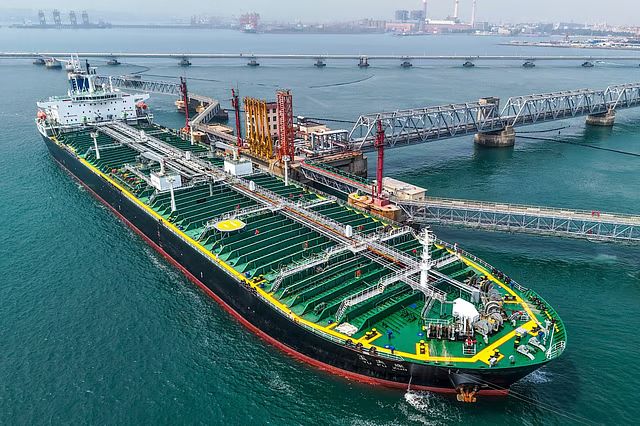
The US-Israel war with Iran has forced oil producers to turn to alternative pipelines, offshore transfers and tanker shuttles to keep crude flowing.
Saudi Arabia and the United Arab Emirates have adapted to disruptions in the Strait of Hormuz, helping sustain exports despite mounting shipping challenges.
As a result, Middle East oil exports have risen to more than 24 million barrels a day, up from 23.3 million before the war began, according to energy intelligence firm Kpler.
By diverting more crude through pipelines to export terminals outside the Strait of Hormuz, Saudi Arabia and the UAE have helped sustain regional oil flows despite heightened security risks.
However, the recovery in export volumes has come at a significant cost, according to the International Energy Agency (IEA). Iranian attacks on shipping and the threat of further escalation have driven up freight rates, war-risk insurance premiums and other costs associated with transporting oil through the region.
“The volume recovered. The route did not,” Kpler said, noting that 40% of the region’s crude exports bypassed Hormuz in September, compared with 17% before the war.
Key figures: How Gulf oil exports recovered
- 24.6 million barrels per day (bopd): Average Middle East oil exports, excluding Iran, in the week to October 18, according to energy intelligence firm Kpler.
- 23.3 million bopd: Comparable average before the war.
- 16.5 million bopd: Crude exports from the region, excluding Iran, between September 1 and 28, indicating a recovery in shipments.
- 40%: Share of regional crude exports that bypassed the Strait of Hormuz in September, up from 17% before the war.
- Alternative export routes: Saudi and UAE pipelines have helped redirect millions of barrels towards terminals on the Red Sea and Gulf of Oman.
- Rising ship-to-ship transfers: More than 70% of crude crossing Hormuz in August was transferred between tankers offshore near Fujairah or Sohar.
- Flexible Saudi export routes: Saudi Arabia shifted shipments between Gulf and Red Sea terminals as disruptions affected loading operations.
- Higher shipping costs: Tanker charter rates and war-risk insurance premiums have climbed, making alternative routes more expensive and leaving shipments vulnerable to further attacks, according to the Financial Times.
- Iranian exports remain constrained: The recovery figures exclude Iran, whose shipments remain affected by the US blockade, according to the report.
How exporters rebuilt their routes
Kpler said the region has “rebuilt” its oil export network around three main channels: direct shipments through the Strait of Hormuz, exports from ports in the Gulf of Oman and shipments routed through the Red Sea.
Saudi Arabia has increased crude shipments through its 1,201-kilometre East-West Pipeline, also known as Petroline. The pipeline transports oil from fields in the Eastern Province to Yanbu on the Red Sea, allowing exports to bypass Hormuz.
The UAE has also expanded its use of the 406-kilometre Habshan–Fujairah pipeline, which connects inland oil fields to an export terminal outside the strait.
However, producers without comparable bypass infrastructure remain heavily dependent on the Strait of Hormuz, Kpler noted.
Three routes sustain Gulf oil exports
September shipments were distributed across three main export channels:
- 60% — Strait of Hormuz: About 9.9 million barrels per day (mbd) crossed the strait, with shuttle tankers playing a key role.
- 23% — Gulf of Oman: Crude was loaded at terminals outside the strait, primarily at Fujairah in the UAE.
- 17% — Red Sea: Shipments moved through Saudi Arabia’s Red Sea export network.
Before the war, about 83% of the region’s crude exports passed through Hormuz. The shift towards alternative routes has reduced dependence on the narrow waterway, although it remains the primary corridor for regional oil shipments.
A ‘shuttle system’ emerges

A network of shuttle tankers has helped keep oil moving despite heightened security risks. Vessels load crude inside the Gulf, with some reportedly switching off their automatic identification systems (AIS) while crossing Hormuz before transferring cargo to other tankers near Fujairah or Sohar for onward delivery.
More than 70% of crude crossing the strait in August changed tankers offshore, according to Kpler, highlighting the growing role of ship-to-ship transfers in sustaining regional exports.
Some vessels switch off their identification signals, making it harder to track shipments. Analysts must therefore combine satellite imagery, vessel movements, loading data and destination checks to estimate export volumes. Figures may be revised as additional cargo movements are confirmed.
Does the “above 90%” claim hold?
The answer depends on the period covered, the geographic scope and whether Iranian exports are included.
Kpler’s September analysis indicated that non-Iranian oil exports had recovered to their prewar average. Including Iran, regional exports reached about 91% of prewar levels.
Exports exceed prewar levels
In a later period, regional crude shipments surpassed prewar levels. The Wall Street Journal, citing Kpler data, reported that exports exceeded 24 million barrels per day in the week to October 18, compared with a prewar average of 23.3 million barrels per day.
The International Energy Agency (IEA), however, offered a more cautious assessment for September, estimating that Gulf crude exports had reached 13.9 million barrels per day, or more than 75% of prewar levels.
The differing estimates reflect variations in reporting periods, geographic coverage and the treatment of Iranian exports. Any recovery claim should therefore specify the period measured and whether it covers crude shipments alone or a broader category of oil exports.
Tanker transfers reshape the shipping network
An increasing share of crude shipments now involves transferring cargo between vessels offshore rather than transporting oil directly from loading terminals to final destinations. These ship-to-ship transfers have helped exporters reroute supplies and sustain deliveries amid security risks and disruptions to established shipping routes.
In August, more than 70% of crude passing through the Strait of Hormuz was transferred between tankers offshore near Fujairah or Sohar, according to Kpler.
Very large crude carriers (VLCCs) have become central to this system, making shuttle voyages roughly every 16 days to transport crude between locations and larger vessels for onward delivery.
The practice has complicated conventional shipping surveillance. Some tankers switch off their automatic identification system (AIS) transponders, while ship-to-ship transfers and changes in vessel draught make cargo movements more difficult to track.

