

Gold prices rise as declining oil prices and a weaker US dollar support precious metals, while investors look to upcoming US inflation figures for signals on the Federal Reserve’s interest rate decisions.
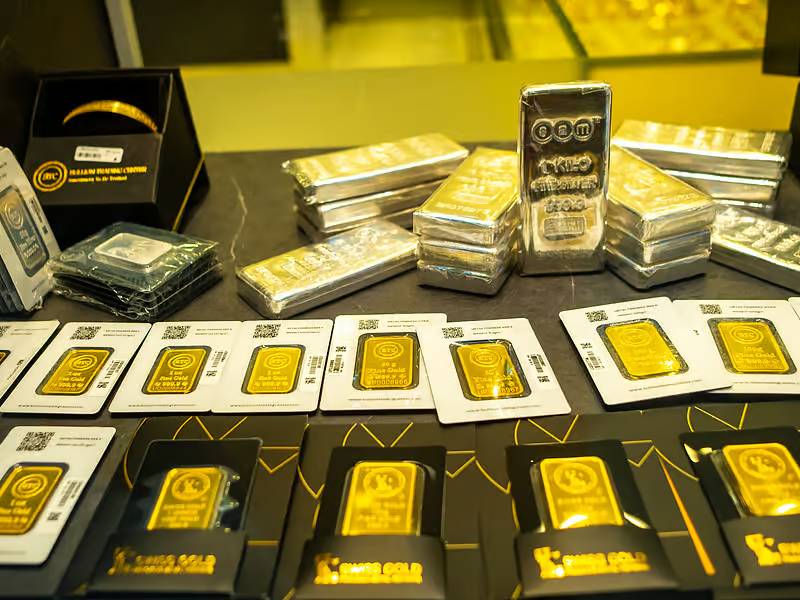
Dubai: Gold prices recorded a modest increase in Dubai on Tuesday morning, recovering slightly after giving up some of their earlier gains during Monday evening’s trading session.
According to figures released by the Dubai Jewellery Group, 24-karat gold was priced at Dh505.75 per gram, while 22-karat gold traded at Dh468.25 per gram. The price of 21-karat gold stood at Dh449 per gram.
In international markets, spot gold climbed 0.8 per cent to reach $4,199 per ounce, supported by declining oil prices and a relatively weaker US dollar.
Investors are now closely monitoring upcoming US inflation figures for indications of the Federal Reserve’s future interest-rate decisions.
Lower Oil Prices and Weaker Dollar Support Gold
Naeem Aslam, Chief Investment Officer at Zaye Capital Markets, explained that the recent recovery in gold prices reflects improving market conditions for precious metals.
He noted that falling energy costs and a comparatively subdued US dollar have helped ease some of the pressure on bullion.
According to Aslam, US President Donald Trump’s announcement of a proposed energy ceasefire between Russia and Ukraine, together with an agreement to increase Russian diesel supplies, has contributed to the decline in global oil prices.
He explained that lower energy prices could benefit gold by reducing inflationary pressures and weakening expectations that central banks will need to maintain restrictive monetary policies.
However, Aslam cautioned that a sustained increase in gold prices would depend on whether US Treasury yields and the dollar continue to ease.
Geopolitical Uncertainty Continues to Influence Gold Demand
Geopolitical developments remain a significant factor affecting investor interest in gold, which is traditionally viewed as a safe-haven asset during periods of uncertainty.
Aslam pointed out that although President Trump had announced an immediate energy ceasefire, continued attacks on energy infrastructure have raised concerns about whether the proposed agreement can be effectively implemented.
These developments have kept the possibility of further disruptions to global energy supplies in focus.
He explained that a meaningful reduction in geopolitical tensions could temporarily weaken demand for gold and other defensive investments, particularly if investors shift more funds towards equities.
On the other hand, renewed interruptions to energy shipments or setbacks in diplomatic negotiations could encourage investors to increase their exposure to gold.
Aslam emphasised that the future direction of bullion prices will depend on the balance between declining inflation expectations and changing geopolitical risks.
The key question, he explained, is whether the impact of lower oil prices on inflation and monetary policy expectations will be strong enough to offset any reduction in demand for gold as a safe-haven investment.

