

Flight Disruptions, Fuel Prices and Shipping Risks Remain Concerns as Strait of Hormuz and Yemen Crisis Escalates.
The ongoing confrontation between the United States and Iran has become increasingly complicated, with several regional developments adding to security concerns across the Middle East.
The situation is being shaped by three major flashpoints: Houthi attacks targeting Saudi Arabia, incidents involving commercial vessels near the Strait of Hormuz, and growing diplomatic tensions between Iran, the United Kingdom and the United States.
These developments are closely linked to the broader military and diplomatic standoff between Washington and Tehran, rather than being entirely separate regional incidents.
For residents of the UAE, the most immediate concerns involve possible disruptions to air travel, maritime trade, fuel prices and regional supply chains, rather than necessarily an immediate threat to their personal safety.
Continued uncertainty surrounding the Strait of Hormuz, the conflict in Yemen and security developments in Saudi Arabia has increased attention on the potential economic and travel consequences across the Gulf.
Latest Developments in the US-Iran Standoff
UAE Flights Face Delays and Cancellations
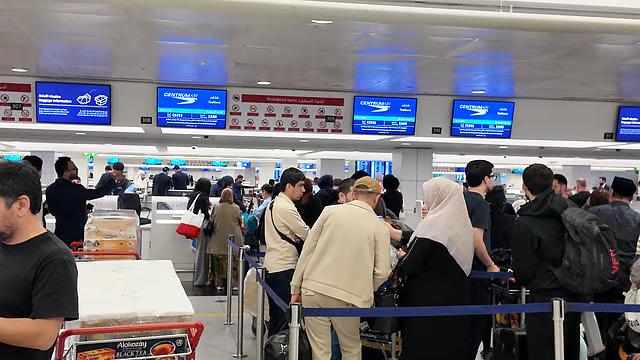
Airlines operating from the UAE experienced flight delays and cancellations on October 12, 2026, as regional security concerns and operational challenges affected several routes.
Flights connecting the UAE with Saudi Arabian destinations, including Riyadh, Jeddah, Dammam and Abha, were among those disrupted.
Some international and regional services also remained suspended, delayed or rescheduled amid the evolving security situation.
Travellers have been advised to monitor airline announcements and confirm their flight status before heading to the airport.
Strait of Hormuz Shipping Security Remains a Major Concern
Maritime security around the Strait of Hormuz continues to attract international attention following reports of attacks on commercial shipping.
At least three vessels were reportedly struck by unidentified projectiles as tensions intensified around the strategically important waterway.
According to the United Kingdom Maritime Trade Operations (UKMTO), Iranian forces attacked six vessels travelling through the strait on Sunday, October 11, 2026.
The reported incidents represented the highest number of vessel attacks recorded in a single day during the conflict.
The developments have raised further concerns about the safety of commercial shipping and the possibility of additional disruptions to international trade routes passing through the Gulf.
UAE Reaffirms Solidarity with Saudi Arabia
The UAE has cautioned against attempts to create divisions between Saudi Arabia and the Emirates amid heightened regional tensions.
Abdullah bin Mohammed bin Butti Al Hamed, Chairman of the UAE National Media Authority, expressed support for Saudi Arabia following Houthi attacks on King Khalid International Airport in Riyadh.
He emphasised the close relationship between the two countries and conveyed solidarity with those affected by the attacks.
Saudi authorities have meanwhile strengthened security preparedness in response to the recent incidents.
Yemen Conflict Intensifies as Saudi Arabia Strengthens Defences
The conflict involving Yemen’s Houthi movement has continued to escalate, adding pressure to the wider regional security situation.
Yemeni government forces reported that 950 Houthi fighters had been killed during 1,879 military operations conducted under Operation Dawn of Yemen.
Meanwhile, Saudi Arabia has increased its security readiness following Houthi attacks, including missile incidents targeting Riyadh.
The attacks have also renewed attention on the effectiveness of Saudi air-defence systems and the challenges posed by missile threats.
Iran Rejects Allegations of Involvement in UK-Linked Plot
Diplomatic tensions have increased after Iran challenged the United Kingdom to provide evidence supporting allegations involving the Islamic Revolutionary Guard Corps (IRGC).
The accusations relate to an alleged plot connected to RAF Fairford, a British military airbase.
Tehran has disputed the claims and demanded proof of the IRGC’s involvement.
The disagreement has introduced another source of diplomatic friction into the broader confrontation involving Iran and Western governments.
Regional Conflict Raises Economic Concerns
The economic consequences of the conflict are becoming increasingly significant for countries across the Middle East.
The International Monetary Fund has lowered its regional economic growth forecast amid the ongoing war and the closure of the Strait of Hormuz.
Disruptions to maritime trade and energy transportation have raised concerns about supply chains, shipping costs and wider economic activity.
Currency movements are also affecting expatriate communities in the UAE.
The Indian rupee has recovered against other currencies, influencing the amount of money Indian expatriates receive when converting UAE dirhams for remittances.
Saudi Arabia Remains on Heightened Security Alert
Saudi authorities have stepped up security measures following attacks attributed to Yemen’s Houthi movement, including incidents targeting Riyadh.
Saudi leaders have visited people injured in the attack on King Khalid International Airport and pledged continued support and medical care for those affected.
Reports of casualties and injuries have heightened concerns about the security situation, while the Kingdom continues to strengthen its preparedness against further threats.
IRGC Chief Warns Against Foreign Intervention in Hormuz
Ahmad Vahidi, Chief of Iran’s Islamic Revolutionary Guard Corps, warned foreign powers on Monday against threatening or interfering in the Strait of Hormuz and the Gulf.
His remarks reinforced Tehran’s opposition to an expanded foreign military presence in the strategically important waterway.
The warning comes amid growing international concern over shipping security and the possibility of further military escalation in the region.
Trump Dismisses Claims of Chinese and Russian Assistance to Iran
US President Donald Trump has rejected speculation that China and Russia are providing significant assistance to Iran during the ongoing confrontation.
In remarks shared by the White House through its Rapid Response account on X, Trump said he did not believe either country was meaningfully supporting Tehran.
He suggested that any assistance, if taking place, would be limited, arguing that both countries had too much at stake and that Washington would quickly become aware of such involvement.
His comments came as international attention remained focused on the roles of major global powers in the escalating US-Iran dispute.
US Tightens Naval Blockade of Iranian Ports
The United States has stepped up enforcement of its naval blockade targeting Iranian ports, with reports indicating that several vessels have been disabled and 135 ships turned away since mid-July.
The intensified maritime restrictions come amid increasing security incidents in the Strait of Hormuz and limited progress in diplomatic negotiations between Washington and Tehran.
According to the US Central Command (CENTCOM), an American fighter aircraft struck the rear section of the Panama-flagged cargo vessel M/V Ocean Molica, also identified as Arika Sun, in the Gulf of Oman.
The strike reportedly disabled the ship’s propulsion system without causing injuries to crew members.
CENTCOM stated that the vessel had previously departed an Iranian port and allegedly attempted to breach the naval blockade despite receiving repeated warnings.
The incident highlights the growing military pressure surrounding Iranian maritime operations and the potential risks facing commercial vessels operating near the Gulf.
What UAE Residents Should Monitor Amid Regional Tensions
As the US-Iran confrontation continues, residents in the UAE are encouraged to remain informed about developments that could affect travel, trade, energy prices and regional security.
Air Travel and Airport Updates
Although there is no nationwide suspension of flights across the UAE, individual routes may experience delays, cancellations or schedule changes as regional security conditions evolve.
Airlines may also adjust flight paths, transit arrangements and operational procedures in response to changing circumstances.
Passengers should regularly review official airline and airport announcements, particularly when travelling to destinations affected by the conflict.
Shipping Disruptions and Supply-Chain Risks
Maritime trade remains an important area of concern following reports that three commercial vessels were struck during the escalating Strait of Hormuz crisis.
The disruption to regional shipping activity, combined with the International Monetary Fund’s reduced growth outlook for the Middle East, has increased concerns about broader economic consequences.
Prolonged interruptions to shipping routes could result in longer delivery times, increased freight charges and additional pressure on regional supply chains.
Such developments may eventually influence the cost and availability of imported goods.
Fuel Prices and Energy Market Volatility
The closure of the Strait of Hormuz and the wider regional conflict continue to influence global energy market expectations.
Disruptions to oil transportation and uncertainty surrounding regional energy supplies could contribute to fluctuations in international oil prices.
These movements may affect fuel costs, transportation expenses and inflation expectations in the UAE and other economies.
Public Safety and Official Security Advisories
Residents are encouraged to obtain security information from official UAE government agencies rather than relying on unverified social media posts or circulating rumours.
Authorities’ announcements should remain the primary source for reliable updates on public safety and regional developments.
Emergency Preparedness and Public Instructions
In the event of an emergency, residents should follow instructions issued through authorised UAE government and emergency communication channels.
These may include guidance relating to travel restrictions, evacuation procedures, shelter arrangements or other precautionary measures, depending on the situation.
Staying informed through official sources can help residents respond appropriately to any changes in security conditions.
Latest UAE Flight Status and Travel Advisory
Travellers departing from or arriving in the UAE are advised to confirm their flight status directly with their airline before travelling to the airport.
Flight schedules and operating arrangements may change with limited notice as airlines respond to evolving regional security conditions.
The UAE’s suspension of services operated by Iranian airlines to and from the country remains in effect until further notice.
Passengers planning to travel to or from Tel Aviv have also been advised to monitor airline announcements following the recent security incident involving flydubai flight FZ1073.
Travellers should continue checking official updates for information about possible delays, cancellations, route adjustments or other operational changes.

