

UAE’s humid weather explained: Why moisture builds up even when rain stays away.
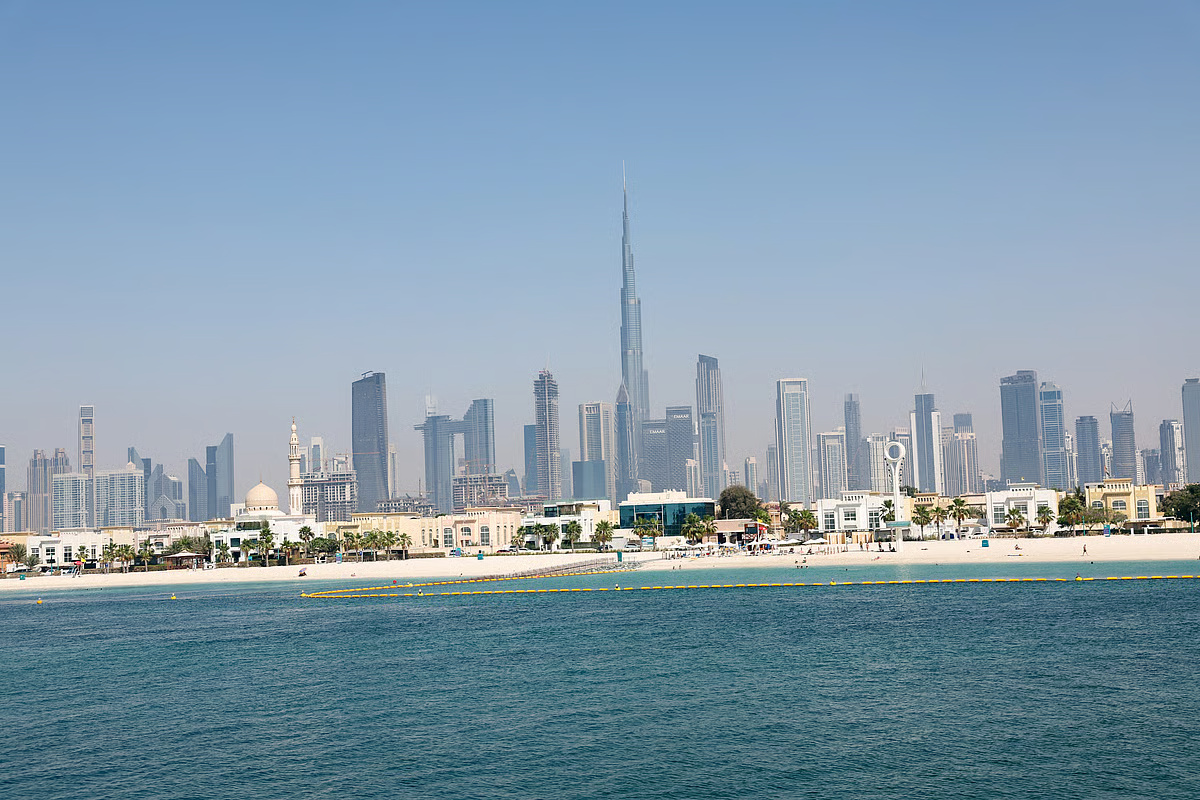
Dubai: Few weather phenomena leave UAE residents as puzzled as the intense humidity of summer. On some days, the air can feel heavy and uncomfortable, with humidity levels rising above 90 per cent, yet the skies remain clear and rainfall stays away.
So where does this moisture come from? Why does it not turn into rain? And what does a humidity reading of 60 per cent actually tell us about the air?
Understanding the science behind UAE humidity reveals why the country can experience extremely moist conditions even without clouds or showers. The combination of high temperatures, warm seas and atmospheric conditions creates the sticky summer weather familiar across the Emirates.
Meteorologists explain that the key lies not simply in the amount of moisture in the air, but in how that moisture moves, spreads and interacts with atmospheric conditions.
“Humidity alone does not produce rain,” Ibrahim Al Jarwan, Chairman of the Emirates Astronomical Society and a member of the Arab Union for Astronomy and Space Sciences, told Gulf News.
For rainfall to occur, moist air must rise high into the atmosphere, where it cools and condenses to form clouds. The water droplets within those clouds then need to grow large and heavy enough to fall as rain.
During much of the UAE’s summer, these conditions are often missing. While moisture levels can be extremely high near the surface, the atmosphere may not provide the upward movement and cooling needed for cloud formation and rainfall.
Where does the humidity come from?
Contrary to common assumptions, the Arabian Gulf is not always the primary source of the UAE’s summer humidity.
According to Al Jarwan, the strongest rise in humidity from August onwards is often linked to “Kous” winds, which carry moisture from the Arabian Sea and the Gulf of Oman into the region.
These moist air currents can increase humidity levels across the UAE, creating the familiar heavy, sticky conditions during late summer even when skies remain clear and rainfall is limited.
These south-easterly winds transport moist air across large parts of the UAE, causing humidity levels to climb sharply and exceed 90 per cent on some days.
The same weather pattern can also help create towering convective clouds over the Hajar Mountains, occasionally bringing heavy thunderstorms to mountainous areas and the gravel plains stretching between Al Ain and Al Dhaid. It may also lead to low clouds and light drizzle along parts of the east coast.
The Arabian Gulf remains an important contributor, especially in coastal areas. Warm sea temperatures drive evaporation, adding moisture to the air over cities such as Dubai, Abu Dhabi, Sharjah and Ajman. Humidity levels can also rise after rainfall, as water from wet surfaces evaporates back into the atmosphere.
Why doesn’t all that moisture become rain?
High humidity simply means the air contains a large amount of water vapour. Rainfall, however, requires another key ingredient: rising air.
When moist air rises, it expands and cools. As temperatures drop, the air can no longer hold the same amount of water vapour, causing tiny droplets to condense and form clouds.
During much of the UAE’s summer, the atmosphere remains relatively stable, limiting large-scale upward movement of air across much of the country. As a result, moisture often stays concentrated in the lower atmosphere, creating hot and oppressive conditions without necessarily leading to rainfall.
Rainfall is more likely in areas where terrain forces moist air to rise. This is why summer thunderstorms are typically concentrated around the Hajar Mountains and eastern parts of the UAE, where rising air helps trigger cloud formation.
Why do Dubai and Abu Dhabi feel more humid than inland deserts?
One major reason summer conditions feel very different in coastal cities such as Dubai and Abu Dhabi compared with inland areas like Al Ain or the Empty Quarter is their closeness to the sea.
The Arabian Gulf acts as a constant source of moisture, with warm waters increasing evaporation and adding water vapour to the atmosphere. Inland desert areas, farther from these marine influences, often experience hotter but drier conditions.
Coastal cities are located beside large bodies of warm water that continuously release moisture into the atmosphere through evaporation.
While humidity across the UAE can be influenced by moist air arriving from the Arabian Sea and the Gulf of Oman, the Arabian Gulf remains a significant local source of moisture for coastal areas. This helps explain why cities along the coastline often experience higher humidity levels compared with inland desert regions.
As sea breezes develop, this moist marine air is carried inland, increasing humidity levels across much of the UAE’s coastline. The movement of these moisture-rich winds helps maintain the high humidity commonly experienced in coastal cities, particularly during the warmer months.
By contrast, inland desert areas are located farther away from marine moisture sources. While they often experience higher daytime temperatures, humidity levels are generally lower, making the heat in places such as Al Ain feel drier compared with coastal cities like Dubai and Abu Dhabi.
The contrast becomes even clearer after sunset. Coastal areas continue to hold moisture absorbed from the sea, while inland locations cool more quickly overnight. This difference helps explain why desert areas can frequently experience early morning fog, even though coastal cities typically record higher overall humidity levels.
What exactly is humidity?
Humidity refers to the amount of water vapour present in the air. The figure shown in weather forecasts is usually relative humidity, which compares the amount of moisture currently in the air with the maximum amount the air can hold at that temperature.
A reading of 60 per cent does not mean that 60 per cent of the air is made up of water. Instead, it means the air contains 60 per cent of the maximum water vapour it could hold under the existing temperature conditions.
Instead, it means the air is holding 60 per cent of the maximum amount of water vapour it can contain at that specific temperature.
Meteorologists often explain this using the example of a sponge. Warm air acts like a larger sponge, allowing it to hold much more moisture, while cooler air has a smaller capacity to retain water vapour.
That is why air with 60 per cent humidity at 40°C contains significantly more moisture than air with the same 60 per cent humidity at 20°C, even though the percentage reading appears identical.
Why does 60 per cent humidity feel different in summer than in winter?
One of the most common misconceptions is that a 60 per cent humidity reading will always feel the same. In reality, it can feel very different depending on the temperature.
Relative humidity is measured against the maximum amount of water vapour the air can hold at its current temperature. Since warmer air can hold much more moisture than cooler air, the same humidity percentage can represent very different amounts of actual moisture in the atmosphere.
Warm air has the capacity to hold much more water vapour than cool air, which is why the same relative humidity percentage can feel far more uncomfortable during hot weather.
For example, air at 40°C can hold more than three times as much water vapour as air at 20°C before reaching saturation. This means a relative humidity reading of 60 per cent at 40°C represents significantly more moisture in the atmosphere than the same 60 per cent reading at 20°C, even though the percentage value is identical.
That is why a summer day in Dubai with temperatures exceeding 40°C and humidity around 60 per cent can feel far more oppressive than a winter day with the same humidity level.
The additional moisture also slows the evaporation of sweat from the skin, reducing the body’s natural cooling process and making conditions feel much hotter than the actual air temperature suggests.
Why does humidity rise at night?
One of the UAE’s most noticeable weather patterns occurs after sunset, when humidity levels often increase sharply.
As temperatures drop overnight, the amount of water vapour in the air usually changes very little. However, cooler air has a lower capacity to hold moisture, causing relative humidity levels to rise.
This is why humidity readings in the UAE often climb to 90 or even 100 per cent in the hours before sunrise.
When temperatures fall to the dew point — the temperature at which air becomes fully saturated — water vapour begins to condense into tiny droplets. Depending on local conditions, this can result in dew forming on surfaces or fog developing near the ground, particularly in inland areas where temperatures fall more quickly overnight than along the coast.
Al Jarwan said fog becomes increasingly common from mid-August onwards as humid air spreads further inland during calm nights. While fog can occur at various times of the year, it is most frequent between mid-September and mid-November, with October typically among the peak months for fog formation.
Why does the weather feel so uncomfortable?
Humidity plays a major role in how effectively the human body regulates temperature. Under normal conditions, sweat evaporates from the skin, carrying heat away from the body and helping it cool down.
When humidity levels are high, evaporation slows significantly because the air is already holding a large amount of moisture. As a result, the body’s natural cooling system becomes less effective, making temperatures feel much hotter than the thermometer reading suggests.
This is why August and September are often considered the UAE’s most uncomfortable months, when extreme heat combines with very high humidity to create challenging outdoor conditions.

