

Palmear began as one founder’s effort to support farmers battling the threat of the Red Palm Weevil.
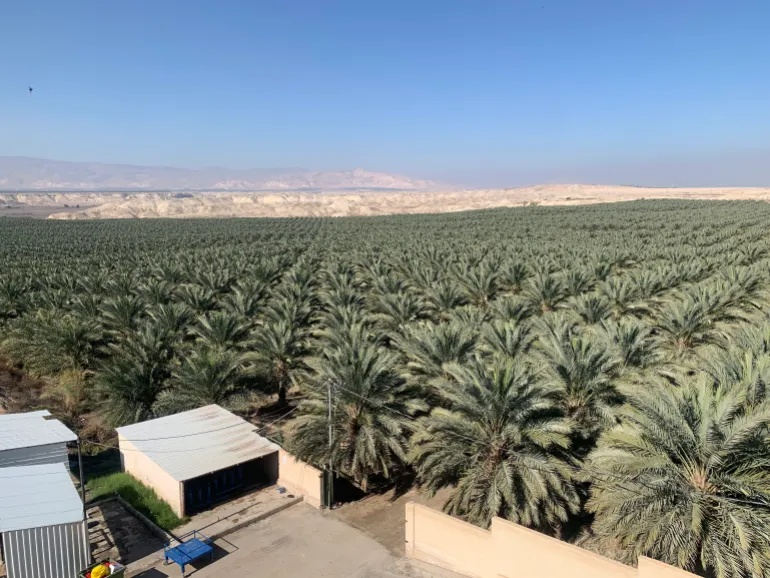
Abu Dhabi: Zeid Sinokrot’s journey across agriculture, technology, and industry eventually led him to a pressing challenge — one that became the foundation for building a deep-tech venture in Abu Dhabi.
Millions of date palms were being devastated by the Red Palm Weevil, putting at risk trees deeply connected to the region’s heritage, food security, and agricultural livelihoods. Earlier attempts to address the problem had largely remained limited to research and development, with few solutions reaching practical use.
The 39-year-old Jordanian engineer decided to take matters into his own hands and develop a solution himself.
“I saw millions of date palms — trees that represent our region’s culture, heritage, and source of livelihood — being destroyed by the Red Palm Weevil. I realized that if no solution existed, someone needed to create one,” Sinokrot said.
His involvement in a date palm project gave him firsthand insight into the scale of the crisis, while completing a complex industrial project in conflict-affected Iraq strengthened his determination to tackle challenging problems.
“My experience with the date palm project, combined with the resilience I developed while delivering a complex project in war-torn Iraq, made one thing clear: I had to be the person to take on this challenge,” Sinokrot said.
That commitment led to the creation of Palmear, a company developing patented AI-acoustics technology designed for agricultural and environmental intelligence.
When laboratory results failed in real-world conditions
Developing a functional artificial intelligence model was only the first step in Palmear’s journey.
His involvement in a date palm project gave him firsthand insight into the scale of the crisis, while completing a complex industrial project in conflict-affected Iraq strengthened his determination to tackle challenging problems.
“My experience with the date palm project, combined with the resilience I developed while delivering a complex project in war-torn Iraq, made one thing clear: I had to be the person to take on this challenge,” Sinokrot said.
That commitment led to the creation of Palmear, a company developing patented AI-acoustics technology designed for agricultural and environmental intelligence.
When laboratory results failed in real-world conditions
Developing a functional artificial intelligence model was only the first step in Palmear’s journey.
“One of our biggest challenges was understanding that a solution proven in the laboratory does not always translate directly to real-world conditions,” Sinokrot said.
To overcome this, Palmear gathered more than 700,000 minutes of audio data from actual field environments, providing its AI system with a much larger and more diverse foundation for training and improvement.
The process required significant time and effort, but it transformed the company’s approach to product validation and technological development.
“True innovation happens when you bridge the gap between theory and reality. Creating reliable, field-ready technology requires patience, persistence, and a deep understanding of the challenge being solved,” Sinokrot said.
Farmers became the ultimate measure of success
Palmear spent four years developing and refining its technology before receiving the feedback that mattered most to Sinokrot.
Farmers began reporting that the solution was helping them tackle a long-standing challenge that had damaged date palms and threatened their livelihoods.
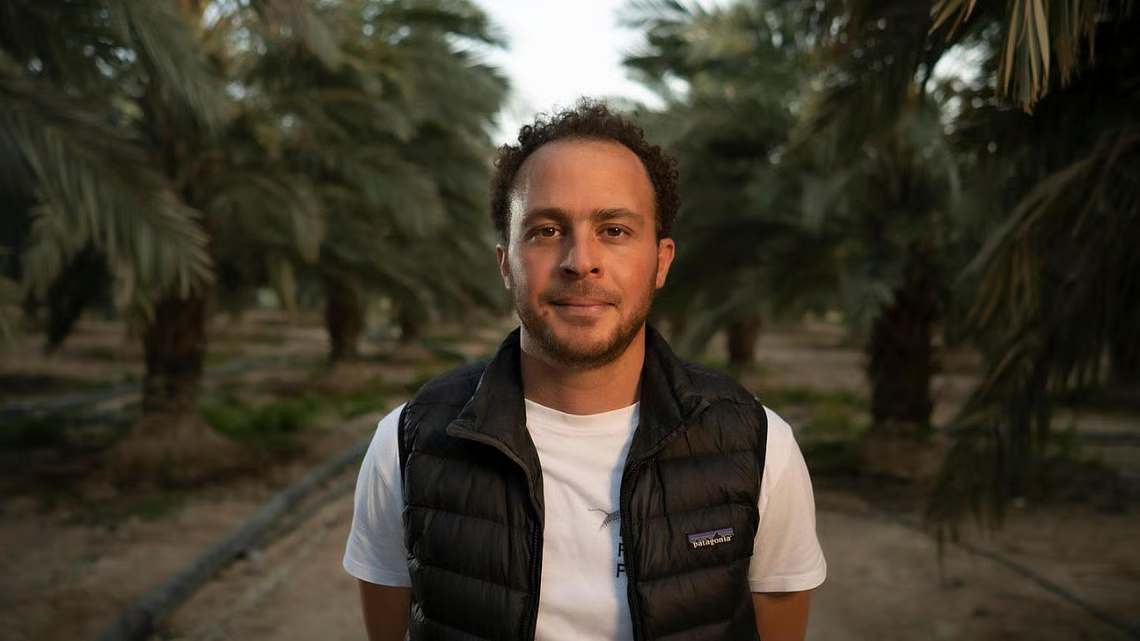
“Our greatest achievement has been hearing directly from farmers who have benefited from our technology,” Sinokrot said.
“After four years of developing and improving our solution, seeing it address a real and pressing challenge in the field — and knowing it is creating a meaningful impact on people’s livelihoods — has been incredibly rewarding. That kind of validation is more valuable than any performance metric.”
Funding from multiple sources
Sinokrot financed Palmear through a mix of personal investment, support from friends and family, angel investors, corporate backers, and venture capital funding.
Coming from an entrepreneurial family, Sinokrot also serves on the board of Jordan’s Sinokrot Group. His previous experience includes working with Switzerland-based Bühler Group, leading the development of a major industrial complex in Iraq, and co-founding Jordanian date producer SUFFCO.
Palmear also received backing through the Mohammed Bin Rashid Innovation Fund, where guidance from advisers helped the company strengthen its go-to-market strategy.
The programme pushed the team to reassess its assumptions and connected Sinokrot with entrepreneurs who had faced similar challenges while building and scaling their own businesses.
Why Abu Dhabi
Sinokrot relocated to Abu Dhabi in late 2019 and selected the UAE as Palmear’s base because the company was tackling a challenge with global relevance rather than a single-market issue. The country’s supportive regulatory framework, business environment, and economic ecosystem provided a strong foundation for developing the technology and expanding internationally.
Palmear’s ambition is to see its technology adopted by millions of farmers within the next five years, while expanding its role in agricultural and environmental intelligence.
Sinokrot acknowledges that the entrepreneurial journey has included moments of uncertainty, including times when he considered stepping away to return to a traditional career.
“Every founder experiences those moments. The important thing is to keep moving forward — those are often the moments just before things begin to change,” he said.
Drawing from his own experience, Sinokrot’s advice to aspiring entrepreneurs is centered on persistence and staying focused on solving meaningful problems.
“If you are addressing a problem that people are willing to pay to solve, don’t give up. Success is often closer than it appears, even during moments of uncertainty,” he said.

