

PAL secures up to 20 Boeing 787-10s to advance its global travel ambitions.
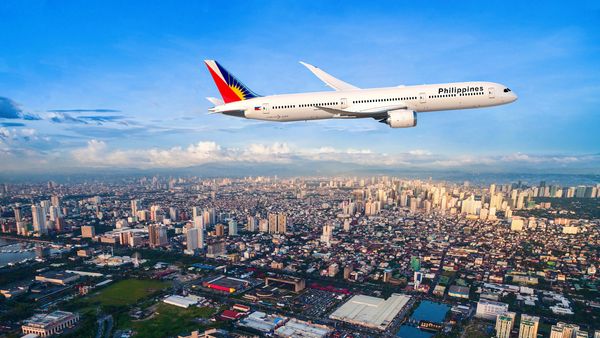
Manila: Philippine Airlines (PAL) has announced one of its biggest aircraft acquisitions in recent years, placing an order for 15 Boeing 787-10 Dreamliners with options to add five more aircraft.
The multibillion-dollar investment reflects the flag carrier’s confidence in the continued expansion of international air travel, following a period of significant challenges and disruption across the aviation industry.
Value of the deal
If PAL exercises all five purchase rights, the agreement could reach an estimated value of $3.4 billion after standard industry discounts, according to aviation consultancy IBA Group.
The agreement, unveiled on Monday at the Farnborough International Airshow, represents a major milestone for the flag carrier as it advances its fleet modernization program. The strategy aims to replace aging widebody aircraft while increasing capacity across key markets in Asia, Australia, and other long-haul destinations.
“Our first Dreamliner is expected to arrive in 2031,” PAL President Richard Nuttall said during the signing ceremony.
“These aircraft will serve as long-term replacements for our medium-haul fleet while also creating new opportunities for network expansion. We are extremely pleased to be adding these aircraft to our fleet.”
The agreement comes as Boeing continues efforts to strengthen its presence in the rapidly expanding Asia-Pacific aviation market.
Strategic fleet strategy
Instead of relying solely on a single aircraft manufacturer, PAL is strengthening partnerships with both Boeing and Airbus. This approach reflects a growing trend among global airlines to maintain operational flexibility, reduce supply-chain risks, and improve fleet resilience.
PAL currently operates a diverse long-haul fleet comprising 10 Boeing 777-300ERs, 11 Airbus A330-300s, and four Airbus A350s, including two A350-900s and two A350-1000s.
The airline also has seven more Airbus A350-1000 aircraft on order, further strengthening its position as one of Southeast Asia’s few carriers operating both Airbus and Boeing widebody fleets.
Regional and medium-haul growth strategy
While the Airbus A350 is optimized for long-haul operations such as flights to North America and Europe, the Boeing 787 Dreamliner is expected to serve as a high-capacity regional and medium-haul aircraft, acting as a key workhorse for Asian routes.
Together, the two aircraft families are designed to complement each other, providing PAL with greater flexibility to match aircraft capacity and efficiency with different market demands.
The Boeing 787-10, the largest variant in the Dreamliner family, will complement PAL’s existing Airbus fleet rather than replace it. The aircraft will provide the airline with greater flexibility to align capacity and aircraft size with passenger demand across various international markets.
Preparing for the next decade
The Dreamliners are scheduled to begin arriving in 2031, highlighting the extended delivery timelines faced by aircraft manufacturers as airlines globally compete for next-generation, fuel-efficient aircraft.
The aircraft will be equipped with GE Aerospace GEnx-1 engines, according to a source familiar with the agreement.
PAL expects the new jets to offer improved fuel efficiency, lower emissions, and enhanced passenger comfort — key priorities for airlines seeking to reduce operating expenses while adapting to increasingly stringent environmental requirements.
“These aircraft will enhance our long-haul fleet, enabling us to deliver an improved travel experience for our passengers while increasing operational efficiency,” PAL Holdings Chief Operating Officer Lucio Tan III said.
“This investment reflects our confidence in the future of Philippine Airlines and the continued expansion of global air travel.”
Confidence after years of recovery
The order marks another milestone in PAL’s ongoing recovery following the pandemic, which led airlines worldwide to reduce capacity, retire older aircraft, and restructure their operations.
Since completing its financial restructuring, PAL has gradually rebuilt its international network, returned to profitability, and expanded services to key markets including North America, Australia, Japan, and the Middle East — regions that remain central to the airline’s long-term growth plans.
Industry analysts project that the ASEAN region will rank among the world’s fastest-growing aviation markets over the next two decades, fueled by rising incomes, expanding tourism, and increasing demand from overseas workers.
In the Philippines, where millions of overseas Filipino workers (OFWs) and diaspora communities rely on long-haul air connectivity, fleet modernization is seen as both a business imperative and a strategic investment in the country’s future aviation needs.
An eight-decade partnership
Lucio Tan highlighted the long-standing relationship between Boeing and PAL, noting that the two companies have collaborated for nearly 80 years.
“That partnership has played a key role in shaping our airline and supporting the growth of Philippine aviation,” he said.
The announcement delivers another major boost for Boeing as it competes with Airbus for a larger share of the fast-growing Asian aviation market, where airlines are making significant fleet investments to capture rising travel demand.
By the time PAL’s first Dreamliner enters commercial service in 2031, the airline expects international travel demand to surpass pre-pandemic levels significantly — a long-term outlook that underpins its multibillion-dollar investment and will shape the future direction of its fleet strategy.

