

Peace deal could unlock billions in frozen assets and fuel Iran’s post-war oil resurgence.
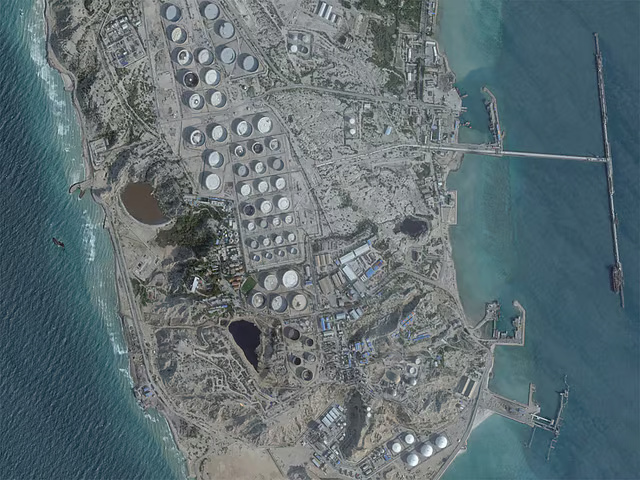
During 111 days of conflict, the US military largely avoided targeting Iran’s oil infrastructure, fully loaded crude tankers and key energy facilities — a strategy analysts say was intentional.
While naval restrictions and military strikes weakened Iran’s armed capabilities and placed significant strain on its economy, much of the country’s oil production and export capacity remained intact.
If the emerging US-Iran peace agreement holds, Tehran could emerge from the war with stronger financial prospects than many had anticipated, supported by potential sanctions relief, renewed oil exports and access to billions of dollars in previously frozen assets, according to energy market analysts.
The proposed 14-point memorandum of understanding (MoU) would go beyond simply ending the conflict.
‘Game changer’
The proposed agreement would do more than end the conflict. It would restore Iran’s access to global oil markets, ease decades of US-led sanctions, unlock more than $100 billion in frozen overseas assets, and potentially pave the way for hundreds of billions of dollars in reconstruction investment — developments that Canadian Prime Minister Mark Carney described as potential “game changers”.
Energy analysts say the measures could have far-reaching implications for both Iran’s economy and global energy markets.
The most immediate beneficiary would likely be Iran’s oil industry, which remains the backbone of the country’s economy.
Oil exports poised for revival
With US sanctions temporarily waived, Iran could once again legally export tens of millions of barrels of crude oil currently held in floating storage aboard tankers, potentially boosting supply and generating a rapid influx of revenue.
Iran’s oil exports could eventually rise to around 2 million barrels per day — roughly one-third higher than pre-conflict levels — according to Jorge Leon, head of geopolitical analysis at energy consultancy Rystad Energy, as quoted by CNN.
Before the conflict, Iran relied heavily on a vast “shadow fleet” of ageing tankers and opaque shipping networks to circumvent US sanctions, with most of its crude sold to China at significant discounts.
US blockade squeezes exports
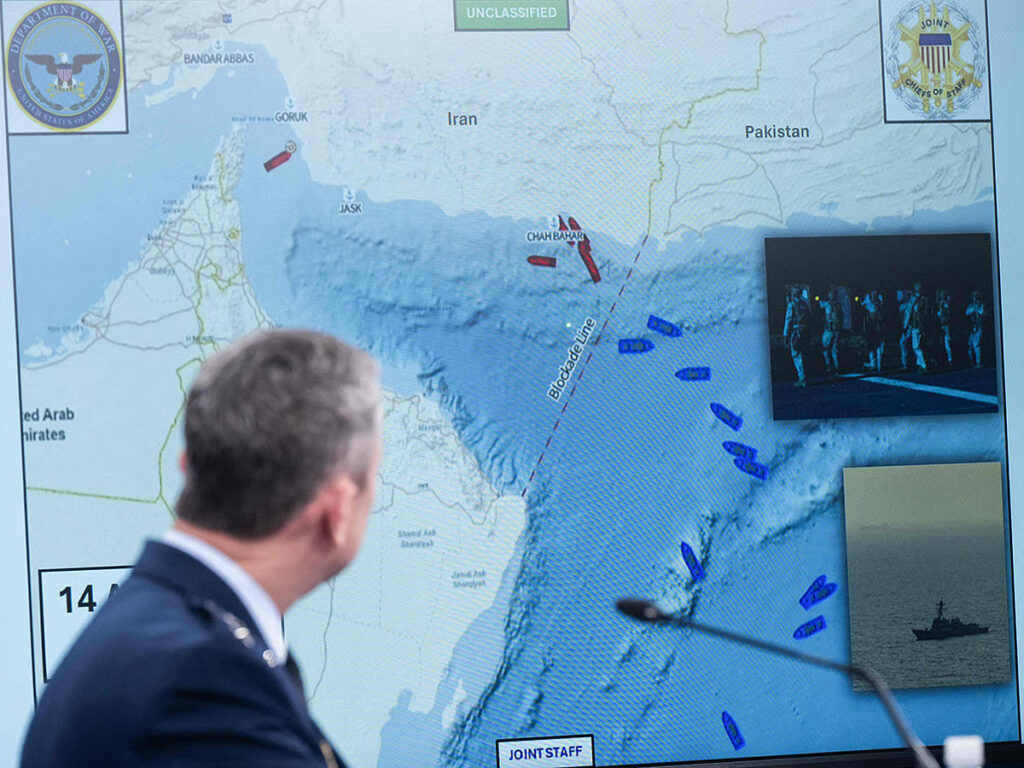
That export model came under severe pressure during the conflict, as a US naval blockade effectively curtailed Iran’s ability to ship oil from the Gulf.
Under the proposed agreement, however, the US Treasury would move quickly to issue sanctions waivers, allowing Iranian crude exports and related services to resume through legal channels and potentially restoring access to a much broader range of international buyers.
The sanctions waivers would allow Iran to transport, insure, market and receive payments for its oil through legitimate international banking and financial channels, ending years of reliance on covert trading networks. Under the proposed arrangement, oil exports could once again be conducted openly with access to international shipping, insurance and payment systems.
“This sounds like a pretty good deal for Iran,” Jorge Leon, head of geopolitical analysis at Rystad Energy, told CNN.
The stakes are particularly high because oil remains one of Iran’s most important sources of government income. Despite having a more diversified economy than many Gulf states, petroleum exports continue to generate a significant share of state revenue and foreign currency earnings, making any increase in oil sales a major boost to public finances.
If fully implemented, the agreement could provide Tehran with a substantial economic windfall through higher oil exports, improved access to global markets, and the eventual release of frozen assets, potentially strengthening the country’s fiscal position after months of conflict.
There are already signs that Iran’s oil trade is beginning to recover.
According to maritime intelligence firm TankerTrackers, Iran exported 3.8 million barrels of crude through the Strait of Hormuz this week after Washington agreed to lift its naval blockade, suggesting a rapid revival in export activity.
Toll-free passage, at least initially
The proposed agreement would also guarantee toll-free transit through the Strait of Hormuz for a 60-day period, helping to restore confidence among shipping companies and energy traders operating in the region.
What happens after that remains uncertain. The memorandum does not specify whether Iran would be permitted to levy transit or service fees once the temporary toll-free arrangement expires. If such charges were introduced, analysts estimate they could amount to about $1 per barrel, potentially generating around $2 million in revenue from a single fully loaded tanker passing through one of the world’s most strategically important energy corridors.
The issue is likely to be addressed during negotiations on the final agreement, alongside broader discussions on the long-term governance and operation of the Strait of Hormuz.
More than $100 billion in assets could be released
The proposed agreement could also unlock one of Iran’s largest sources of dormant capital: billions of dollars in frozen overseas assets.
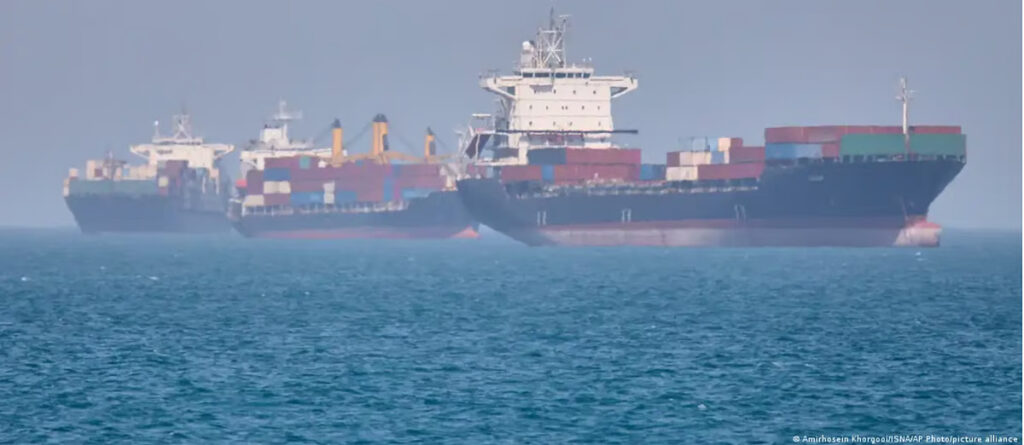
Iranian funds held in banks across Asia, Europe and other regions are estimated to total between $124 billion and $167 billion, according to estimates cited by CNN from Middle East analyst Frederic Schneider. The sum is equivalent to roughly a quarter of Iran’s annual economic output before the conflict, highlighting the scale of the potential financial windfall.
If released, the funds could provide Tehran with a significant boost to its foreign exchange reserves, strengthen government finances and support post-war reconstruction efforts, while reducing pressure on an economy that has spent years operating under sanctions.
Among the assets that could be released most quickly are an estimated $12 billion held in Qatar, according to Gregory Brew, senior Iran and energy analyst at Eurasia Group.
The proposed agreement states that Iran’s frozen assets would become “fully available” to the country’s central bank. However, US officials have stressed that any release of funds would be contingent on Tehran meeting its obligations under the accord.
A $300 billion reconstruction opportunity
The proposal also outlines plans for a $300 billion reconstruction and investment fund backed by private capital rather than US government financing.
Such investment could play a crucial role in rebuilding Iran’s economy after months of conflict reportedly damaged significant portions of the country’s industrial infrastructure, including steel plants, petrochemical facilities and parts of the energy sector.
If realized, the fund could help restore industrial production, modernise key infrastructure and accelerate economic recovery, complementing the benefits of sanctions relief, renewed oil exports and access to frozen overseas assets.
At Kharg Island, Iran’s primary oil export hub, US forces initially carried out precision strikes against military targets while avoiding the island’s oil and gas infrastructure.
However, satellite images published later reportedly showed extensive damage and fires affecting some of the island’s oil storage facilities, according to the BBC.
Iranian authorities have estimated that the conflict caused around $270 billion in economic damage, though the figure has not been independently verified.
Economists told CNN that restoring damaged industrial assets and infrastructure would likely require years of investment, access to modern technology and substantial foreign capital, underscoring the scale of the reconstruction challenge facing the country even if a peace agreement is reached.
President Donald Trump has indicated that foreign investors would be allowed to participate in Iran’s reconstruction efforts under the proposed agreement.
However, he also questioned whether international companies would be willing to return quickly, arguing that many investors are likely to wait for clearer evidence of Tehran’s long-term commitment to the terms of any settlement before committing significant capital.
Global banks may remain cautious
Analysts caution that even if sanctions are eased, Iran’s reintegration into the global financial system is unlikely to be immediate.
Many international banks remain wary of the Iranian market after incurring billions of dollars in fines over the past two decades for breaching US sanctions rules. As a result, financial institutions may adopt a wait-and-see approach, seeking greater regulatory clarity and confidence that any sanctions relief will be durable before resuming large-scale business with Iran.
That caution could slow the flow of investment and financing into the country, even if restrictions on oil exports and access to frozen assets are lifted.
Even if sanctions are relaxed, analysts caution that Iran’s return to the global financial system is unlikely to be immediate.
Unless Washington provides explicit licences and clear legal assurances, many financial institutions may remain reluctant to finance trade or investment linked to Iran.
“There is still a great deal of uncertainty and ambiguity,” former International Monetary Fund deputy managing director Adnan Mazarei told CNN.
“Banks are hesitant to take on the risk because many have previously faced substantial US penalties for conducting business with Iran.”
Legal hurdles remain
One of the biggest uncertainties surrounding the proposed agreement is the extent of sanctions relief that can legally be delivered. Some sanctions are enshrined in US law, meaning Congress could ultimately play a decisive role in determining how much relief the White House is able to provide.
Global implications
If fully implemented, the agreement could represent the most significant transformation in US-Iran economic relations since the 1979 Islamic Revolution.
For global energy markets, a revival in Iranian oil production could add millions of barrels of crude to international supply, helping to ease upward pressure on prices and improve fuel affordability worldwide. Increased flows of Gulf crude could also strengthen energy security for major importers across Asia and Europe.
Within Iran, higher export revenues, access to frozen assets and renewed foreign investment could support the reconstruction of damaged infrastructure, modernisation of ageing oil fields, restoration of telecommunications networks, revival of manufacturing activity and efforts to curb inflation. Food prices have reportedly more than doubled in recent years, highlighting the economic challenges facing ordinary Iranians.
The deeper challenge
Economists caution, however, that sanctions relief alone will not resolve Iran’s longstanding structural weaknesses.
“While sanctions have inflicted significant damage on Iran’s economy, mismanagement and corruption are arguably the country’s most serious underlying problems,” former International Monetary Fund deputy managing director Adnan Mazarei told CNN.
His assessment highlights the fundamental question facing the proposed accord. Sanctions relief could provide Tehran with access to unprecedented financial resources, but the agreement’s long-term success may depend on how those funds are used.
Whether the economic windfall is directed toward rebuilding infrastructure, improving living standards and supporting economic development — or diverted to military spending and broader geopolitical ambitions — could ultimately determine whether the deal delivers lasting stability or eventually unravels.

