

Travellers turn to flexible dates and connecting flights as UAE-India fares remain high ahead of school reopening.
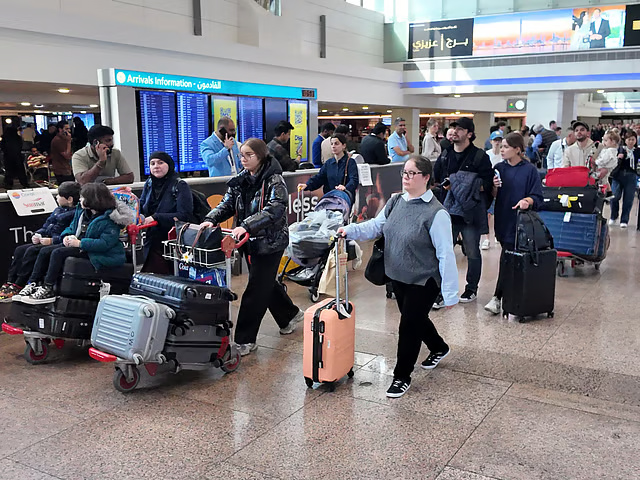
Dubai: With UAE schools set to reopen later this month, families returning from summer breaks are facing some of the season’s highest airfares on India-UAE routes. The price surge has prompted many travellers to reconsider their booking strategies and explore alternative ways to reduce costs.
Rather than travelling on peak dates, many passengers are adjusting their plans by returning earlier or later, opting for connecting flights, arriving through alternative Gulf airports, or purchasing one-way tickets in the hope that prices may drop closer to the travel date.
Travel agents said demand is largely driven by essential travel, while geopolitical uncertainties, higher fuel costs, and limited airline capacity continue to contribute to elevated fares.
For example, one-way Economy fares during the final weeks of August, when UAE schools reopen after the summer break, range from around Dh1,200 for flights from Mumbai to as high as Dh3,705 from Kochi. During off-peak periods, similar fares can sometimes be found for between Dh350 and Dh650.
Most public and private schools in the UAE are scheduled to reopen on August 31.
UAE-India airfares remain elevated ahead of school reopening
Airfares from India to the UAE have increased significantly during the final week of August, as families return before the start of the new school term. A comparison of popular routes shows that fares during the peak travel period are considerably higher than off-peak prices.
| Route | Economy return airfare (Aug 24-30) | Off-peak fare |
|---|---|---|
| New Delhi to Dubai | Dh1,040 | Dh540 |
| Mumbai to Dubai | Dh1,200 | Dh555 |
| Bengaluru to Dubai | Dh1,120 | Dh613 |
| Kochi to Dubai | Dh1,952 | Dh547 |
| Kozhikode to Dubai | Dh1,970 | Dh519 |
| Kolkata to Dubai | Dh1,147 | Dh689 |
| New Delhi to Abu Dhabi | Dh1,213 | Dh606 |
| Mumbai to Abu Dhabi | Dh1,084 | Dh613 |
| Bengaluru to Abu Dhabi | Dh1,343 | Dh571 |
| Kochi to Abu Dhabi | Dh1,693 | Dh482 |
| Kozhikode to Abu Dhabi | Dh1,650 | Dh504 |
| Kolkata to Abu Dhabi | Dh1,300 | Dh696 |
| Mumbai to Sharjah | Dh1,086 | Dh610 |
| New Delhi to Sharjah | Dh1,045 | Dh678 |
| Bengaluru to Sharjah | Dh1,484 | Dh734 |
| Kochi to Sharjah | Dh1,884 | Dh533 |
| Kozhikode to Sharjah | Dh2,316 | Dh579 |
| Mumbai to Ras Al Khaimah | Dh1,019 | Dh602 |
“Fare reductions are not expected any time soon,” said TP Sudheesh of Deira Tours and Travels.
He said passengers remain cautious about travelling through the Middle East, while several international airlines continue to adjust their operations, further limiting seat availability and keeping prices high.
According to Sudheesh, higher oil prices and increased airline operating costs are limiting the scope for fare reductions, especially with strong demand expected from families returning before schools reopen in late August.
“Many families, particularly those from low- and middle-income groups, are adjusting their return dates to match periods of lower demand,” he said.
“Travelling a few days earlier or later can help passengers secure lower fares compared with peak travel dates. Looking at indirect flights or returning through a different Gulf airport can also provide more affordable options.”
One-way tickets emerge as a popular option
Afi Ahmed, Chairman of Smart Travels, said many travellers delayed booking their return journeys in the hope that airfares would drop as the summer season progressed.
“Many people wait until the last minute expecting prices to fall,” he said, adding that fares briefly declined before rising again.
He noted that one of the key trends this year was an increase in families choosing one-way tickets instead of the usual return bookings.
“Normally, travellers purchase return tickets. This time, one-way tickets became much more common, as people hoped fares would decrease closer to departure and that geopolitical conditions would improve,” he said.
Ahmed added that summer travel volumes were lower compared with last year, with some families choosing alternative holiday plans, including trips to nearby destinations such as Sri Lanka before continuing onwards to India.
However, he said such travel patterns remained limited, with only a small number of passengers opting for these alternatives.
Leisure travel takes a back seat
For many travel agencies, holiday bookings have slowed significantly as families prioritise essential travel during the peak return period.
Ipshita Sharma of SCN Travel & More said enquiries for leisure trips have dropped considerably, with many travellers focusing on necessary journeys rather than vacations.
“Only essential travel is taking place. I have not received any enquiries for leisure trips. People are simply travelling home and returning, while holiday travel has almost completely disappeared,” Sharma said.
She added that travellers are facing a combination of high airfares and ongoing uncertainty.
“Just when things appeared to be settling, new concerns started emerging. The spread of rumours and speculation is also adding to the uncertainty,” she said.
Sharma noted that in some cases, the cost of flights has become higher than the holiday expenses themselves.
“The entire land package, including a five-star hotel stay and private transfers, costs less than four flight tickets. For a family of four, a five-star holiday package can be cheaper than the cost of four Etihad tickets to Bali,” she said.
Why fares remain high
Travel experts said the back-to-school rush is coinciding with higher operating costs across the global aviation sector, putting additional pressure on ticket prices.
Jet fuel prices have increased sharply in recent weeks, adding to airlines’ expenses. According to the International Air Transport Association’s Jet Fuel Monitor, the global average jet fuel price reached $158.77 per barrel for the week ending July 31. While this represented a 0.8 per cent decline from the previous week, prices were still 76.4 per cent higher compared with the same period last year.
The combination of rising fuel costs, increased operating expenses, and strong seasonal demand has made significant fare reductions unlikely in the near term.
Several airlines globally have raised concerns over increasing fuel expenses, while aviation analysts noted that carriers are also dealing with higher labour costs, maintenance expenses, and broader operational pressures.
Adding to the complexity, airlines are increasingly adopting artificial intelligence systems to adjust ticket prices in real time based on factors such as demand, booking trends, seat availability, and competitor pricing.
A recent Bloomberg report said these technologies are helping airlines maximise revenue on high-demand routes by limiting discounted fares, while flights with weaker demand may still see lower prices as carriers try to fill available seats.
Travellers become more flexible
Alena Iakina, founder of visarun.ai, said residents are continuing to travel but are adapting their booking strategies in response to changing conditions.
“People are still travelling, but they are changing the way they book. They are becoming more flexible with travel dates and are considering less common routes,” she said.
She added that nearly 90 per cent of the company’s bookings this month were for Saudi Arabia, with a smaller number of trips to destinations such as Australia, the UK, and the US.
“We haven’t seen a single Schengen booking in several weeks. That was a real surprise for us,” she said.
According to Iakina, some travellers are changing their plans due to ongoing uncertainty and rising costs.
“We believe so, although it is also linked to higher expenses. People are avoiding certain routes and choosing destinations that currently feel safer,” she said.
She expects airfares to remain elevated through the first half of August before easing once the peak travel period ends.

