

Authorities said the pilot allegedly captained more than 900 flights before the deception was uncovered.
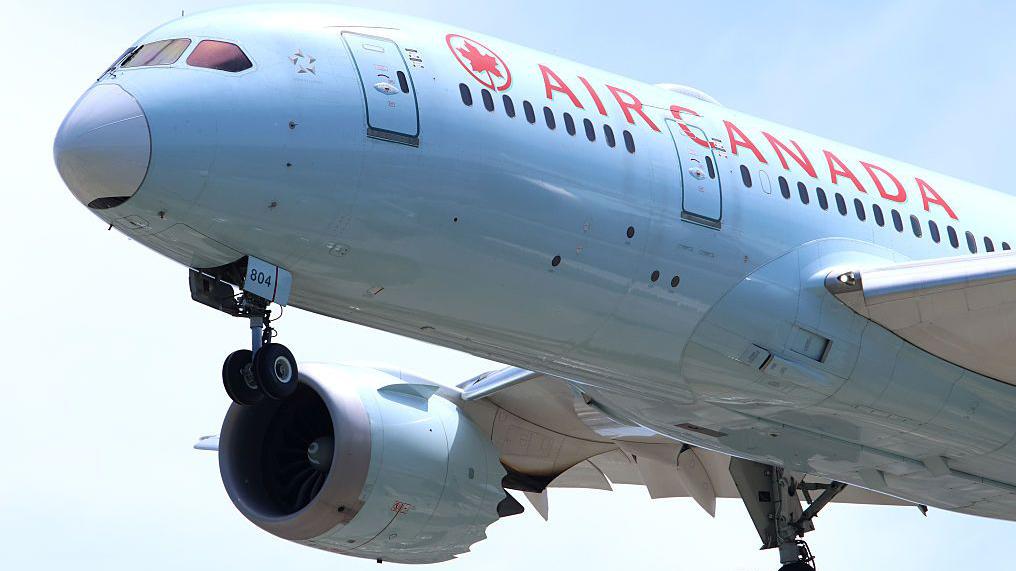
A former Air Canada captain has been charged after Canadian authorities alleged he flew large passenger aircraft for nearly 17 years without the required licence.
Police say Geoffrey Wall, 59, commanded more than 900 domestic and international flights between 2009 and 2025, carrying tens of thousands of passengers on Boeing 767, 777 and 787 aircraft, despite not holding the Airline Transport Pilot Licence for Aeroplanes (ATPL-A) required for airline captains.
The case, uncovered during a routine review of pilot credentials, has shocked Canadian aviation authorities and drawn comparisons to the film Catch Me If You Can, which depicts a man posing as an airline pilot.
Wall was arrested on June 1 and faces multiple charges, including fraud, possession of counterfeit marks, and use of forged documents.
The licence he allegedly did not possess
According to Peel Regional Police in Ontario, Wall did hold a valid commercial pilot licence throughout his career and was legally authorised to fly commercial aircraft.
However, investigators allege he never obtained the higher-level Airline Transport Pilot Licence required when he was promoted to captain in 2009.
Police said he continued serving as a captain for the next 16 years, allegedly misrepresenting his qualifications to both regulators and his employer.
Deputy Chief Nick Milinovich described the case as one that “reads like a movie script”, adding that Wall became pilot-in-command of some of the world’s largest passenger aircraft while earning nearly C$3 million during the period.
Authorities compared the case to a doctor licensed for general medicine performing specialised surgery without the required qualifications.
Key facts:
- More than 900 flights allegedly operated as captain
- Investigation period: 2009–2025
- Aircraft flown included Boeing 767, 777 and 787 jets
- Pilot held a valid commercial licence but allegedly lacked the Airline Transport Pilot Licence (ATPL-A) required for captains
- Discovery made during a routine credential review
- Faces seven criminal charges, including fraud and forged-document offences
- Court appearance scheduled for June 29, 2026
Discovery during routine checks
The alleged misconduct came to light in 2025 during a routine review of licensing documents that uncovered irregularities.
Air Canada informed Transport Canada, the country’s aviation regulator, after anomalies were found in Wall’s paperwork, according to investigators.
The pilot had already retired earlier this year before a criminal investigation, codenamed “Project Icarus,” was formally launched.
Police later alleged that Wall also filed a false report claiming that his pilot documentation had been stolen.
Transport Canada imposed administrative penalties and referred the case for further investigation.
Wall is scheduled to appear in court on June 29.
Air Canada: Safety was not compromised
Despite the seriousness of the allegations, Air Canada said that passenger safety was not compromised.
The airline said Wall held a valid commercial pilot licence and had successfully completed all mandatory flight competency checks required of airline pilots.
Air Canada noted that pilots undergo recurrent training every six months, along with annual flight assessments conducted by certified Transport Canada examiners.
The airline added that these evaluations consistently confirmed Wall’s ability to safely operate aircraft.
However, it emphasised that proper licensing remains an essential part of aviation safety and regulatory compliance.
The carrier said it immediately removed Wall from active duty once the licensing discrepancy was discovered and voluntarily reported the matter to regulators.
Air Canada has since completed an audit of pilot qualifications and said no similar cases were found.
The case has raised serious questions about how a licensing discrepancy could allegedly go undetected for so many years in one of the world’s most tightly regulated industries.
Investigators have not yet publicly explained how the alleged falsified credentials passed scrutiny for over a decade, nor whether additional oversight measures will be introduced.

