

Zayed National Museum Exhibition to Highlight 7,000 Years of Camel Heritage.
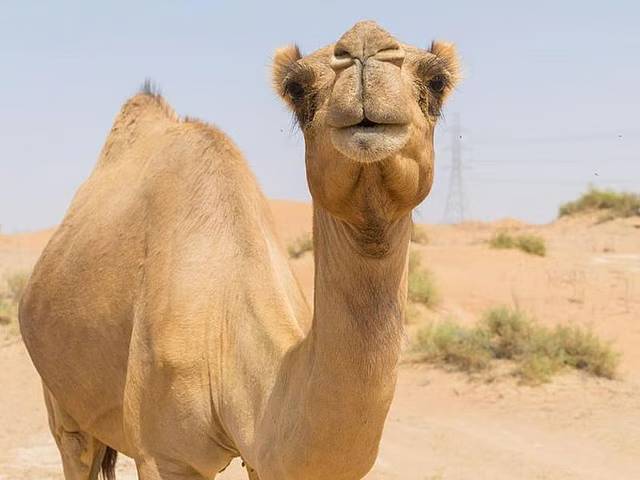
Abu Dhabi: More than 6,000 years ago, a wild camel died along the coastline of what is now Abu Dhabi. Its remains lay buried beneath the ground at Baynunah for thousands of years before archaeologists uncovered them. This December, the ancient bones will be displayed to the public for the first time.
The remains will be among the highlights of Tracks Through Time: The Camel in Society, Trade and Art, the inaugural temporary exhibition at Zayed National Museum, scheduled to open in early December.

According to the museum, the exhibition will be the first of its kind globally to examine more than 7,000 years of camel history, tracing the animal’s relationship with human civilisation, trade and artistic expression.
The story of an extinct wild ancestor
The domesticated camels familiar across the Arabian Peninsula today descended from wild dromedaries that have long since disappeared.
A 2025 study by researchers at UAE University, published in the journal Heritage, suggests that dromedaries were first domesticated in south-eastern Arabia, covering parts of present-day Oman, Saudi Arabia and the UAE, between 1800 and 1100 BCE.
Further evidence emerged from a 2016 genetic study published in the Proceedings of the National Academy of Sciences (PNAS).
Researchers analysed ancient DNA extracted from wild dromedary remains dating back as far as 7,000 years, including specimens discovered at archaeological sites in the UAE such as Al Sufouh, Tell Abraq and Al-Buhais.
They compared the ancient genetic material with DNA from 1,083 modern camels, revealing important clues about the origins of domesticated dromedaries.
The findings indicated that wild camels inhabiting the south-eastern Arabian coast contributed to the genetic ancestry of today’s domestic camel populations.
Scientists believe these wild animals once grazed in coastal mangrove environments, where salt was readily available. However, within less than 2,000 years of domesticated camels emerging, their wild ancestors had disappeared.
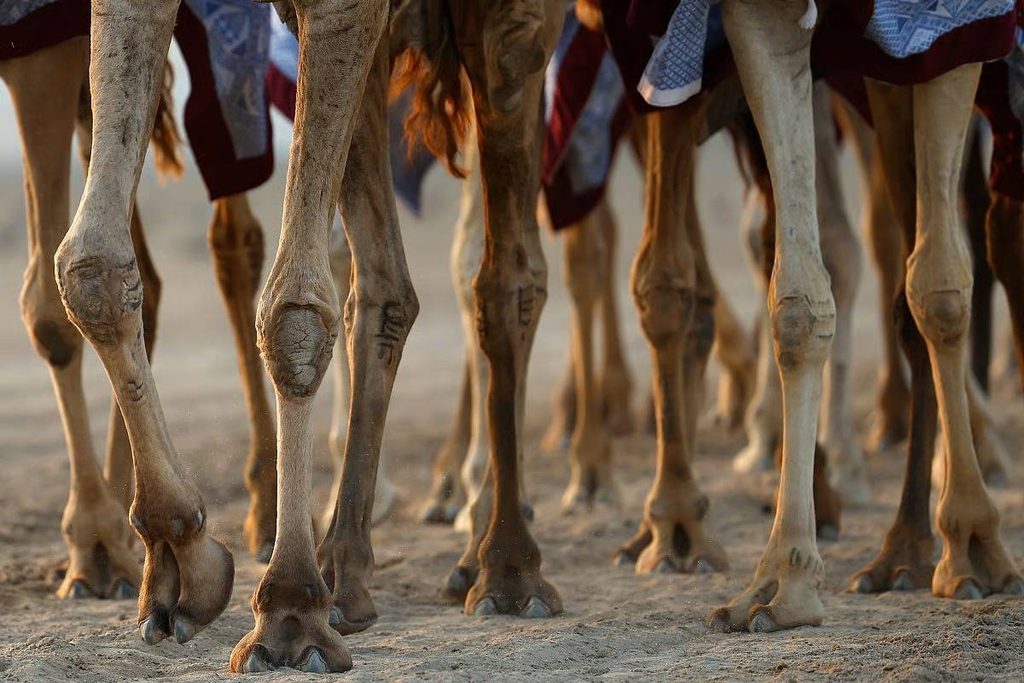
The museum’s description of camel remains from Saruq Al Hadid as “some of the earliest evidence in the world” reflects the continuing scientific discussion surrounding the animal’s domestication.
The PNAS researchers also highlighted the dromedary’s crucial contribution to ancient commerce, describing how camels transported valuable commodities such as salt, incense and spices across Arabia, the Near East and North Africa.
Some trading caravans consisted of thousands of camels, and the tradition continued into the 20th century.
According to the researchers, commercial exchanges between south-western and south-eastern Arabia were almost certainly conducted using camel caravans.
From desert survival to modern heritage
The camel’s place in Arabian society has undergone a remarkable transformation, particularly over the past century.
Historically, camels were essential to everyday life, providing transportation across harsh desert landscapes as well as milk, meat and hides. They also held economic and religious significance, with camels sometimes used to fulfil zakat obligations.
Today, although modern transportation has replaced many of their traditional functions, camels remain an important symbol of Emirati heritage and cultural identity.
Their numbers have also increased in the UAE.
According to a 2025 study by UAE University researchers, the country’s camel population rose from 430,372 in 2015 to 569,527 in 2022.
The study found that nearly 90 per cent of the animals were located in Abu Dhabi, while approximately 85 per cent of the country’s camel population was female.
These figures highlight the continued importance of camels in the UAE, even as their role has evolved from a necessity for desert survival to a valued part of the nation’s cultural and economic life.
Camel milk finds growing international markets
The UAE’s camel industry has expanded beyond its traditional activities, with camel milk emerging as an increasingly important commercial product.
Industry figures cited in the research indicate that the country produces more than 7,000 tonnes of pasteurised camel milk annually, with exports reaching markets including the European Union, China and the United States.
In February, the Codex Alimentarius Commission approved a UAE proposal to develop the first international standard for pasteurised camel milk, marking a significant step towards establishing globally recognised guidelines for the product.
Beyond dairy production, camel racing and beauty competitions have become prominent features of the UAE’s camel industry and cultural heritage.
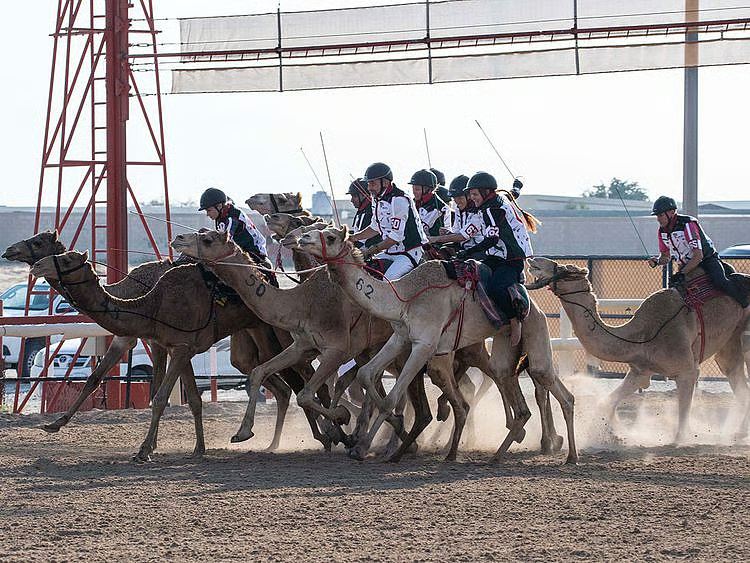
The upcoming exhibition at Zayed National Museum will explore these traditions, highlighting what Magee described as the prestige associated with Al Hejin camel racing and Mazayna camel beauty competitions.
Camels also continue to provide materials for traditional crafts, with camel hides used locally to produce footwear, bags and water containers.
A 2025 study by researchers at UAE University found that camel beauty competitions increasingly reward particular physical characteristics, encouraging breeders to selectively breed animals that meet these standards.
This growing emphasis on appearance has also contributed to higher market prices for camels possessing the most sought-after features.
Bringing 7,000 years of camel heritage to life
The exhibition aims to offer visitors a comprehensive look at the camel’s remarkable journey, from its wild ancestors roaming the UAE thousands of years ago to its domestication and enduring importance in Arabian society.
According to Magee, the exhibition will explore the close relationship between camels and the communities that depended on them for transportation, food and everyday survival, before examining their modern role in prestigious racing events and beauty competitions.
The display will combine archaeological discoveries and historical artefacts with archival photographs, film footage and personal accounts from camel herders and members of local communities.
Visitors will also be able to experience recordings of Taghrooda and Alheda’a, traditional forms of poetry and camel calling associated with Bedouin culture and recognised by UNESCO as part of the world’s intangible cultural heritage.
Among the other exhibits will be a children’s book dating to the 1840s that describes different camel species and their uses, approximately 3,000-year-old rock art from Fujairah, and UAE postage stamps featuring camel imagery.
Together, these objects and recordings will illustrate how camels have influenced life in the region across thousands of years, evolving from indispensable companions in the desert to enduring symbols of Emirati identity, heritage and tradition.
Across the UAE, camels remain a familiar part of everyday life, from racing tracks and supermarket shelves stocked with camel milk to postage stamps celebrating the nation’s heritage. But inside Zayed National Museum, visitors will have the opportunity to journey thousands of years into the past and discover the camel’s origins, long before it became an enduring symbol of Emirati culture and identity.

