

Her treatment plan was adjusted from an initial recommendation of 18 chemotherapy sessions at another facility to just four, reflecting her early-stage diagnosis and successful surgery.
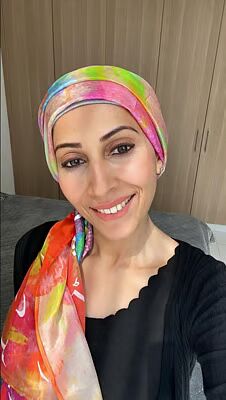
When Shabina Chaudhry was diagnosed with breast cancer, what was meant to be a day of celebration—her 21st wedding anniversary—turned into a life-altering moment. “I honestly didn’t react at first,” she recalls. “It was when they mentioned chemotherapy that the tears started falling. That’s when it became real.”
At 44, Chaudhry considered herself exceptionally healthy. A science teacher by profession, she had kept up with routine check-ups and mammograms, including monitoring a previously benign lump. However, months of intense emotional strain—caring for her mother through a severe psychotic episode in the UK—had left her physically and mentally drained.
“I wasn’t eating. I wasn’t sleeping. I was just praying and crying,” she says. “I went from being very healthy to something in my body just going out of balance.”
She noticed a new lump shortly after returning to Dubai, experiencing what she described as an unusual heaviness in her chest. Still burdened by family challenges, she postponed seeking medical attention until she felt she had the “bandwidth” to cope. Within days of consulting a breast specialist, she was diagnosed with stage 2 breast cancer in October 2024.
Seeking a second opinion
Initially evaluated at another hospital, Chaudhry was advised that her surgery would follow a single approach. However, her husband felt uneasy. “When you’re in distress, you trust the doctor after God,” she says. “But my husband just felt unsettled.”
The couple sought a second opinion at Cleveland Clinic Abu Dhabi, where Chaudhry was referred to breast surgeon Ahmad Matalka. The consultation proved pivotal. “He gave me options,” she says. “The moment I knew I had a choice, I felt calm again. It gave me control back.”
Matalka discussed the possibility of a robotic-assisted bilateral mastectomy—a minimally invasive procedure still rare in the region at the time. For Chaudhry, the advantages were clear: smaller incisions hidden under the bra line, lower risk of infection, and faster recovery. “I’m forward-thinking. I don’t scare easily,” she says. “Recovery mattered to me. I’m not someone who can stay bedridden. Movement is healing.”
Although only a few such surgeries had been performed locally, and hers would be the first bilateral case at the hospital, Chaudhry felt confident. “I prayed on it. I had peace about it,” she says. “And honestly, it was the best decision I made for myself.”
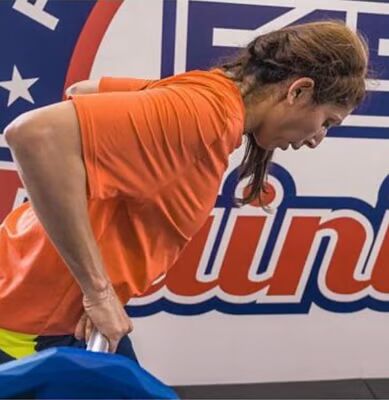
Inside robotic-assisted mastectomy
According to Matalka, robotic-assisted mastectomy uses a keyhole approach, allowing surgeons to remove breast tissue through a small incision while controlling robotic instruments that provide magnified, three-dimensional vision and highly precise movements. “The oncological safety is the same as conventional mastectomy,” he explains. “But complication rates are lower, sensation is better preserved, and quality-of-life outcomes are improved.
The procedure is suitable for carefully selected patients—typically those with early-stage breast cancer, ductal carcinoma in situ, or individuals undergoing risk-reducing mastectomy due to genetic factors. It is not recommended for locally advanced or inflammatory breast cancer, or for patients whose body size or tumour location makes robotic access unsafe.
Since launching the programme in September 2024, Ahmad Matalka says he has performed nearly 50 robotic-assisted mastectomies, reporting significantly fewer complications compared with traditional surgery. “This requires infrastructure, specialised training, and a multidisciplinary team,” he explains. “That’s why it hasn’t been widely available in the region until recently.”
Chaudhry’s surgery lasted nine hours. The following day, she received devastating news: her father had passed away. “At that moment, cancer became secondary; grief took over.” Instead of being discharged within days, she remained in the hospital, supported by nurses, physiotherapists, and mental health professionals. “They felt like angels,” she says. “People said the right things, at the right time. I didn’t feel alone.”
Her recovery involved regaining arm movement after lymph node removal, managing tenderness following reconstruction, and later undergoing preventive chemotherapy and radiotherapy. At Cleveland Clinic Abu Dhabi, her treatment plan was revised from an initial recommendation of 18 chemotherapy rounds elsewhere to just four, reflecting her early-stage diagnosis and successful surgery. “Chemo was preventive for me,” she explains. “Most of the cancer was already gone.”
Turning pain into purpose
Now 45 and cancer-free, Chaudhry says that survivorship remains a journey—emotionally as much as physically—but it has also reshaped her priorities. “I don’t believe cancer comes from nowhere,” she reflects. “Stress matters. Sleep matters. Mental health matters.”
She has since launched an Instagram awareness page, ‘Khaula with Heart n Soul’, supporting women across the UAE and Pakistan, where she notes that lack of screening and awareness often leads to late diagnoses. “In some cultures, cancer is still seen as a death sentence,” she says. “But it doesn’t have to be.”
Her message to women is clear: get screened early, ask questions, seek second opinions, and don’t settle until you feel at peace with your care. “Treatment today is personalised. There are options,” she says. “This may be a difficult year of your life—but you will bounce back stronger.” For Chaudhry, that belief has become her new mission. “My aim now is simple,” she adds. “To turn pain into purpose—and help other women realise that healing is possible.”

