

Trump takes tougher line on Iran as Qatar steps up talks, Hormuz remains flashpoint: Friday updates.
The US-Iran conflict is entering a particularly delicate phase, with Washington insisting that no negotiations are underway, Iran preparing conditions for reopening the Strait of Hormuz, and Qatar stepping up diplomatic efforts in Tehran.
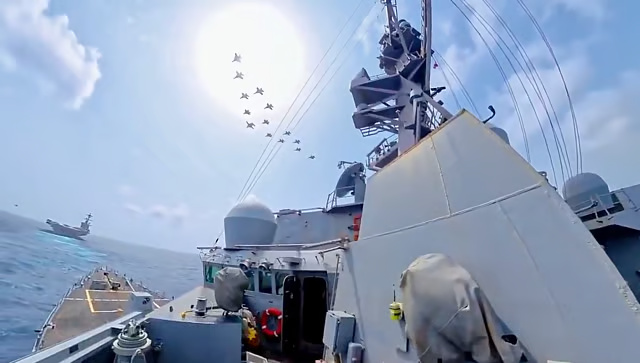
Meanwhile, the US military continues to maintain a strong presence in the region and has tightened its grip on Iran-linked shipping. A new carrier strike group is also being deployed as the prolonged conflict raises concerns over US missile-defence stockpiles, while risks to shipping and aviation remain elevated.
For UAE residents, key concerns remain security, flight disruptions, oil prices, shipping, banking restrictions and the risk of further escalation.
Trump says US is not talking to Iran
The biggest diplomatic complication is the growing gap between indirect mediation efforts and direct US-Iran negotiations. While Qatar is seeking to revive diplomacy, US President Donald Trump says Washington is not currently in talks with Tehran and has ruled out an immediate meeting.
US President Donald Trump said on Thursday that Washington is not currently in talks with Iran, while the White House said Tehran must engage meaningfully before negotiations can resume. Trump has instead backed intensifying economic pressure on Iran through what the administration calls “Operation Economic Outcast”, aimed at restricting Tehran’s access to funds and international trade.
Meanwhile, Qatar is pursuing diplomacy with Iran, with its prime minister visiting Tehran, while Oman and Pakistan are also involved in efforts to bridge differences. Qatar’s talks have focused on de-escalation and conditions for restoring safe navigation through the Strait of Hormuz.
But Washington maintains that no direct US-Iran negotiations are taking place.
For now, the diplomatic track therefore remains largely indirect, with regional mediators carrying messages and seeking to create conditions for a possible resumption of direct talks.
Qatar’s prime minister visits Tehran
Qatar’s Prime Minister and Foreign Minister Sheikh Mohammed bin Abdulrahman Al Thani has met Iranian President Masoud Pezeshkian and Foreign Minister Abbas Araghchi in Tehran as Doha steps up efforts to revive diplomacy and prevent further escalation.
Qatar’s role is significant given its previous involvement in mediating between Iran and the United States. The latest diplomatic push comes as Oman and Iran separately work on a possible arrangement to facilitate commercial shipping through the Strait of Hormuz.
Why this matters
Any diplomatic breakthrough could have an immediate impact on:
- Strait of Hormuz shipping
- oil and gas prices
- inflation
- maritime insurance costs
- aviation routes
- investor confidence
- regional security
A possible reopening mechanism is emerging, but Hormuz remains the key sticking point
The most significant potentially positive development is an emerging Iran-Oman arrangement aimed at facilitating shipping through the Strait of Hormuz.
Iran says it has reached an initial understanding with Oman on a temporary shipping corridor through the strategic waterway, using both Iranian and Omani territorial waters.
Iranian security official Mohsen Rezaei said Tehran is preparing the conditions needed to reopen the waterway. Iran is seeking several measures in return, including an end to what it describes as the US blockade, compensation for losses and sanctions relief. The US has already proposed lifting sanctions and ending its economic campaign in exchange for the reopening of Hormuz.
Oman and Iran are also discussing mine-clearing operations and procedures to ensure commercial vessels can move safely through the waterway.
However, the arrangement does not yet amount to a full reopening.
Hormuz today: A possible corridor, but shipping is far from normal
Traffic through the strait has picked up slightly, but remains well below normal levels. Kpler data showed that 10 commodity vessels transited the waterway on Wednesday, up from eight the previous day.
The figure is still below the 10-day average of 15 vessels — and remains dramatically lower than pre-war traffic levels.
A tanker was also struck by an unidentified projectile, underscoring the continued risks facing vessels using the route.
For UAE businesses, the takeaway is clear: Hormuz may be moving towards a controlled reopening, but shipping conditions remain far from normal.
US military presence remains substantial
The diplomatic efforts are unfolding alongside continued US military preparations in the region. The USS George Washington has arrived in the Arabian Sea as part of a deployment to replace the long-serving USS Abraham Lincoln.
The Lincoln has remained at sea for an unusually extended period, with the length of its deployment drawing concern from some US lawmakers.
The development sends two messages at the same time:
Diplomacy remains possible, but Washington is also preparing for the possibility that it could fail.
For the Gulf, that means the risk of further escalation remains real, even as mediators continue diplomatic efforts between regional capitals.
UAE aviation: Operating, but don’t assume ‘normal’
Flights through the UAE are continuing, but airlines remain cautious, and schedules can change at short notice.
Regional carriers are gradually restoring services, while some international airlines continue to operate reduced networks or suspend selected routes amid ongoing airspace and security concerns.
Dubai International Airport (DXB) has already felt a significant impact from the conflict. The airport handled 31.5 million passengers in the first half of 2026, down 31.3 per cent from the same period last year, with the conflict and resulting airspace disruptions weighing heavily on traffic.
Dubai Airports expects activity to strengthen in the second half of the year as airlines gradually restore capacity.
For UAE travellers today
Before leaving for the airport:
- Check your airline’s official app or website for the latest updates.
- Confirm your flight status before setting off.
- Allow extra time for potential delays at the airport.
- Review connecting-flight arrangements, particularly if your itinerary involves another regional airport.
- Avoid relying solely on social media posts for information about cancellations or schedule changes.
The situation can change faster than published timetables, so travellers should check directly with their airline for the latest information.

