

Hormuz Shipping Traffic Gradually Resumes as Wider Gulf Tensions Keep Markets on Edge.
The Strait of Hormuz is showing early signs of a gradual recovery, although oil and tanker traffic remains well below normal levels as the US-Iran conflict continues to disrupt one of the world’s most critical energy and aviation corridors.
Several flights connecting the UAE with Kuwait and Bahrain were cancelled by Air Arabia, while Emirates, Etihad Airways and flydubai continued to operate scheduled services, despite some delays and cancellations.
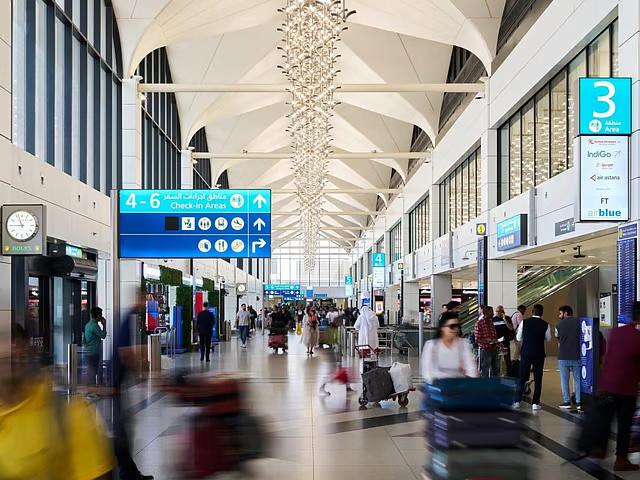
At Dubai International Airport, several Emirates and flydubai flights faced delays, while services to destinations including Abha and Kochi were cancelled.
At Abu Dhabi’s Zayed International Airport, an Air Arabia Abu Dhabi service to Sialkot was cancelled, while Etihad Airways flights to Charlotte and Boston experienced delays.
Despite ongoing regional tensions, Etihad Airways and Emirates continue to operate selected flights connecting the UAE with Bahrain and Kuwait.
Flydubai has also maintained some services between Dubai and Abha, although other flights on the route have been cancelled.
The disruptions have been attributed to a range of factors, with airlines and airports cautioning that not every delay or cancellation is linked to regional security developments.
Travellers are advised to check the latest status of their flights directly with their airline before heading to the airport, as schedules may change at short notice.
Shipping, aviation
The latest situation points to a gradual recovery in maritime traffic, although significant disruption persists across the region. Shipping activity through the Strait of Hormuz is beginning to improve, but energy flows remain well below normal levels.
For UAE residents, the evolving situation remains particularly significant because of its potential impact on shipping, oil prices, regional airspace, travel and broader Gulf security.
For households and businesses across the UAE, the main near-term concerns include further flight disruptions, rising oil and insurance costs, delays to shipping and supply chains, and the possibility of a wider escalation in regional tensions.
Hormuz tanker traffic shows signs of recovery — but oil flows remain weak
Tanker movements through the Strait of Hormuz are showing early signs of recovery, according to shipping and vessel-tracking data. However, Gulf oil flows remain well below normal pre-war levels, suggesting that the increase in tanker activity has yet to translate into a full recovery in energy exports.
The gap between vessel movements and actual oil shipments remains significant, particularly as estimates of crude volumes passing through the strategic waterway have varied considerably.
For UAE residents and businesses, a sustained recovery in Hormuz traffic could help ease pressure on global oil markets, shipping insurance costs and regional supply chains. Any renewed disruption, however, could push crude prices and transportation costs higher.
Trump: ‘Oil is flowing’ — and countries should pay the US
US President Donald Trump again said oil was moving through the Strait of Hormuz and argued that countries benefiting from US protection of energy flows should reimburse Washington for the costs involved.
“Oil is flowing through the Hormuz Strait,” Trump said in a social media post, arguing that countries that had offered limited assistance should compensate the US for protecting the strategically important waterway. He did not explain how any reimbursement would be calculated or collected.
What it means: Trump’s remarks reinforce Washington’s position that US military operations are providing security that benefits the wider global economy. However, tanker data suggest that traffic through Hormuz has yet to return to normal levels, meaning the president’s statement should not be interpreted as evidence of a full recovery in commercial shipping.
Iran protests as nuclear chief is blocked from IAEA meeting
Iran has lodged a protest after Mohammad Eslami, head of the Atomic Energy Organization of Iran, was prevented from attending this week’s International Atomic Energy Agency (IAEA) General Conference in Vienna.
Eslami is subject to United Nations sanctions that include a travel ban. Iran has accused the US of pressuring Austria over his participation in the meeting.
Why it matters: The dispute comes amid continued international concern over Iran’s nuclear programme. According to the IAEA, the agency has been unable to verify the status of Iran’s stockpile of highly enriched uranium since strikes targeted Iranian nuclear facilities.
US disputes Iran’s claim over tanker hitting a mine
A disagreement has emerged over the circumstances surrounding the El Gaia, a Panama-flagged crude oil tanker.
Iran’s Islamic Revolutionary Guard Corps (IRGC) said the tanker exploded and caught fire after striking a naval mine in the Strait of Hormuz.
US Central Command disputed that account, rejecting Iran’s claim that the vessel had hit a mine. It alleged that the tanker had previously been struck by an Iranian missile and was targeted again by an Iranian drone over the weekend.
The conflicting accounts underscore the continuing uncertainty surrounding maritime incidents in and around the Strait of Hormuz.
Why it matters to UAE residents: Reports of attacks, naval mines or missile strikes can increase war-risk insurance premiums, discourage commercial vessels from operating in the area and raise the cost of transporting energy and other goods through the Gulf.
Trump says he remains ‘open’ to engaging Iran
Trump has continued to signal that a diplomatic solution remains possible despite ongoing military pressure. He said he was “open” to US engagement with Iran and has repeatedly claimed that Tehran is seeking an agreement.
Washington maintains that any deal must address US security concerns and prevent Iran from obtaining a nuclear weapon.
Why it matters: The contrasting signals — continued military and economic pressure alongside an expressed willingness to negotiate — are leaving markets and Gulf governments closely watching for signs of either a diplomatic breakthrough or further escalation.
US expands financial pressure on Iran — targets Russia’s VTB Bank
The US Treasury has expanded its Operation Economic Outcast campaign as Washington increases financial pressure on Iran.
On September 14, the US Treasury imposed sanctions on Russia’s VTB Bank, accusing it of helping Iran circumvent US sanctions by establishing correspondent banking relationships with sanctioned Iranian financial institutions.
US Treasury Secretary Scott Bessent said Washington would continue targeting organisations that provide financial, technological or material support to Iran. The latest action follows sanctions announced on September 8 against 36 targets linked to Iran’s aviation sector, including remaining Iranian airlines and foreign intermediaries.
Bessent urges whistleblowers to expose Iran’s financial networks
Bessent has also urged individuals around the world to provide information about organisations and networks allegedly helping Iran evade sanctions, saying those who submit actionable information could be eligible for Treasury rewards.
What it means: Washington’s strategy is extending beyond military pressure, with the US seeking to restrict Iran’s access to banking services, aircraft, technology, international trade channels and foreign intermediaries.
UAE flights: Check before heading to the airport
Regional airspace disruptions continue to affect flights to and from the UAE, with airlines operating amid cancellations, delays and reduced schedules.
Emirates, Etihad Airways, flydubai and Air Arabia have all experienced disruptions during the conflict. Some international carriers have resumed selected services to Gulf destinations, while others continue to suspend flights to Dubai, Abu Dhabi or other cities in the region.
Passengers should check the latest status of their individual flight directly with their airline immediately before travelling to the airport, as schedules and airspace restrictions can change at short notice.
Traveller checklist
- Check your airline’s app or website before leaving for the airport.
- Do not rely solely on an earlier booking confirmation or email.
- Allow additional time for airport procedures and possible disruption.
- Keep your phone switched on to receive airline alerts and updates.
- Be prepared for last-minute changes if regional airspace restrictions are introduced.
- If travelling through another Gulf hub, check the status of each connecting flight separately.

