

Data from Ministry of Human Resources and Emiratisation indicates talent-driven growth, with private sector companies and employment levels continuing to rise.
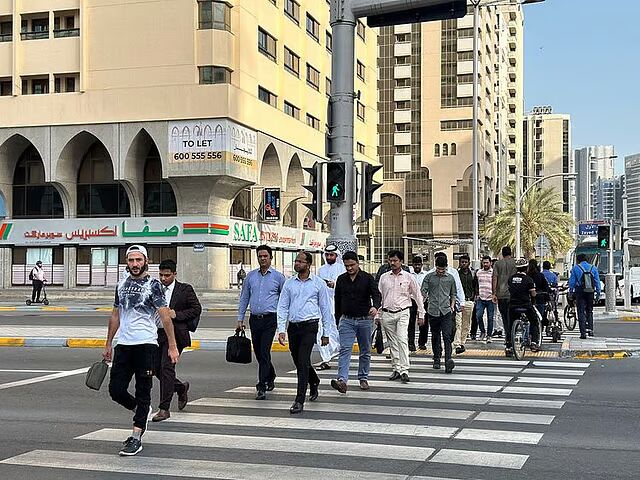
The Ministry of Human Resources and Emiratisation (MoHRE) in the United Arab Emirates announced that the private sector workforce grew by 2.5% in Q1 2026, while the number of skilled workers increased by 1.5% over the same period.
According to data from the Labour Market Observatory, the number of private sector companies rose by 0.4% during the first quarter of 2026, reflecting the strength of the country’s investment environment and its ability to attract talent at globally competitive rates while sustaining growth.
The UAE’s competitive advantages, advanced infrastructure, and business-friendly policies have helped attract both domestic and international talent, while also supporting the formation of new companies, business activities, and employment opportunities.
These results highlight ongoing efforts to advance comprehensive economic development under a clear legal framework aligned with the UAE’s long-term strategic vision to promote priority sectors and build a future-ready economy.
The latest results underscore the private sector’s ability to achieve sustainable growth and expand its contribution to the national GDP in the United Arab Emirates.
They also reinforce the UAE’s position as a preferred destination for living, working, and investing, while supporting long-term economic growth through the attraction and retention of skilled talent from around the world.
Labour market indicators over the past year further reflect rising confidence in the UAE’s employment environment and strengthen its status as a global hub for talent.
This progress has been enabled by the introduction of a modern labour market legislative framework in the United Arab Emirates, which has strengthened institutional systems and policies. It has also supported efforts by Ministry of Human Resources and Emiratisation, in coordination with public and private sector partners, to build a competitive labour market that empowers Emirati talent while attracting skilled professionals from around the world.
According to MoHRE’s classification system, skilled workers are placed within five professional tiers out of a total of nine occupational levels that structure all private sector jobs in the UAE under the national occupational framework.
Under this system, an employee is considered skilled if they hold a qualification higher than a high school certificate (or equivalent), provided it is formally accredited by the relevant authorities in the UAE. The worker’s monthly salary must also be at least AED 4,000, excluding commissions.
The classification follows the nine-level structure based on the International Standard Classification of Occupations (ISCO), a globally recognised framework developed by the International Labour Organization. This system is used to organise occupations into standardised skill levels for statistical and labour market purposes.
- Legislators, senior officials, and business managers
- Professionals in scientific, technical, and humanities fields
- Technicians and associate professionals in scientific, technical, and humanities fields
- Clerical occupations
- Service and sales occupations
- Skilled agricultural, fisheries, and livestock workers
- Craft and related trades workers, including construction and extraction trades
- Plant and machine operators and assemblers
- Elementary occupations
Ministry of Human Resources and Emiratisation applies the UAE Occupational Classification System for private sector professions, which includes 725 occupational categories organised into nine occupational levels and grouped across five skill levels.
This classification is part of the Ministry’s commitment to achieving its strategic objectives and supporting the Government of the Future vision through effective human capital management and skills development.
The framework also underpins the Ministry’s plans, programmes, and policies aimed at building a labour market that empowers UAE nationals while attracting highly skilled professionals. It supports the UAE National Agenda by increasing Emiratisation in the private sector, expanding the share of knowledge workers, and improving overall labour market productivity.
The classification system provides detailed job descriptions for each occupation, including qualification requirements, employment criteria, and potential career pathways for workers.
Present and Future of the UAE Labour Market
The system is built on comprehensive studies of the current labour market and future workforce needs, developed in collaboration with relevant stakeholders and leading international consultancy firms specialising in labour market analysis.
The framework is designed to address both present and future labour market requirements while remaining aligned with internationally recognised occupational classification standards.
Ministry of Human Resources and Emiratisation categorises occupations into five skill levels:
- Level One: Professional roles requiring advanced academic expertise and a university degree.
- Level Two: Technical roles requiring intellectual, practical, and supervisory skills, typically supported by a diploma-level qualification.
- Level Three: Vocational roles requiring practical skills and secondary-school-level qualifications.
- Level Four: Roles requiring practical and vocational competencies to perform job-related tasks.
- Level Five: Limited-skill occupations.
This classification framework supports workforce planning, skills development, and labour market sustainability, helping the United Arab Emirates remain competitive in attracting talent and driving economic growth in line with its long-term development vision.

