

MoHRE Warns of Fines and Work Permit Restrictions for Non-Compliant Employers.
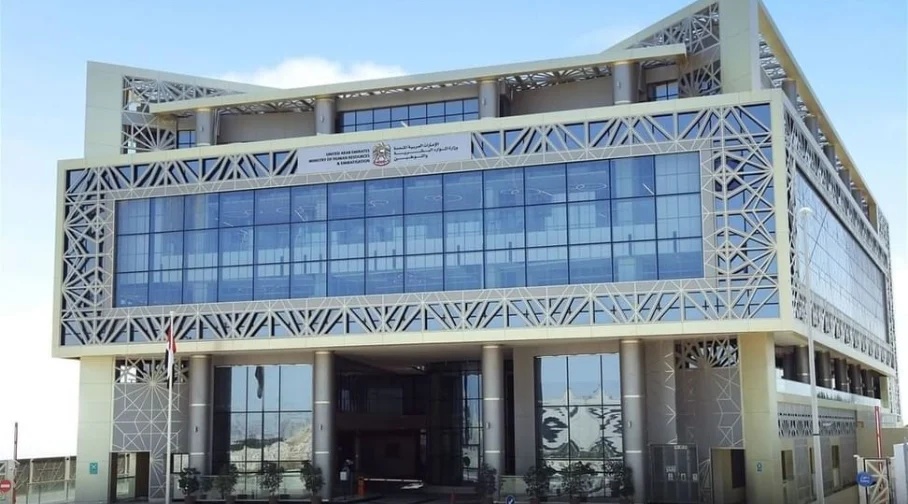
Abu Dhabi: The Ministry of Human Resources and Emiratisation (MoHRE) has outlined six violations related to health insurance requirements for employees in private-sector establishments and domestic workers.
The first violation is an employer’s failure to enrol an employee in a health insurance scheme or renew the policy when required.
Other violations include refusing to cover the cost of healthcare services or emergency medical treatment for an insured employee, as well as requiring workers to pay all or part of the cost of obtaining or renewing their health insurance policy.
Other violations include providing a health insurance policy that does not meet the basic coverage requirements approved by the Ministry; cancelling an employee’s policy while the work permit remains valid, thereby disrupting insurance coverage; and failing to maintain continuous health insurance coverage throughout the validity of the work permit.
Fines and Penalties
The Ministry said administrative fines will be imposed on establishments that fail to comply with the health insurance requirements. The penalties will be applied in accordance with Cabinet Resolution No. 21 of 2020 on service fees and fines at the Ministry of Human Resources and Emiratisation, as amended.
Without prejudice to any other penalties or measures предусмотрed under applicable laws, the Ministry may take all necessary legal and administrative action against establishments that fail to comply with the required requirements and procedures. These measures may include suspending, rejecting or refusing to renew work permits.
Health Insurance Controls and Responsibilities
MoHRE has also set out the requirements governing health insurance, stressing that a policy will only be considered compliant for the purpose of issuing or renewing a work permit if four conditions are met.
The health insurance policy must meet the basic coverage requirements approved by the Ministry, which establish the minimum level of coverage required. It must also be valid when the work permit is issued or renewed and remain valid throughout the permit’s two-year validity period, as well as for at least the minimum insurance coverage period specified under the basic policy.
In addition, workers must not be required to pay any part of the cost of subscribing to or renewing their health insurance, without affecting any applicable co-payment for medical services covered under the policy.
The health insurance policy must also remain active throughout the validity of the work permit and cannot be cancelled during this period unless the approved conditions are met and the worker’s insurance coverage remains uninterrupted.
Public Consultation to Gather Feedback and Proposals
MoHRE is currently conducting a public consultation to collect views, suggestions and feedback on health insurance requirements for private-sector employees and domestic workers.
The consultation seeks to understand the needs and expectations of both employers and employees while assessing whether the proposed insurance benefits and coverage are suitable. The feedback will help shape an effective and sustainable health insurance system that meets the needs of all stakeholders and strengthens the competitiveness of the UAE labour market.
The online survey will remain open until September 1. The Ministry said all feedback and suggestions received will be carefully reviewed, with the findings helping inform future decisions and further improve the system in a way that serves the shared interests of employers and workers.
The Ministry’s survey focuses on five key areas. The first asks participants to identify their top priorities when choosing health insurance for workers, including the cost of coverage, the range of benefits, the network of healthcare providers, and the speed of approvals and related procedures.
For private companies and employers, the survey offers four categories based on the number of workers to be covered: fewer than 10 employees, 10 to 49, 50 to 99, and 100 or more.
Participants are also asked to identify the types of employees who should be covered, including senior management, administrative and office staff, field workers and domestic workers. They can also propose additional categories for consideration.
Another question seeks to determine whether the nature of an establishment’s operations requires health insurance coverage across multiple locations in the UAE. Respondents can select from three options: yes, no or unsure.
The fifth and final question asks participants to highlight the challenges that private-sector employers and domestic workers may encounter in relation to health insurance policies.
Health insurance for workers is regarded as an important pillar of job stability and business continuity, given its role in safeguarding employees’ health, supporting productivity and promoting a safe and healthy workplace.
Workers’ Public Health and Disease Prevention
Article 36 of Federal Decree-Law No. 33 of 2021 on the Regulation of Labour Relations, as amended, requires establishments to comply with Federal Law No. 13 of 2020 on public health, along with all related legislation and decisions. The Executive Regulations also outline provisions covering workers’ safety, protection and healthcare.
Under Ministerial Resolution No. 504 of 2026 on procedures for subscribing to health insurance for private-sector employees, the Ministry has introduced health insurance enrolment procedures that are electronically linked to work permit issuance and renewal services.
The system allows authorities to electronically verify whether a worker holds a valid health insurance policy, removing the need to submit the policy separately. The move aims to streamline procedures, reduce documentation requirements and speed up service completion for customers.
Benefits and Services
MoHRE, in coordination with the Insurance Pool, launched the health insurance system on January 1, 2025.
Under the system, an insurance product was introduced at a competitive annual premium of up to Dh320 for workers aged 64 and below. The scheme covers private-sector employees and domestic workers, as well as their families, and offers a broad range of healthcare benefits and services.

