

Schools to embed national identity, values and future-ready skills into daily learning.
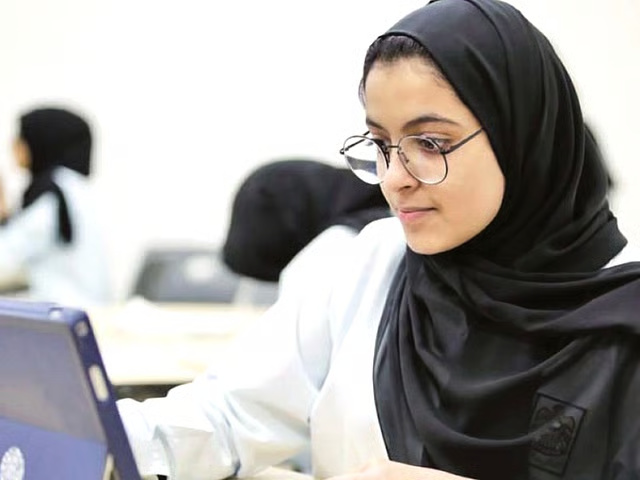
Abu Dhabi: As the new academic year gets underway, students’ educational experience will extend beyond classroom lessons and the formal curriculum. Schools are beginning a gradual process of translating the National Charter for Education into everyday practices, with the aim of developing students’ character alongside academic achievement through an integrated framework focused on national identity, personal attributes and future-ready skills.
The Charter outlines the profile of learners in the UAE across three key dimensions: nine national identity components, six personal attributes and seven core skills. These include loyalty and belonging, Arabic language, integrity, self-confidence, critical thinking, AI proficiency and financial literacy.
The pillars will be gradually incorporated into classroom practices, school activities and the wider student experience, without adding new classes or academic subjects.
According to the Education Ministry’s 2026 Parents’ Guide, the Charter aims to balance academic achievement with character development by giving students opportunities to apply their skills in practical settings, engage in dialogue and take responsibility. The approach is designed to make values and skills a natural part of students’ everyday school experience.
No immediate changes to curricula
On the Charter’s impact on curricula, the guide states that its implementation will not lead to immediate changes to Ministry of Education curricula. Instead, it will provide a foundation for their future development.
At the same time, the guide emphasises that the Charter’s pillars should be reflected across the wider school experience in all schools, supporting students regardless of the curriculum they follow.
It comprises six key attributes, including self-regulation, discipline and teamwork.
Artificial intelligence and financial literacy
The third dimension outlines seven core skills learners need to thrive in a rapidly changing world. These include critical thinking, effective communication, AI proficiency, reading and writing, creativity, numeracy and financial literacy.
Critical thinking is designed to help students analyse information and assess ideas objectively, while effective communication focuses on clear expression and active listening across different contexts.
The Charter defines AI proficiency as the ability to use and engage with artificial intelligence efficiently and responsibly, while reading and writing focus on proficiency in both Arabic and English.
It also places emphasis on creativity, encouraging students to generate new ideas and approach problem-solving through innovative thinking.
Education Ministry to gradually standardise language of instruction for maths and science in UAE private schools
Sarah bint Yousif Al Amiri, Minister of Education, has announced plans to gradually introduce a unified language of instruction for mathematics and science at the secondary-school level in private schools, starting from the 2026–2027 academic year.
The first phase will apply to Grade 9 students in the Advanced Track, with the language of instruction for mathematics and science gradually shifting from Arabic to English.
Al Amiri said the initiative will be introduced in phases through coordination between the Ministry’s Curriculum and Inspection sectors. The Inspection Sector will establish a support mechanism to assist schools and facilitate the transition.
The move forms part of the Ministry’s broader curriculum and education updates for the new academic year, which aim to support the measured development of the education system and ensure changes remain aligned with students’ needs.
Mohammed Al Qassim, Undersecretary of the Ministry of Education, told the media that curricula do not undergo fundamental changes from one academic year to the next. Instead, they are continuously reviewed and developed in a measured manner, in line with the UAE’s national priorities and the needs of the current and future labour market.
He explained that annual curriculum updates do not involve replacing the curriculum in its entirety. Instead, they may place greater emphasis on specific areas or skills that the Ministry aims to strengthen and develop among students during the academic year.

