

Flying to Europe? Four more countries are tightening border controls under new biometric entry requirements.
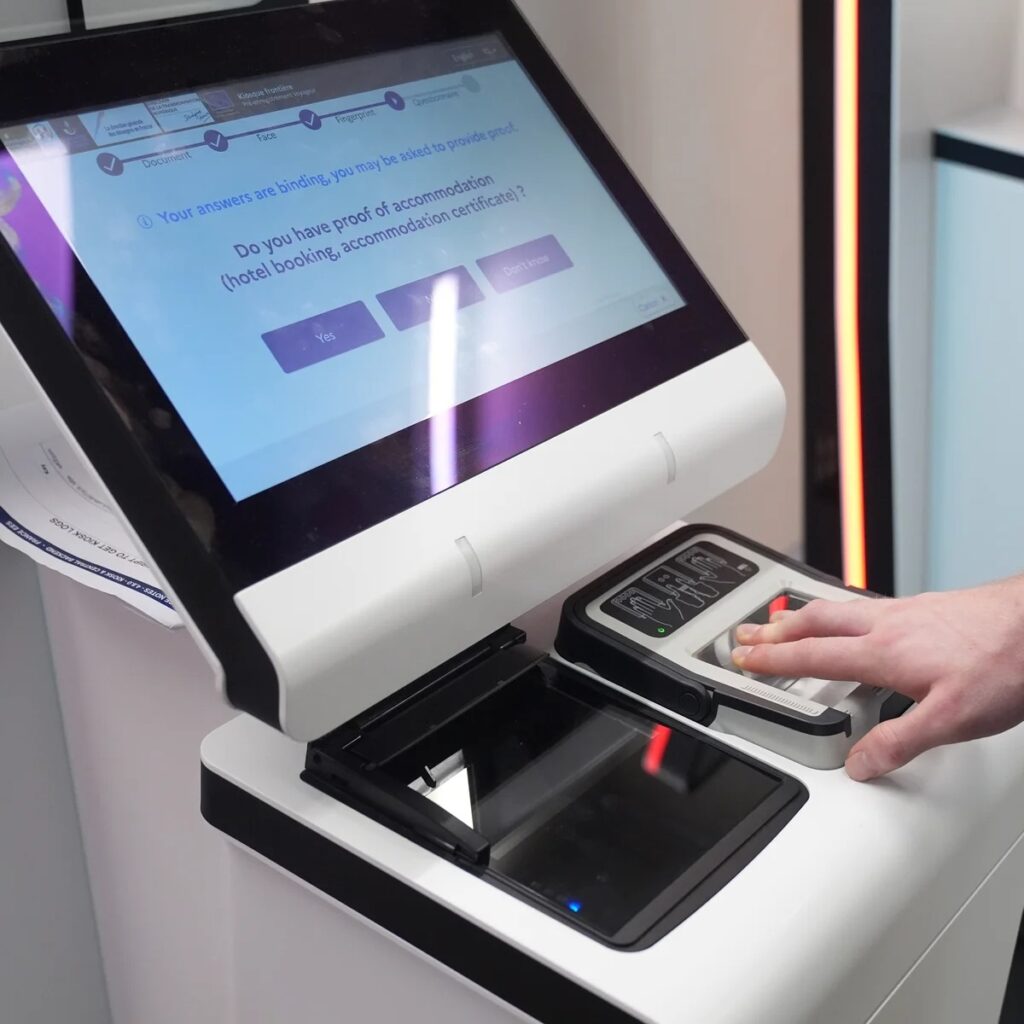
Travelers to parts of Europe could experience longer delays at border checkpoints as Sweden, Finland, Spain, and Croatia implement the EU’s new Entry/Exit System (EES), a digital border control platform aimed at improving security across the Schengen Area.
The system will gradually replace traditional passport stamping with biometric screening, enabling authorities to automatically monitor how long non-EU visitors stay within the bloc, according to the European Commission.
The Entry/Exit System (EES) is an EU-wide digital database that tracks the entry and exit movements of most non-EU nationals traveling to and from the 29 countries in the Schengen Area.
Instead of manually stamping passports, border officers collect:
It then automatically logs the date and location of each entry and exit, allowing authorities to monitor how long travelers stay in the Schengen Area and detect overstays.
The Entry/Exit System is part of the EU’s effort to modernise border control, reduce identity fraud, and improve security while keeping travel efficient.
What’s changed?
As Sweden, Finland, Spain, and Croatia integrate the system into their border checkpoints, travelers arriving via airports, seaports, or land borders will increasingly undergo biometric registration instead of relying on traditional passport stamps.
According to the European Commission’s Directorate-General for Migration and Home Affairs, the EES became fully operational on April 10, 2026, replacing manual stamping with biometric checks for non-EU nationals and automatically recording entries, exits, and overstays.
- Digitally verify travelers’ identities
- Automatically calculate the 90-day stay limit within any 180-day period for short-term visitors
- Detect overstays
- Identify individuals using multiple identities
- Share border data across participating Schengen countries
Officials say the system has already helped flag more than 1,000 suspected overstayers and individuals considered security risks during testing and phased rollout.
Who is affected?
The Entry/Exit System (EES) primarily applies to non-EU nationals, including tourists, business travelers, and other short-term visitors entering the Schengen Area.
For Filipino travelers, the new procedures will generally apply when entering participating Schengen countries under a Schengen visa or any applicable visa-free or visa arrangements.
EU citizens and certain categories of long-term residents are generally exempt from biometric registration under the EES. Should travelers expect delays?
Yes.
Since fingerprints and facial images must be captured during a traveler’s first registration—and then verified on future trips—border checks may take longer compared to the old passport-stamping system.
Authorities are advising passengers to:
- Arrive earlier at airports
- Allow extra time at ferry terminals
- Expect possible queues at land border crossings, especially during peak travel periods
Authorities say wait times should gradually improve as both border officers and travelers become more familiar with the new system.
Why is the EU introducing EES?

According to the European Commission, the Entry/Exit System is designed to fix long-standing gaps in traditional passport control, including:
- Difficulty tracking overstayers
- Inconsistent or missing passport stamps
- Risks of identity fraud
- Limited coordination and data sharing between Schengen countries
The EES also supports the future rollout of the European Travel Information and Authorisation System (ETIAS), an electronic travel authorization that will eventually be required for visa-exempt travelers entering much of Europe.
What should travelers do?
Passengers traveling to Sweden, Finland, Spain, Croatia, or other participating Schengen countries should:
- Carry valid travel documents
- Check visa requirements before departure
- Be ready to provide fingerprints and a facial scan at border control
- Allow extra time for immigration processing
While the new procedures may initially slow border checks, EU officials say the digital system is designed to improve long-term efficiency and security by standardizing biometric processing across the Schengen Area.

