

Candida auris Raises Global Concerns Due to Difficulties in Controlling Its Spread in Healthcare Settings.
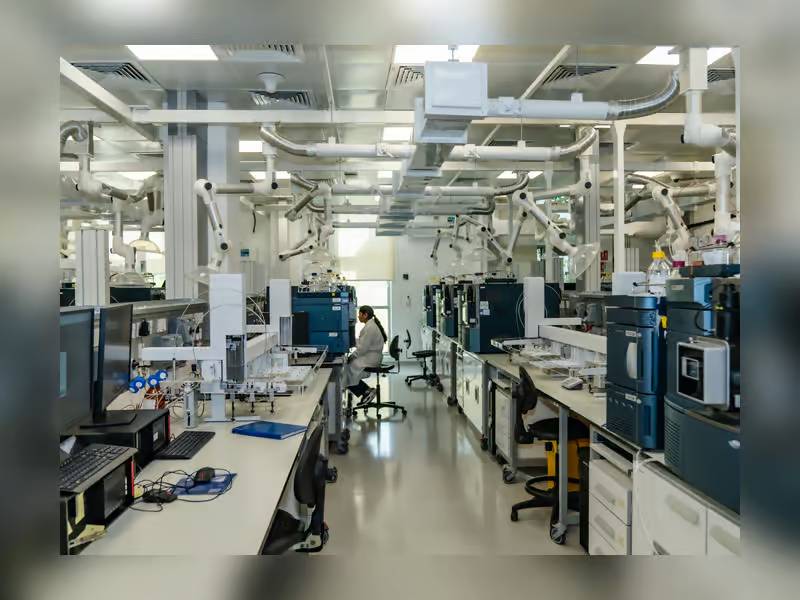
Abu Dhabi: Scientists at an Abu Dhabi laboratory, working in collaboration with healthcare technology company M42, have achieved a significant research milestone by identifying a rare, antifungal-resistant fungus in the emirate’s wastewater.
The discovery was made by the Reference and Surveillance Intelligence Department (Rasid) at the Central Testing Laboratory of the Abu Dhabi Quality and Conformity Council, in partnership with M42.
Using Abu Dhabi’s wastewater early surveillance system, researchers successfully detected and isolated a recently identified genetic variant, known as Clade VI, of Candida auris, a fungal pathogen associated with resistance to antifungal medications.
Why Candida auris Is a Global Health Concern
Candida auris has drawn international attention because of its potential to resist several antifungal treatments and the difficulties healthcare facilities may face in preventing and controlling its spread.
The World Health Organisation (WHO) has placed the fungus in its Critical Priority Group of fungal pathogens, highlighting its significance as a public health concern.
The research, published in Communications Medicine, a journal within the Nature Portfolio, documented what researchers described as the first known detection of Candida auris Clade VI in the region through environmental wastewater surveillance, based on information available when the study was conducted.
The findings provide additional insight into the genetic diversity of the pathogen and could help scientists better understand emerging risks associated with antifungal resistance.
More Than 23,000 Wastewater Samples Examined
The study involved the systematic collection and analysis of more than 23,000 wastewater samples as part of Abu Dhabi’s environmental health monitoring programme.
Researchers were able to isolate the fungus directly from wastewater and verify its identity through laboratory testing.
This was a significant aspect of the research because the scientists recovered actual fungal isolates rather than relying solely on the detection of genetic material.
The investigation involved several advanced scientific techniques, including:
- Laboratory identification and isolation of fungal samples.
- Whole Genome Sequencing (WGS) to examine the pathogen’s genetic structure.
- Genomic and phylogenetic analysis to identify and classify genetic clades.
- Antifungal susceptibility testing to assess responses to different treatments.
- Examination of genetic markers potentially linked to antifungal resistance.
The analyses revealed several genetic clades of Candida auris, including the rare Clade VI, along with genetic characteristics and differing patterns of resistance to certain antifungal medications.
Wastewater Surveillance Strengthens Early Health Monitoring
The findings demonstrate how wastewater monitoring can provide valuable information alongside traditional clinical and public health surveillance systems.
By examining wastewater samples, researchers can identify the presence of pathogens and monitor indicators of antimicrobial resistance, including resistance to antifungal treatments.
Such environmental surveillance can support earlier recognition of emerging health patterns, strengthen preparedness and provide scientific evidence to inform public health assessments.
However, detecting a pathogen in wastewater does not necessarily indicate that it is causing widespread infections in the community.
Abu Dhabi Researchers Highlight Scientific Significance
Samara Bin Salem, Director of Rasid, said the importance of the discovery lies in the ability of environmental monitoring systems to identify emerging health indicators and patterns of drug resistance.
She explained that these observations can be converted into scientific data for further investigation and risk assessment.
According to Bin Salem, combining direct laboratory isolation with whole genome sequencing and antifungal susceptibility testing enabled researchers to identify Clade VI and examine its genetic characteristics and resistance patterns in greater detail.
She added that Rasid is working towards developing a more advanced scientific monitoring system that goes beyond identifying microorganisms in samples.
The broader objective is to understand changes at the population level, recognise emerging risks and identify early indicators that may require preventive planning or additional public health preparedness.
Genomic Research Offers New Insights Into Antifungal Resistance
Dr Bhuvanesh Shanmugam, a principal researcher involved in the study and Senior Microbiologist and Laboratory Manager at M42, said identifying Clade VI contributes to scientific understanding of Candida auris and its genetic diversity.
He noted that the discovery also provides evidence of the pathogen’s presence outside clinical environments, demonstrating the value of environmental monitoring in infectious disease research.
Shanmugam explained that combining genomic sequencing results with antifungal susceptibility testing allows scientists to examine factors associated with treatment resistance more closely.
The integrated approach may also help researchers track emerging resistance patterns and identify genetic changes that could become important for future public health surveillance.
The discovery underscores Abu Dhabi’s growing use of advanced laboratory techniques and environmental surveillance to strengthen scientific understanding of emerging pathogens and support proactive health monitoring.
Continuous Wastewater Monitoring Helps Detect Emerging Health Risks
Dr Grzegorz Brudecki, a researcher involved in the study and Associate Director of Environmental Sciences at M42, highlighted the importance of continuous environmental surveillance in identifying changes, emerging trends and unusual patterns over time.
He explained that regular monitoring allows researchers to distinguish between expected variations and potentially significant indicators that require further scientific investigation.
According to Brudecki, integrating routine wastewater surveillance with advanced genomic analysis increases the scientific value of environmental data.
This combined approach enables researchers to examine changes in pathogens, track genetic variations and monitor indicators associated with antimicrobial resistance, providing a clearer understanding of potential emerging health concerns.
Advanced Laboratory Techniques Improve Pathogen Identification
Sumaya Al Mansoori, one of the study’s principal researchers, emphasised that combining multiple scientific methods played a key role in the successful identification and analysis of the fungal isolates.
She explained that the integration of systematic sample collection, continuous environmental monitoring, fungal isolation, whole genome sequencing and antifungal susceptibility testing allowed researchers to characterise the isolates more accurately.
These techniques also supported more precise genetic classification and helped scientists identify variations in resistance patterns among the samples examined.
Al Mansoori added that the findings demonstrate the potential of wastewater surveillance to provide valuable information about the genetic diversity of pathogens, indicators of antimicrobial resistance and emerging health risks.
She noted that such scientific insights can contribute to more proactive environmental monitoring strategies, helping researchers identify developments that may require further investigation and supporting improved preparedness for future public health challenges.

