

Energy markets remain volatile as Iran links shipping access to US concessions.
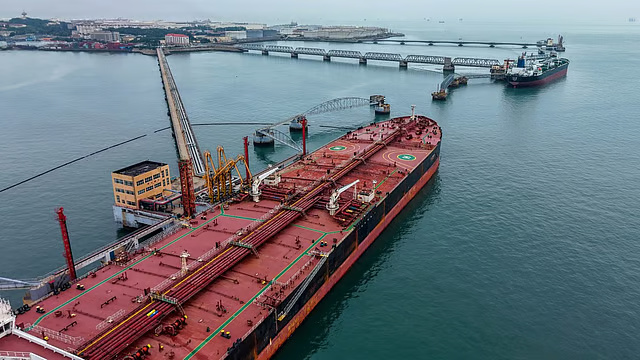
Oil prices edged higher in early Asian trading on Monday as uncertainty over a potential deal to reopen the Strait of Hormuz continued to outweigh expectations of a swift return to normal shipping.
At 8:33 a.m. Tokyo time on August 10, 2026, market data cited by OilPrice.com showed West Texas Intermediate (WTI) crude at $78.71 a barrel, up 53 cents, or 0.68%. Brent crude rose 73 cents, or 0.87%, to $84.28 a barrel, while Murban crude gained 72 cents, or 0.91%, to $80.25.
Natural gas prices also moved higher, reaching $2.719 per million British thermal units, an increase of 5.7 cents, or 2.14%.
The gains came despite renewed diplomatic efforts to reopen the strategic waterway. Traders remain concerned that a potential Iran-Oman arrangement may not be enough to quickly restore unrestricted global shipping through the Strait.
Iran said Monday that it was close to reaching a final agreement with Oman on new shipping routes through the Strait of Hormuz, but Tehran has made a full reopening conditional on further concessions from Washington.
Hormuz remains the market’s biggest wildcard
The Strait of Hormuz has remained severely disrupted since the US-Iran war broke out in late February.
The strategic waterway normally handles a significant share of global oil and LNG shipments, meaning any prolonged disruption could put further pressure on energy supplies and drive up shipping costs.
Oil markets have remained highly sensitive to developments on the diplomatic front, with prices reacting sharply to signs of progress or setbacks.
Brent crude settled at $83.55 a barrel on Friday, while WTI closed at $78.18. Both benchmarks posted gains as traders questioned whether a proposed reopening arrangement would be enough to restore normal commercial shipping through the Strait.
By Monday, Brent crude had climbed further toward $85 a barrel. Reuters reported that futures rose $1.20, or 1.44%, to $84.79, while WTI gained $1.12, or 1.08%, to $79.29 in the latest trading session.
The price moves point to an energy market that remains firm but highly volatile, rather than one convinced that the Hormuz crisis is close to ending.
The emerging deal is not yet a full reopening
The main sticking point is that Tehran and Washington appear to have different interpretations of what “reopening” the Strait would actually entail.
Iran has been negotiating with Oman over a mechanism to establish new shipping lanes through the strategic waterway.
But Tehran has said Washington must meet additional conditions, including concessions related to the conflict and sanctions, before unrestricted commercial passage can resume.
Earlier reports suggested that a proposed arrangement could give Iran significant control over inbound traffic—a potentially major concession given Washington’s longstanding opposition to any Iranian control over the international waterway.
That uncertainty is exactly what oil traders are pricing into the market.
A deal on paper does not necessarily mean:
- Tankers immediately resume normal passage.
- US-linked vessels receive guaranteed access.
- Insurers quickly restore coverage.
- Iranian and US sanctions are lifted.
- Gulf producers can immediately return to normal export schedules.
Until these questions are resolved, the oil market is likely to maintain a geopolitical risk premium.
What it means for oil consumers
For motorists and businesses, the key issue is not simply whether Brent crude trades above or below $80 a barrel.
What matters most is how quickly and reliably Gulf oil can reach international markets.
A prolonged disruption could push up shipping and insurance costs, extend voyage times and force refiners to seek alternative sources of crude. Even when sufficient oil is available elsewhere, rerouting cargoes can raise the cost of transporting supplies to consumers.
The U.S. Energy Information Administration has also significantly revised its oil-price forecasts as supply conditions have evolved, underscoring how quickly the market outlook can change as the Hormuz situation develops.
Why oil prices haven’t surged
The market is being tempered by the possibility of a diplomatic breakthrough.
Oil prices fell sharply earlier this month after President Donald Trump announced renewed talks with Iran, as traders anticipated that a potential settlement could eventually restore Gulf oil shipments.
However, traders have repeatedly found that the gap between a diplomatic announcement and the return of actual tanker traffic can be significant.
That explains Monday’s price action: traders are neither pricing in a prolonged closure of the Strait nor betting on an immediate return to normal operations.
Instead, they are pricing uncertainty.
What to watch next
The next major market catalyst will be whether Iran and Oman can finalize the proposed shipping arrangement—and, more importantly, whether Washington agrees to its terms.
The US has signaled optimism that an agreement could be reached soon, while Iran continues to attach conditions to any reopening of the strategic waterway.
For Asian markets, the implications are especially significant. The region relies heavily on crude oil and LNG supplies from the Gulf, meaning any prolonged disruption to normal traffic through the Strait of Hormuz could quickly push up refinery costs, freight rates, fuel prices and inflation.

