

An inoperative PAN may result in delayed tax refunds and increased TDS or TCS deductions.
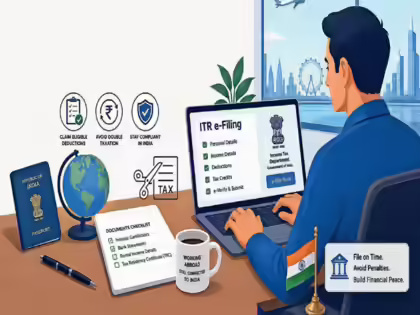
Dubai: UAE-based Indians are advised to check that their PAN records accurately reflect their residential status before filing an Income Tax Return (ITR) or conducting significant financial transactions in India.
Moving abroad does not automatically update your PAN records. While your PAN number remains the same for life, the personal details and residential status linked to it may need to be updated.
Why did some NRI PANs become inoperative?
PANs became inoperative from July 1, 2023, for individuals who were required to link their PAN with Aadhaar but failed to do so by the June 30, 2023 deadline. While many NRIs are exempt from mandatory Aadhaar linking, those whose PAN records still reflected them as residents may have been flagged as non-compliant, resulting in their PAN becoming inoperative.
PAN with Aadhaar. However, some NRIs still had their PANs marked as inoperative because the Income Tax Department’s records did not reflect their non-resident status.
According to the department, it automatically updated a taxpayer’s status as an NRI if they had filed an Income Tax Return (ITR) as a non-resident in any of the previous three assessment years or had informed their Jurisdictional Assessing Officer (JAO) of their non-resident status.
Affected NRIs were advised to submit proof of their non-resident status, along with supporting documents, to their Jurisdictional Assessing Officer (JAO) to have their records updated.
What happens if your PAN is inoperative?
The Income Tax Department has clarified that an inoperative PAN is not the same as a cancelled PAN. Taxpayers can still file their Income Tax Return (ITR), but they may face certain restrictions.
The key consequences include:
- Tax refunds and any applicable interest may be withheld.
- Tax Deducted at Source (TDS) may be deducted at a higher rate.
- Tax Collected at Source (TCS) may be collected at a higher rate.
- Processing of tax returns and certain financial transactions may be delayed.
Although an NRI can later claim excess TDS by filing an ITR, subject to applicable tax rules, an inoperative PAN may delay the processing of the return and the issuance of any refund due.
Why does your residential status in the PAN database matter?
Your PAN serves as the primary identifier for your tax records in India. It links your Income Tax Returns (ITRs), tax payments, Tax Deducted at Source (TDS) records, Annual Information Statement (AIS), and all communication with the Income Tax Department.
It is also widely used for investments, securities transactions, and property purchases or sales in India. Banks, stockbrokers, mutual fund companies and other financial institutions rely on PAN during Know Your Customer (KYC) verification.
However, updating your residential status with the Income Tax Department does not automatically update the records held by banks, brokers or other financial institutions. NRIs may need to update their KYC details with each organisation separately.
Does your PAN determine your tax residency?
No. Your PAN does not determine your tax residency. Under Indian tax law, residential status is assessed separately for each financial year based on the applicable stay-in-India (day-count) rules, income thresholds and other statutory criteria. Your PAN simply reflects the information recorded by the Income Tax Department and does not, by itself, establish your tax residency.
Does working in the UAE automatically make you an NRI for tax purposes?
No. Simply working in the UAE or holding a UAE residence visa does not automatically make you a non-resident under India’s income tax laws. Your residential status is determined separately for each financial year based on the applicable statutory tests, including the number of days spent in India and other prescribed conditions.
Similarly, updating your residential status in the PAN database does not permanently determine your tax residency for future years. Your status must be assessed afresh each financial year.
Is a PAN enough to claim benefits under the India-UAE tax treaty?
No. A PAN by itself does not establish eligibility for benefits under the India-UAE Double Taxation Avoidance Agreement (DTAA).
Depending on the nature of the claim, taxpayers may also need to furnish a valid UAE Tax Residency Certificate (TRC), Form 10F and other prescribed information to claim treaty relief.
In certain cases, Indian tax rules also provide limited relief from higher Tax Deducted at Source (TDS) rates for eligible non-residents who do not have a PAN, provided they submit the prescribed documents relating to their identity, address and tax residency.
How can you check your PAN status?
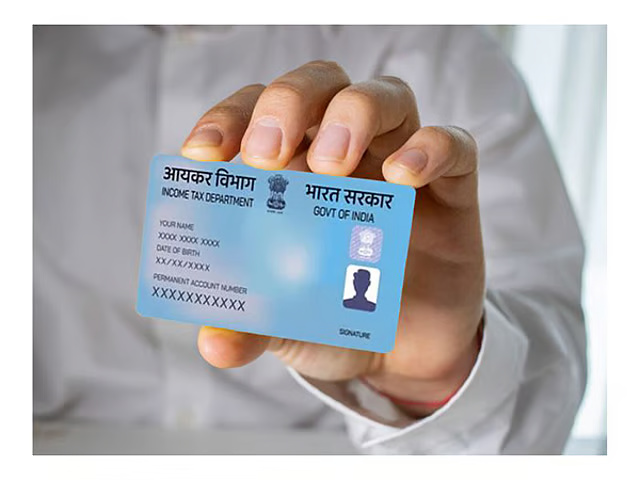
You can verify your PAN status through the Income Tax Department’s e-filing portal. After logging in, check:
- Whether your PAN is operative.
- Your PAN-Aadhaar linking status.
- The residential status recorded in your profile.
- The residential status reflected in your recent Income Tax Returns (ITRs).
If your PAN is operative and the Income Tax Department already recognises you as a non-resident, you may not need to make any changes simply because you now live outside India.
How can an NRI update their status?
If your PAN has become inoperative because your non-resident status was not recorded, you should contact your Jurisdictional Assessing Officer (JAO) to have your records updated.
You can identify your JAO using the “Know Your AO” service available on the Income Tax Department’s e-filing portal. Once contacted, you may be asked to submit proof of your non-resident status along with the prescribed supporting documents to update your PAN records.
To update your residential status, submit a request to your Jurisdictional Assessing Officer (JAO) along with supporting documents. These may include:
- A copy of your PAN card
- Passport, including relevant immigration and travel pages
- UAE residence visa or Emirates ID
- Evidence of the period spent outside India
- OCI (Overseas Citizen of India) or other overseas citizenship documents, where applicable
Depending on your case, the JAO may ask for additional documents or information. The Income Tax Department has not prescribed a standard timeline, such as one month, for processing every request.
NRIs should not rely solely on updating their residential status through the online profile on the e-filing portal to restore an inoperative PAN. If the PAN became inoperative because the department’s records did not reflect their non-resident status, the prescribed process is to submit a request with supporting documents to the JAO for verification and updation.

