

Hydrogen-powered pilot project marks a major milestone in India’s railway decarbonisation efforts.
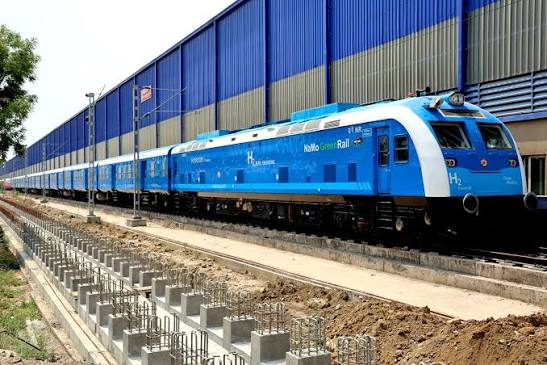
India launches first hydrogen-powered train in green transport push
India has introduced its first hydrogen-powered train, becoming one of a small number of countries exploring the technology as part of efforts to make rail transport cleaner and reduce reliance on fossil fuels.
The pilot project is part of a wider plan to modernise one of the world’s largest railway networks while lowering carbon emissions and advancing sustainable mobility.
The 10-coach train operates on an 89-kilometre (55-mile) route between Jind and Sonipat in the northern state of Haryana. It is powered by a 1,200-kilowatt hydrogen fuel cell propulsion system, marking a significant step towards greener railway operations.
Officials described the hydrogen propulsion system as the most powerful of its kind developed for a train worldwide.
Hydrogen-powered trains generate electricity through fuel cells, which combine hydrogen with oxygen to produce energy. Unlike conventional diesel engines, the technology produces no direct carbon emissions, releasing only water vapour and steam as by-products.
India’s push for self-reliance and sustainability
Prime Minister Narendra Modi, who launched the train’s inaugural journey, called the project a major milestone in India’s pursuit of self-reliance and sustainable development.
The Railway Ministry said the hydrogen-powered train was “developed entirely in India”, though senior officials clarified that some important components, including fuel cells, were sourced from overseas.
As part of the initiative, authorities also opened what they described as India’s largest railway hydrogen storage and refuelling facility in Jind. With a capacity of around 3,000 kilograms, the facility has been built to support future hydrogen train operations.
The pilot project required an investment of about $12 million. A senior railway official noted that the cost remains considerably higher than running a similar conventional train service, reflecting the early stage of hydrogen technology adoption in rail transport.
Hydrogen technology expected to become more affordable
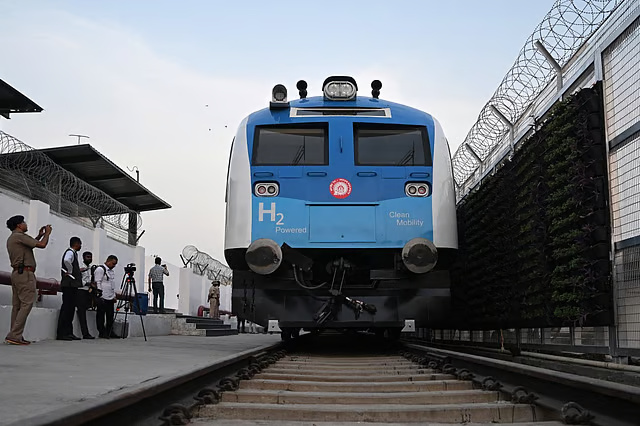
The railway official said the cost of hydrogen-powered trains is expected to decline as the technology advances and becomes more widely adopted.
With the launch, India joins a select group of countries, including Germany, Japan, China and the United States, that are developing or operating hydrogen-powered rail systems.
India’s railway network has undergone a remarkable transformation since the country’s first passenger steam train began its journey from Mumbai in 1853.
In recent years, the government has invested billions of dollars in upgrading railway infrastructure, enhancing safety standards and expanding network capacity as part of efforts to modernise one of the world’s largest rail systems.
India’s rail network enters a new era of modernisation
India’s extensive railway network transported 7.41 billion passengers and 1.67 billion tonnes of freight in the previous year, according to official figures, highlighting its crucial role in the country’s economy and daily life.
Alongside hydrogen-powered trains, India has also introduced its locally designed Vande Bharat trains, which are capable of reaching speeds of up to 180 kilometres per hour (112 miles per hour).
The country is also developing its first high-speed rail corridor using Japan’s Shinkansen technology. Officials expect the bullet train service, designed to operate at speeds of up to 320 kilometres per hour, to begin operations on its initial section in 2027.

