

Argentina’s history traces back to its time as part of the Spanish Empire.
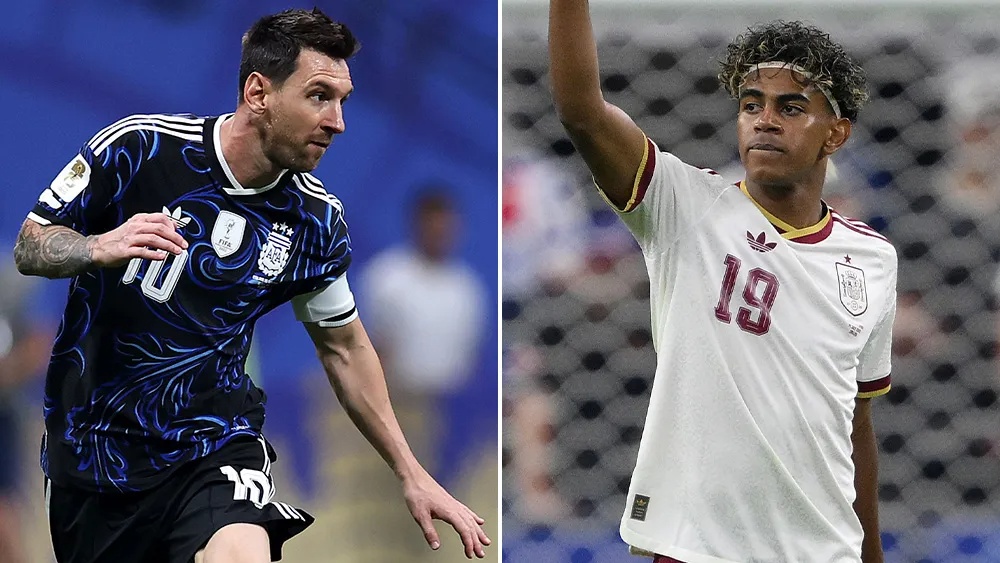
A Spain vs Argentina World Cup final would be a clash filled with layers of football history.
On one side is Lionel Messi, leading Argentina into another final against the country where he spent 21 formative years of his life. On the other is Spain, the football powerhouse that once hoped to convince him to represent its national team. Beyond the rivalry on the pitch lies a centuries-old connection between the two nations — a shared history that began long before football, the World Cup, or Messi’s iconic left foot became part of the story.
Argentina was once part of the Spanish Empire, but the country’s colonial story did not begin with a simple quest for gold, silver and territorial expansion. The arrival of Europeans in the region that is now Argentina followed a more complex path, with early explorers initially searching for something entirely different.
The quest for a route to Asia
As European powers expanded their exploration of the Americas, much of the continent remained uncharted territory. Spain and Portugal had already divided their areas of influence through the Treaty of Tordesillas, yet the true shape and geography of South America were still largely unknown to European explorers.
The search for a passage to Asia
For European explorers, the Río de la Plata — the vast river system stretching across present-day Argentina and Uruguay — appeared to hold the promise of a route towards Asia. At the time, much of South America remained unexplored, and navigators were eager to discover new passages and opportunities.
Soon, rumours began spreading of enormous silver deposits and hidden riches somewhere in the region. These tales became so influential that they eventually inspired Argentina’s name, which comes from argentum, the Latin word for silver.
However, there was one major problem: the legendary silver was never discovered.
Spain’s first encounters
In 1516, Juan Díaz de Solís became the first known European to reach the region. He arrived at the Río de la Plata, but the expedition ended in tragedy. Solís and several members of his crew were killed by Indigenous communities, while the survivors returned to Spain.
The land offered no easy path for European expansion.
Years later, Venetian explorer Sebastian Cabot learned of the supposed silver riches from Francisco del Puerto, a young survivor of Solís’ expedition who had stayed behind in the region. Driven by the promise of wealth, Cabot travelled inland and established a settlement near the Paraná River.
But this attempt also ended unsuccessfully. The expected silver never appeared, the settlement was destroyed, and the Europeans eventually abandoned their efforts.
Spain gradually establishes control
Spain did not give up on the region. Further expeditions arrived from different directions as the empire sought to expand its influence. However, unlike Mexico and Peru, where the Spanish encountered powerful civilisations such as the Aztec and Inca empires with vast reserves of precious metals, the area that became Argentina offered a very different challenge.
Without a centralised empire or easily accessible riches to capture, Spanish colonisation progressed slowly and became a far more complex process.
Spain’s influence takes root
Over the following decades, Spain gradually strengthened its presence in the region, establishing settlements and building an administrative system to govern the territory. Buenos Aires was founded, later abandoned, and eventually rebuilt as a key colonial centre.
By 1776, the area became part of the Viceroyalty of the Río de la Plata, a major administrative division of the Spanish Empire. For centuries, the lands that would later become Argentina remained under Spanish control.
However, changing political ideas and global events began to challenge colonial rule. The spread of Enlightenment thinking, political unrest across Europe, and Spain’s weakened position during the Napoleonic Wars fueled growing calls for independence.
These pressures eventually led to the Argentine Wars of Independence in the early 19th century, as local movements fought to break away from Spanish authority.
Argentina ultimately gained independence, ending centuries of Spanish colonial rule.
The Messi connection adds another layer to the history
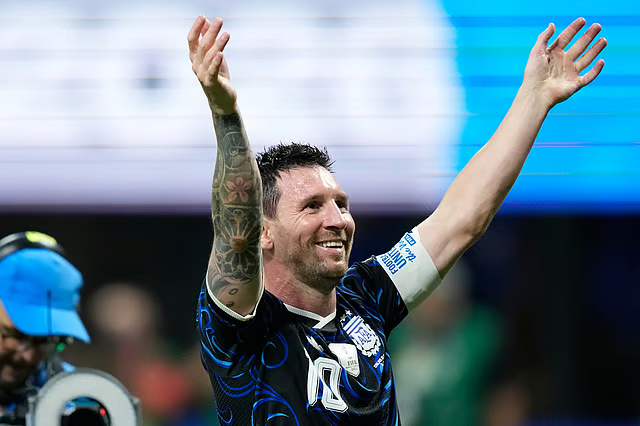
The centuries-old relationship between Spain and Argentina already gives a potential World Cup final a fascinating historical dimension, but Lionel Messi adds an unexpected footballing twist to the story.
Born in Argentina, Messi moved to Barcelona at just 13 years old and spent the next 21 years in Spain. He joined the famed La Masia academy before rising to become one of the greatest players the sport has ever seen.
Because he developed much of his football career in Spain, Messi was eligible to represent the Spanish national team. In an alternative timeline, he could have worn Spain’s iconic red jersey and played alongside the generation that won Euro 2008, the 2010 FIFA World Cup and Euro 2012.
However, Messi chose to represent Argentina, despite concerns that the country was slow to secure the commitment of a player who would eventually become its captain and greatest football icon.
The issue became more pressing in the early 2000s, when Messi was still relatively unknown in Argentina but had already started attracting significant attention from Barcelona.
The VHS tape that nearly changed Argentina’s football destiny
In the early 2000s, Lionel Messi was still largely unknown in Argentina, though stories were beginning to circulate within football circles about a remarkably talented teenager in Barcelona who could effortlessly glide past defenders with incredible speed, balance and control.
During a 2002 visit to Europe, Argentina coach Marcelo Bielsa and his assistant Claudio Vivas travelled to Barcelona to meet senior national team players. It was there that Messi’s early representative, Horacio Gaggioli, arranged for Vivas to watch footage of the young forward, as he later recalled to ESPN.
At the time, Messi’s talent was not widely recognised in Argentina. Gaggioli obtained a video from Barcelona showing the teenage player’s highlights and took the VHS tape to the hotel where Bielsa’s staff were staying, hoping they would notice the emerging star.
The footage showed a young, long-haired Messi in a Barcelona shirt, dribbling past opponents with extraordinary close control and movement that made him appear almost impossible to stop.
Vivas was immediately impressed and informed Bielsa about the teenager. The Argentina coach then asked to watch the footage himself. According to Vivas, Bielsa initially suspected the video might have been sped up because Messi’s movements seemed too quick to be real. But when the tape was played at normal speed, he realised the remarkable ability on display was genuine.
The moment Argentina fought to keep Messi
Messi’s international future was far from guaranteed. Argentina did not include him in the squad for the 2003 FIFA Under-17 World Cup, where the team eventually faced Spain in the semi-final and suffered a 3-2 defeat.
After the match, Argentina youth coach Hugo Tocalli was reportedly approached by the Spanish team’s chef, who suggested that Argentina might have had a different outcome if it had brought “the kid from Barcelona” to the tournament.
Tocalli immediately knew the player being mentioned. The remark reportedly remained in his mind, and after returning to Argentina, he began efforts to ensure the country did not lose Messi to Spain — a nation where the young forward had already spent years developing his football career and which could potentially have offered him an international future.
The rushed match that secured Messi for Argentina
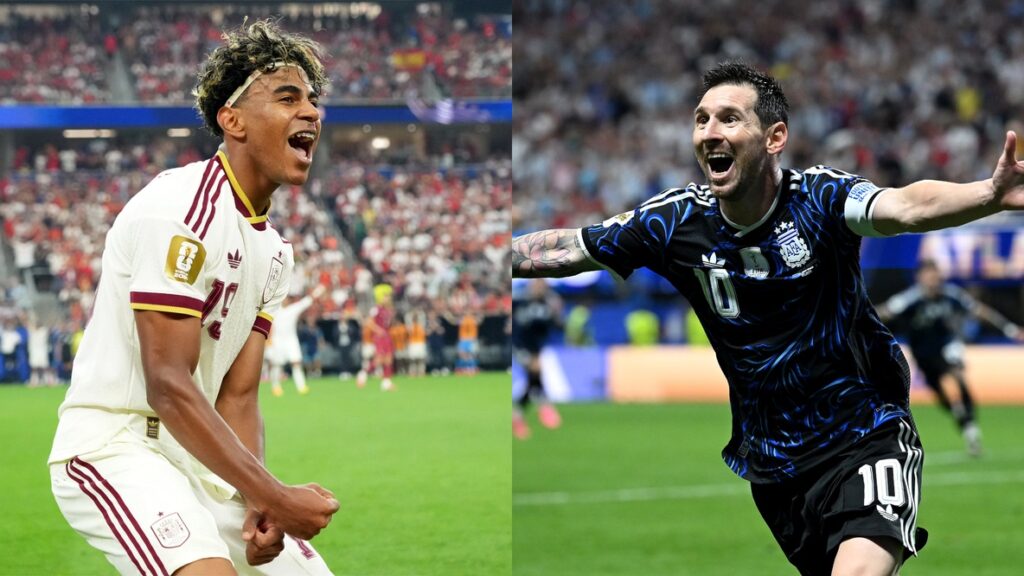
To prevent that possibility, Argentina arranged a last-minute friendly against Paraguay, giving Messi the chance to make his international debut and formally commit his future to the national team.
The circumstances surrounding the match were unusual. Even those involved were surprised by how quickly it was organised. Referee Gabriel Brazenas later recalled receiving a Monday call telling him he needed to officiate a game at the Argentinos Juniors stadium and complete the required FIFA paperwork, despite international youth fixtures typically involving officials from another country.
The debut that changed Argentina’s football history
Messi was expected to enter the match in the second half, and when he finally stepped onto the pitch, his talent was immediately obvious. Former player Federico Almerares, who featured in the game, remembered the teenager’s confidence in taking on defenders, while referee Gabriel Brazenas later recalled Messi gliding past opponents with his trademark quick movements, describing his dribbling as a rapid “ta-ta-ta” burst across the field.
Although the match had been arranged at short notice, its importance was historic. Argentina had acted quickly to secure the future of a player who would go on to become its captain, a World Cup champion and one of the greatest footballers of all time.
By choosing Argentina, Messi represented the country of his birth rather than Spain, the nation where he had spent the majority of his football development.
According to Horacio Gaggioli, Messi’s decision was never really in doubt. He received several inquiries about whether the young star could play for Spain, but Messi remained clear about his choice.
“Leo was always clear: He wanted to play for Argentina and Barcelona.”
A final shaped by history and Messi’s legacy
The Spain-Argentina final carries a connection that goes far beyond football. The relationship between the two nations stretches back centuries — from Spain’s exploration and colonisation of the land that would become Argentina, to Argentina’s fight for independence and its evolution into a nation with its own identity.
More than 200 years after Argentina ended Spanish rule, the two countries now face each other on football’s biggest stage. The storyline carries a remarkable twist: Spain once governed the territory that became Argentina, and centuries later, it came close to claiming Argentina’s greatest footballer as its own international star.
Messi spent 21 years in Spain, where he became a Barcelona icon and one of the greatest players in football history. Yet he chose to represent Argentina, guiding the nation to the 2022 World Cup title and now leading them into another final against the country that played such a defining role in his life and career.

