

Monthly instalments replace bulky cheques as Dubai modernises rental payments.
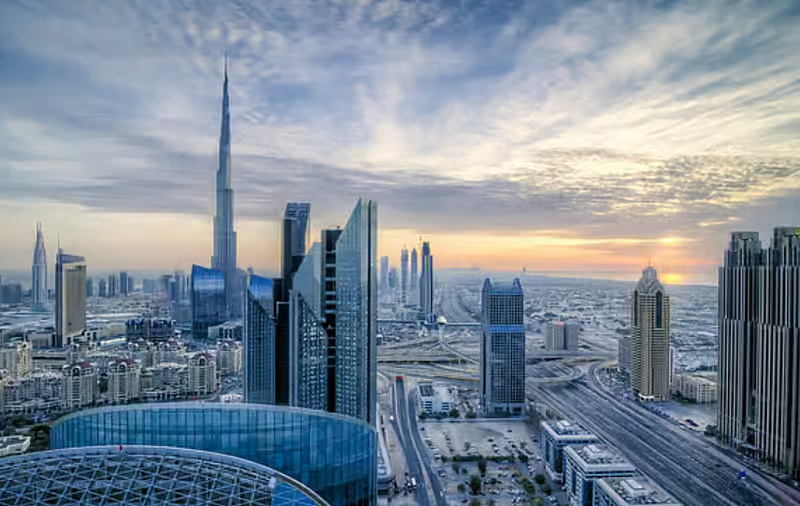
Dubai: Paying rent in Dubai is set to become easier, with more flexible payment options. In a major shift for the emirate’s real estate market, the Dubai Land Department (DLD) has launched the ‘Flexi Rent’ programme. The initiative allows residents to avoid large upfront costs by spreading rent into monthly instalments and other flexible payment structures.
The traditional model, which requires tenants to pay annual rent in one to four lump-sum cheques, is increasingly out of step with modern financial habits.
The surge in demand for monthly rent in Dubai
Demand for flexible rental payment terms has surged across the emirate. Rajneel Kumar, co-founder and COO of Rentify, a UAE-based proptech company designed to replace cheque-based systems, said consumer expectations have fundamentally changed.
“Demand for monthly rentals has grown considerably,” Kumar said. “Over 70% of tenants on our platform opt for monthly payments; for many, it has become a deciding factor in which property they choose. The traditional cheque model no longer reflects how people manage their finances.”
This trend is supported by broader data. In 2025, a Visa study showed a clear shift in consumer behaviour, with UAE residents increasingly moving away from physical cheques in favour of direct debits and digital alternatives for paying rent.
“Demand for monthly rentals has grown considerably—over 70% of tenants on our platform opt for monthly payments, and for many, it has become a deciding factor in which property they choose. The traditional cheque model no longer reflects how people manage their finances,” said Rajneel Kumar, Co-Founder and COO of Rentify.
How does ‘Flexi Rent’ work?
Under the first phase of the framework, participating landlords and property management companies will offer tailored payment plans ranging from monthly and quarterly schedules to semi-annual options. In some cases, payment schedules can be extended up to 12 months, allowing salaried professionals to align their largest living expense directly with their monthly income.
Existing tenants under active contracts can also benefit. Residents currently tied to traditional multi-cheque agreements can approach participating landlords to explore whether their contracts can be restructured under the new flexible terms.
Beyond spreading costs, the programme introduces several financial incentives designed to ease the burden on tenants. Depending on the landlord, these may include grace periods at the start of tenancies, waived administrative fees typically charged for delayed cheques, and frozen rental rates or promotional offers to encourage adoption.
Payments will be processed through credit cards, debit cards and automated direct debits, alongside traditional cheques for tenants who still prefer them.
To support the rollout, the Dubai Land Department (DLD) has signed cooperation agreements with 12 major real estate companies, including Wasl Properties, Deyaar Property Management, Driven Properties and Harbour Real Estate, with plans to gradually expand the programme across Dubai’s wider property market.
Financial relief: How flexible payments ease tenant cash flow
Most tenants in Dubai pay rent through one, two, four or six cheques, covering a significant portion of their annual rent. This often requires residents to commit large sums upfront, creating financial pressure for households already managing other living expenses.
Muhammad Abubakar, CEO of Home Keys Real Estate, said the initiative is an important step towards more sustainable urban living. “The traditional system often places unnecessary financial pressure on tenants, especially families and young professionals balancing multiple monthly outgoings,” he explained.
He added that greater flexibility could ease cash flow, reduce reliance on short-term personal loans, and open up premium housing options to a wider range of residents. Landlords, he noted, also stand to benefit through a larger pool of qualified applicants and more stable long-term occupancy.
Overall, flexible rental payments can help residents manage their budgets more effectively, reduce the need for short-term borrowing, and improve access to quality housing, while also supporting higher occupancy rates for property owners.
Jake Fletcher, Head of Residential Leasing at Engel & Völkers Middle East, said that while the policy does not lower base rental prices, it removes one of the biggest barriers to entry.
“Traditionally, tenants have been required to pay upfront, creating a significant cash flow challenge, even for residents who can comfortably afford the cumulative monthly cost,” Fletcher said.
While the initiative does not directly reduce rental prices, it addresses a key challenge faced by many tenants: the upfront financial commitment. Traditionally, tenants in Dubai have been required to pay annual rent through one to four cheques, creating cash flow pressure even for those who can manage the monthly equivalent.
Fletcher added that introducing more flexible payment structures brings Dubai closer to other major global cities where monthly rent payments are the norm. “This is particularly important as Dubai continues to attract international talent, many of whom are relocating from markets where large upfront rental payments are uncommon,” he said.
Offering monthly rent aligns Dubai with practices seen in cities such as London, New York and Singapore. Mohammed Al Sari, Chief Development Officer at HRE Development, noted that modernising the rental experience enhances the emirate’s appeal for long-term settlement.
“Combined with continued investment in transport infrastructure, such as the upcoming Etihad Rail passenger service, and the growth of well-connected residential hubs, these measures strengthen Dubai’s appeal as a permanent place to live and work,” said Al Sari. He added that areas with high concentrations of salaried corporate professionals and growing families are likely to see an immediate rise in demand as payment friction eases.
Monthly rental payments are the norm in many major international cities, and introducing similar flexibility in Dubai enhances the overall resident experience. Together with ongoing transport infrastructure development, including the Etihad Rail passenger service, and the expansion of well-connected residential communities, these measures reinforce Dubai’s position as a long-term place to live and work.
Operational hurdles and the tech infrastructure
Al Sari noted that landlords and property managers will need robust systems for real-time payment processing, collections management and accurate cash-flow forecasting.
However, the UAE’s financial ecosystem has been gradually building the infrastructure for this shift. Last year, Property Finder partnered with Keyper, a platform enabling automated monthly rent installments.
Furthermore, the Dubai Land Department (DLD) previously integrated its Ejari tenancy system with the Noqodi direct debit system, legally enabling automated bank withdrawals. Alongside Rent Now, Pay Later (RNPL) services, technology is rapidly bridging the operational gap.
“While these changes require upfront investment in technology, they present an opportunity to modernise rental management,” Al Sari noted. “Early adopters will be uniquely positioned as tenant expectations evolve.”

