

Emaar founder says hard work, discipline, and constant risk assessment are key to helping companies withstand crises.

Abu Dhabi: Mohamed Alabbar, Founder and Managing Director of Emaar Properties, said he prefers hiring Indians because of their strong work ethic, using the comment to highlight the importance of hard work, discipline, and a business culture that helps companies navigate repeated crises.
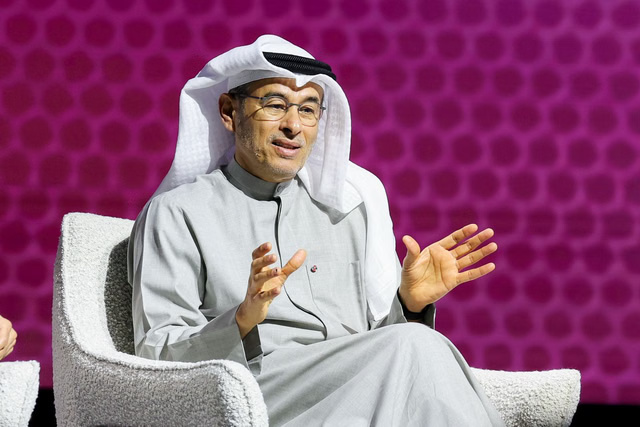
Speaking at the Make it in the Emirates summit in Abu Dhabi, Mohamed Alabbar said companies aiming to grow through periods of disruption need teams that stay active, continuously review their work, and remain closely attuned to risk as conditions shift.
“I always tell people, from my own perspective, my IQ is average, but my hard work is the best,” Alabbar said. “I believe in hard work.”
He said hard work is not just about long hours, but also about carefully evaluating every opportunity, understanding when to take risks, selecting the right people for the business, and closely monitoring execution.
“You need to check your work. You need to study every opportunity and know where to take risks and bring people and monitor their work and keep pushing,” he said.
Alabbar then linked that perspective to his preference for Indian talent in his businesses.
“The harder you work, the luckier you will get,” he said. “There’s a saying: hard work beats talent when talent fails to work hard. This is why I like to hire Indians, because they answer the phone even at one o’clock in the morning.”
Crisis rewards prepared companies
Alabbar said the recent crisis underscored that resilience cannot be built once disruption has already started. Instead, he said, businesses must learn from each shock and convert those lessons into stronger operational discipline.
“What happened recently was not expected, and our country showed its steadfastness and the resilience of its planning under the directives of our leadership, so we managed to successfully survive,” he said.
He pointed to the 2008 financial crisis, the COVID-19 pandemic, and other periods of economic stress as key moments that forced companies to rethink decision-making, safeguard employees, and manage liquidity more carefully.
“There were hard lessons for everyone. We had some hard lessons during the COVID pandemic as well as other crises,” Alabbar said.
He added that the difference today is that many UAE businesses are now more comfortable operating amid uncertainty, having already gone through multiple cycles of disruption.
“When you learn from 2008 and from COVID-19, you have to build an agile and resilient business that can handle these circumstances,” he said.
Emaar moved early to reassure staff
Emaar Properties founder Mohamed Alabbar said one of the company’s first responses during the recent crisis was to reassure employees that there would be no layoffs or salary cuts.
“In the first week, we sent emails to everyone, all the employees. We told them, we are not laying off anyone in the workforce. We are not cutting their salaries,” he said.
He explained that the decision was shaped by lessons from earlier crises and by what he described as the responsibility of UAE businesses toward employees, society, and national leadership.
“Everyone learned lessons from previous crises and, with respect to everyone—whether in government or family businesses—we understand human nature,” he said.
Alabbar said reputation becomes especially important during periods of crisis, as companies are judged by how they treat people under pressure.
“We care about our reputation in society and in front of our leadership,” he said. “It is important for us to always live up to these standards, and to the name of our country.”
The case for “positive paranoia”
Alabbar said resilient companies need what he described as a “positively paranoid” culture—one where ambition is balanced with constant safeguards around costs, contractors, customers, technology, and broader market risks.
“We are looking for profit, but also we are looking for growth,” he said. “In our country, our growth is accelerating.”
He added that this growth must be managed with discipline, as companies cannot pursue expansion without clearly understanding their pressure points.
“You want to go fast, take the money from the table, but there is a process,” Alabbar said. “You have to manage cost, you have to manage technology, you have to manage risks. You have to follow the market on a daily basis.”
The approach is particularly critical in real estate, where developers must simultaneously manage buyers, contractors, construction timelines, and cash flows.
Emaar Properties has around 40,000 customers who have paid for flats and villas still under construction, with monthly instalments continuing to flow into the business. At the same time, around 100 construction sites remain active.
“Those customers, they pay instalments on a monthly basis, and every month we get cash that flows to the bank,” he said.
Lessons from 1997
Alabbar said his approach to crisis management was shaped by experience dating back to 1997, when he was in Singapore during a challenging period for business.
“I started learning from 1997,” he said. “I remember the situation was very difficult. We took a loan from the bank, and then the bankers said we need our money back.”
He said the pressure of that period showed how quickly liquidity can tighten when customers pull back and banks begin demanding repayments.
“The commodities, they are at the store, there are no customers,” he said.
That experience, he added, reinforced the importance of learning from every crisis and building teams capable of preparing the business for the next shock.
“If the organisation cannot learn from what is happening—and I’m sure everyone is learning—but do we have staff who can learn from this and prepare the organisation? Yes,” he said.

