

CEO expects a surge in visitor numbers in Q3, while maintaining that the long-term growth strategy for DWC remains unchanged.
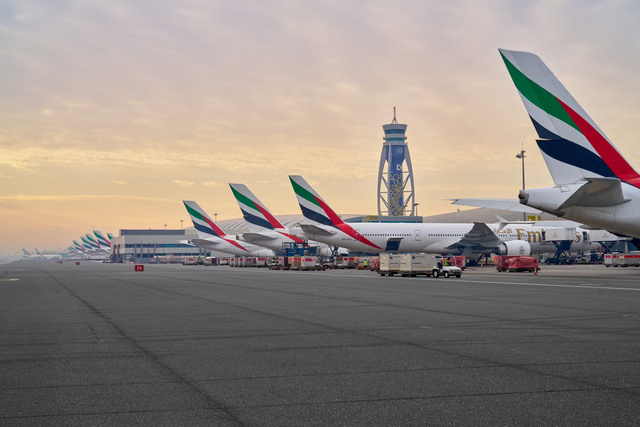
Dubai: Recovery at Dubai Airports is expected to accelerate in the third quarter of this year, with a surge in visitor numbers anticipated as travel demand returns, according to the airport operator’s chief executive.
Paul Griffiths, CEO of Dubai Airports, said the coming months would mark a turning point after weeks of disruption that affected flight capacity and schedules.
“What I think will be the really, really strong growth quarter will be Q3 when we start to see huge surges of visitors coming back to Dubai,” he said.
He added that Dubai’s appeal as a destination—particularly during the winter season—will be a key driver of demand recovery.
“There is no other comparable destination… they will flock back to Dubai in significant numbers,” he said.
Recovery already underway
Dubai Airports has now returned to full operating capacity following the reopening of UAE airspace, removing the main constraint on flight movements.
“We’re now able to operate at 100 per cent full capacity,” the CEO said.
At the height of the disruption, the airport was operating at just 38 per cent of normal throughput due to restricted regional flight paths, even though its infrastructure remained fully available.
The recovery is expected to be led first by transfer traffic—a core pillar of Dubai’s aviation model—before stronger growth in point-to-point travel follows.
“We believe that we are in a recovery phase, much further ahead than any of the competing hubs,” he said.
While uncertainties remain around fuel prices and global conditions, Griffiths said underlying demand for travel remains strong.
“There are so many variables, it’s very difficult to give a precise forecast… but overall, we can expect very strong growth in the aviation sector,” he said.
He added that airlines may absorb some of the cost pressures in order to stimulate demand.
“They will have to suffer a bit on their margins to get people flying again.”
Dubai’s position as a major global transit hub is expected to support a faster recovery compared to other international airports, helping it rebound more quickly once travel demand strengthens.
DWC expansion plans unchanged
Despite recent disruption, Dubai Airports is continuing with its long-term expansion plans at Al Maktoum International Airport, with no changes to timelines or overall strategy.
“No delays at all in our long-term strategic plans… nothing will defer the growth that we’re seeing in the longer term,” the CEO said.
The next phase of development at DWC is designed to handle up to 150 million passengers annually and remains central to Dubai’s future aviation capacity planning.
“We will need that in exactly the timescale we’ve already defined,” he said.
Griffiths said that planning and design work continued even during the disruption, reflecting confidence in long-term demand.
Short-term disruption, long-term growth intact
The recent disruption is expected to weigh on full-year performance, with Dubai Airports unlikely to reach its earlier target of 100 million passengers this year. However, the milestone could still be achieved next year, according to Griffiths.
He noted that Dubai maintained operational readiness throughout the crisis, which has positioned the airport for a faster recovery once conditions stabilise.
“We’ve maintained our full operating strength… so we are absolutely ready to return to full capacity at a moment’s notice,” he explained.

