

Obesity treatment policies are not only critical public health measures but also powerful drivers of economic growth.
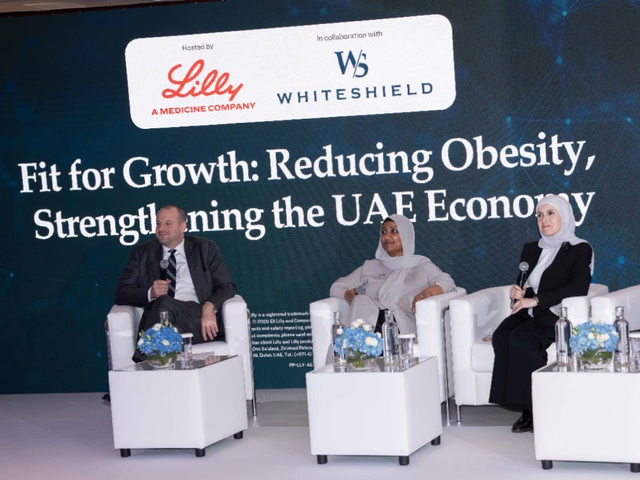
A UAE report launched in collaboration with the Ministry of Economy and Tourism highlighted the wide-ranging benefits of obesity intervention across healthcare, the economy, society, and education, supporting the goals of the ‘We the UAE 2031’ vision.
The report was unveiled in the presence of Dr Maria Hanif Al Qassim, Assistant Undersecretary for Policies and Economic Studies at the ministry. Speaking at the event, she said the report comes at a crucial time as it sheds light on the often-overlooked impact of obesity on the economy, society, and human development — beyond its health implications. She emphasized that the report’s significance lies in its evidence- and data-driven approach to measuring the real impact of weight loss, which can help shape informed policymaking and strengthen collaboration between government entities, the healthcare sector, insurers, and employers.
She added that the UAE continues to place health at the forefront of its national development agenda, stressing that a healthy and productive society is essential for enhancing quality of life, fostering innovation, and strengthening economic resilience.
The report, titled Beneath the Surface: The Hidden Socioeconomic Impacts of Weight Loss, highlighted a major opportunity for the UAE to generate both health and economic benefits through earlier and more effective obesity intervention, with an estimated 1.2 million adults expected to overcome obesity.
The report found that innovative obesity interventions could help more than 1.2 million adults overcome obesity, potentially add $51 billion to the UAE’s GDP by 2031, and reduce healthcare costs by $1.5 billion.
Fadi Fara, CEO of Whiteshield, said the report reveals for the first time the full scale of the benefits linked to weight loss and obesity treatment in the UAE — not only through improved individual health outcomes, but also via broader economic and social gains, including positive impacts on the future workforce.
He added that effective obesity treatment policies are not only important health measures, but also sound economic strategies. With recent advances in research and innovation, he noted, countries now have an unprecedented opportunity to tackle the economic and social burden of obesity with greater ambition and speed than ever before.
Speaking at the launch event, Leena Aziz, Senior Director of Corporate and Government Affairs, Gulf, at Lilly, said obesity is a complex chronic disease that affects not only personal health, but also workforce productivity, economic resilience, and long-term national development. She added that while the UAE has made significant progress in prioritizing health within its national agenda, there remains a strong opportunity to further strengthen prevention, early intervention, and access to care.
She added: “We are committed to collaborating across the healthcare ecosystem to improve understanding, reduce stigma, and support more people earlier in their journey.”
The report noted that accelerated obesity intervention could help more than 1.2 million adults in the UAE move out of obesity by 2031, reducing obesity prevalence by 15 percentage points. It also projected cumulative healthcare savings of up to $1.5 billion and an estimated $51 billion contribution to GDP in 2031 alone.
According to the report, GDP growth could increase by an additional 1.5 percentage points above baseline projections, bringing the UAE’s economy to an estimated $790 billion by 2031. The findings underscore the growing role of population health in driving economic resilience and global competitiveness.
The report further highlighted that worker productivity could improve by the equivalent of up to five additional working days per year for individuals previously living with obesity, while annual personal income could increase by as much as $772.
The report estimated that accelerated obesity interventions could result in nearly 75,000 additional births by 2031, including around 24,000 Emirati births. It also projected that more than 17,000 additional people could enter the workforce, among them over 9,000 Emirati women, highlighting the strong connection between public health, workforce participation, and long-term demographic sustainability.
In the education sector, the report forecast more than 2,000 additional bachelor’s degree enrolments and a 1.4 per cent decline in university dropout rates under the accelerated intervention scenario.
The report categorised obesity intervention into four key pillars — health, economy, society, and education — aiming to support the development of sustainable, data-driven health and economic strategies while strengthening the UAE’s future readiness.

