

Houthi Attacks on Saudi Oil Facilities Raise Regional Security Concerns.
The US-Israel-Iran conflict has entered Day 258, with fresh developments raising concerns over a possible escalation across the Gulf even as diplomatic efforts continue to prevent a return to large-scale fighting.
Iran’s Islamic Revolutionary Guard Corps (IRGC) has claimed that it targeted a US early-warning radar installation in Bahrain. If confirmed, the incident would mark the first reported attack on American military assets in a Gulf country since early September.
Meanwhile, US President Donald Trump said Gulf countries had asked Washington to refrain from launching further attacks against Iran.
For UAE residents, the key concerns remain regional security, possible flight disruptions, maritime incidents near the Strait of Hormuz and potential movements in oil prices.
The UAE’s airspace remains operational, according to the latest aviation reporting cited in the available updates. However, regional security advisories and airline restrictions continue to affect travel.
Here are the latest developments UAE residents need to know:
Iran claims attack on US radar installation in Bahrain
Iran’s Revolutionary Guards said on Friday that they had targeted a US early-warning radar installation in Bahrain.
Iranian state media described the operation as retaliation for an alleged US airstrike on a telecommunications tower in Sirik county, in Iran’s southern Hormozgan province.
Reuters reported that neither Washington nor Bahrain had immediately commented on the claim.
The reported strike could signal renewed threats to US military infrastructure in Gulf countries following a period of relative calm. However, the IRGC’s claim has not been independently confirmed.
IRNA reports ‘enemy strike’ in Iran’s Sirik
Iran’s state-run IRNA news agency reported that Sirik, in the southern province of Hormozgan, had been hit in what it described as an ‘enemy’ attack.
Citing official sources, the agency said the military strike took place late on Thursday, November 12. It did not identify the attacker or specify the target, extent of damage or any casualties.
Residents had earlier reported hearing several explosions of unknown origin, according to Iran International.
Sirik is located in Hormozgan province, near the Strait of Hormuz, a strategically important route for global oil shipments. There has been no independent confirmation of the reported strike.
Trump says Gulf allies asked him to pause attacks on Iran
Trump said Gulf countries had urged him to hold off on launching further attacks against Iran.
The remarks came amid the US president’s warnings that Washington could take additional military action against Tehran.
The reported diplomatic intervention highlights regional concerns that renewed US-Iran hostilities could expose Gulf countries to further retaliation, disrupt energy exports and threaten maritime traffic.
The situation remains fragile, with Washington maintaining its naval blockade of Iranian ports while diplomatic efforts continue.
Houthis claim attacks on Saudi oil infrastructure
Yemen’s Iran-aligned Houthis claimed on Thursday that they had targeted Saudi Arabia’s East-West oil pipeline, an oil facility in Yanbu and an Aramco building in Riyadh.
Saudi-led coalition forces subsequently reported intercepting and destroying two drones — one in the Riyadh region and another in the oil-rich Eastern Province.
The Houthis did not specify when the alleged attacks took place, while Saudi Arabia had not immediately responded to the claims.
The East-West pipeline is strategically important because it enables Saudi Arabia to transport crude oil to export terminals on the Red Sea, bypassing the Strait of Hormuz.
The latest claims add to concerns over the security of Gulf energy infrastructure and the potential implications for regional oil supplies and maritime trade.
Strait of Hormuz: Four tankers reportedly hit by explosions
Maritime security remains a major concern, with Iran’s military saying four oil tankers were hit by explosions in the Strait of Hormuz on Wednesday and Thursday.
Iran claimed the vessels had ignored warnings and entered restricted waters. Iranian state media attributed the explosions to naval mines.
However, Reuters said it could not independently verify Iran’s account.
In a separate incident, the UK Maritime Trade Operations (UKMTO) reported that a commercial vessel was struck by an unidentified projectile about 14 nautical miles northwest of Ras Al Khaimah on Wednesday.
The impact sparked a fire in the vessel’s engine room, but the crew evacuated safely.
The incident’s proximity to UAE waters underscores the importance of maritime security for residents, businesses and shipping operators, particularly as tensions continue around one of the world’s most important energy-shipping routes.
UAE airspace remains open, but flight disruptions continue
There is no indication in the latest available reporting of a general shutdown of UAE airspace. However, airlines continue to adjust schedules in response to regional security concerns.
Here is the latest reported airline situation:
Etihad Airways
- Riyadh and Dammam passenger and cargo flights cancelled through November 19.
- Jeddah services resumed on November 6.
Emirates
- Selected services to Riyadh, Dammam and Jeddah affected.
- Some services to Saudi Arabia continue operating.
flydubai
- Suspensions of flights to Riyadh and Abha extended through November 16.
- Dammam services also affected.
Air Arabia
- Selected services to Saudi Arabia affected.
- Dammam services reported to be operating.
Iranian airlines
- Flights to the UAE remain suspended until further notice.
Emirates and flydubai
- Dubai-Tel Aviv services remain suspended.
These are reported service arrangements and do not guarantee the status of individual flights. Passengers should check directly with their airlines for the latest updates before travelling to the airport.
Oil prices: Markets weigh blockade against renewed attacks
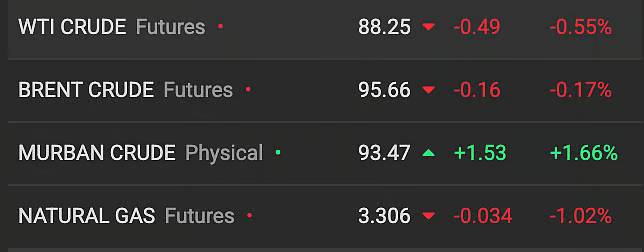
Oil prices edged lower on Friday, putting the market on course for a second consecutive weekly decline as traders weighed the possibility of diplomatic de-escalation against continuing threats to shipping in the region.
The market remains caught between two competing factors: hopes that diplomatic efforts could ease tensions and concerns that renewed attacks or disruptions around the Strait of Hormuz could threaten global oil supplies.
Both benchmarks were down by around 2.9% over the week, as markets assessed the impact of the continuing US blockade of Iranian ports and the possibility that diplomatic efforts could prevent an immediate return to full-scale fighting.
However, tanker attacks and uncertainty surrounding the Strait of Hormuz remain significant risks to global energy supplies. Any prolonged disruption to shipping through the waterway could have wider implications for oil markets and international trade.
What UAE residents should do
For UAE residents, the latest developments call for vigilance rather than panic. Here are some practical precautions:
- Flights: Check airline apps and airport announcements before leaving home, particularly if travelling to Saudi Arabia, Bahrain, Kuwait or Israel.
- Security: Follow announcements from the UAE Ministry of Defence and comply with local emergency instructions.
- Maritime incidents: Stay away from restricted beaches and coastal areas if authorities issue warnings.
- Suspicious objects: Do not approach, photograph or handle suspected missile or drone debris. Report it to the relevant authorities.
- Social media: Avoid sharing unverified videos, claims of interceptions or reports of explosions.
- Travel plans: Keep alternative arrangements and emergency contact details accessible, particularly when travelling internationally.
- Official updates: Monitor announcements from UAE government authorities for any new safety guidance or restrictions.
Is the Gulf heading towards another escalation?
Three developments are likely to shape the regional outlook:
- The Bahrain radar claim: Whether Iran’s reported attack is independently confirmed and whether Washington or Manama announces a response.
- The Saudi-Houthi confrontation: Whether the Houthis escalate their claimed attacks on Saudi oil infrastructure and other strategic facilities.
- The Strait of Hormuz: Whether tanker incidents continue despite the US blockade and ongoing diplomatic efforts.
The reported Bahrain radar incident is particularly significant because, if confirmed, it could mark a renewed direct threat to US military assets in the Gulf.
However, Trump’s statement that Gulf allies had urged Washington to hold back further attacks suggests regional governments continue to favour restraint and are concerned about the consequences of renewed hostilities.
UAE residents should watch for official statements from Washington, Tehran, Manama and Abu Dhabi regarding the Bahrain radar claim and any subsequent developments.
Further developments to monitor
- Any US military response to Iran.
- Saudi Arabia’s response to the latest Houthi claims.
- New UKMTO maritime incident reports around the Strait of Hormuz and UAE waters.
- Any revisions to EASA aviation advisories expected before or on November 16.
- Further airline cancellations, route adjustments or service resumption announcements.
- Progress in diplomatic negotiations and developments concerning the US naval blockade.
The regional situation remains fluid. For UAE residents, following verified official information, checking travel arrangements and avoiding unconfirmed reports remain the most practical ways to stay informed.

