

The ministry warns that defective driver-side airbag inflators could cause fatal injuries and says affected vehicles will receive free repairs.
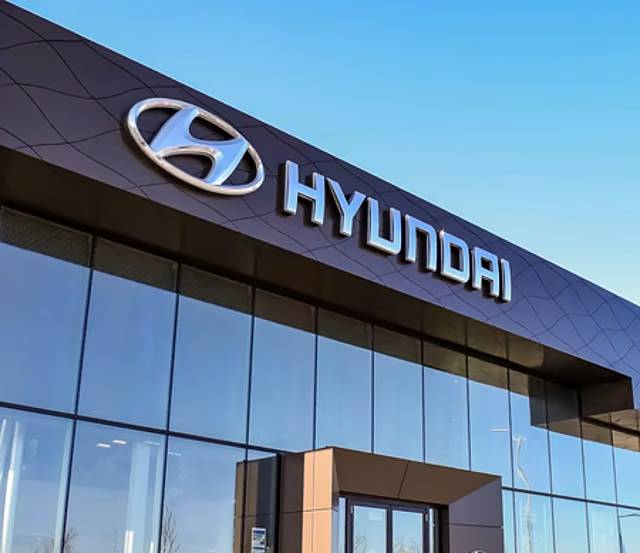
Dubai: Saudi Arabia’s Ministry of Commerce has recalled 44,305 Hyundai i30 and Elantra vehicles over a defective driver-side airbag inflator, warning owners to stop driving the affected cars immediately.
Announced on November 12, the recall covers vehicles manufactured between 2009 and 2011. Owners have been advised to contact authorised Hyundai dealers to arrange the necessary repairs, which will be carried out free of charge.
The ministry warned that the defect could cause serious or potentially fatal injuries, making it important for owners to have their vehicles inspected and repaired without delay.
The latest announcement follows an earlier recall notice issued in September 2025 involving the same models and manufacturing years. That warning highlighted the risk of the driver-side airbag inflator rupturing during deployment in a crash and releasing sharp metal fragments into the vehicle’s cabin.
Such a failure could turn an airbag, designed to protect occupants during an accident, into a source of serious injury.
Similar airbag concerns reported in other countries
Saudi Arabia has issued multiple recall notices involving the Hyundai models, although the number of affected vehicles has changed over time.
An earlier notice covered 71,764 Elantra and i30 vehicles from the same model years. The latest figure of 44,305 represents 27,459 fewer vehicles, a reduction of approximately 38 per cent.
Hyundai’s international recall records also point to the same airbag inflator concern. Campaign 31D070 covers i30 (FD) and Elantra (HD) vehicles manufactured between 2009 and 2011.
Australia has listed 809 affected vehicles, while New Zealand issued a recall in August 2023 after Hyundai Motor Company in South Korea identified the possibility of the inflator module rupturing during deployment.
If the inflator breaks apart, the airbag may not inflate properly. The resulting release of high-pressure gas could also propel metal fragments into the passenger compartment, potentially injuring occupants.
A US recall filing involving 2011 Elantra and i30/Elantra Touring vehicles manufactured in December 2010 also identified ARC single-stage inflators.
Hyundai’s Brazilian division has carried out a similar recall involving the i30. The company said the action followed a reported rupture of a driver-side inflator in another country, although it confirmed that no such incident had been reported in Brazil.
Hyundai is also dealing with a separate airbag inflator issue in the US. In May, Hyundai Motor America recalled 3,493 vehicles, including 2015 and 2016 Elantra models and 2016 Elantra GT cars.
In that case, the ARC-supplied inflators may contain propellant that does not meet specifications. The underlying cause of the defect remains under investigation.
Other vehicle recalls across the Gulf
Airbag-related safety concerns have prompted several vehicle recalls across the Gulf this year.
On August 12, Saudi Arabia recalled 27,360 Chevrolet vehicles, including the Trax, Cruze and Aveo, over a potential defect involving the driver-side airbag inflator. The component could rupture during a crash, creating a risk of injury to occupants.
Kuwait also announced a vehicle safety recall on August 3, involving three Land Rover models. The Ministry of Commerce and Industry urged affected motorists to bring their vehicles in for inspection and necessary corrective action.
New UAE traffic rules raise the stakes for vehicle owners
The UAE has also been stepping up action on vehicle safety recalls, particularly those involving older airbag systems.
On March 30, Stellantis issued a stop-drive warning covering selected Opel, Chrysler, Citroën, Dodge, Jeep and RAM vehicles manufactured between 2003 and 2018 over potentially dangerous Takata airbag inflators.
The inflators can deteriorate over time, particularly in hot and humid climates. If they rupture during deployment, metal fragments may be propelled towards vehicle occupants, increasing the risk of serious or fatal injuries.
Owners of affected vehicles were advised not to drive them until the necessary repairs had been completed.
New UAE regulations are also expected to increase the consequences of ignoring vehicle recall notices. From January 1, 2027, motorists who fail to respond to applicable safety recalls could face restrictions on transactions linked to their vehicle identification number (VIN).
Cabinet Decision No. 174 of 2026 also places obligations on manufacturers’ authorised agents to monitor and follow up on defect announcements.
Saudi Arabia announces more vehicle recalls
The Hyundai announcement comes amid a series of other vehicle recalls issued by Saudi Arabia’s Ministry of Commerce this week.
The ministry has also recalled 23,619 Toyota Highlander vehicles over a defect involving the second-row seat-locking mechanism.
On November 9, it announced a recall of 2,371 Kia K8 vehicles over a potentially loose fuel-line nut, while 1,262 RAM vehicles were recalled on November 6 because of a fault involving the trailer control module.
Motorists who own potentially affected vehicles are advised to check official recall announcements and contact authorised dealerships to confirm whether their cars require inspection or repairs.

