

India considers expanding oil storage in Fujairah after UAE crude boosted its emergency reserves in 2018.
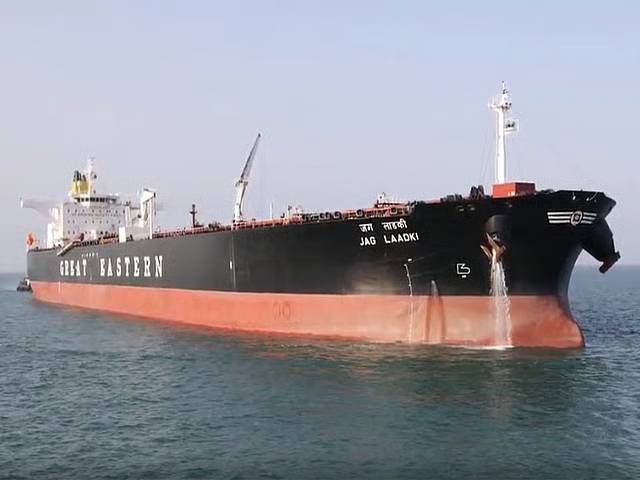
Dubai: In May 2018, the MT Inspiration loaded two million barrels of Abu Dhabi crude bound for an underground storage facility in Mangalore, on India’s western coast. The oil was intended to replenish India’s emergency reserves, providing a supply that could be tapped during a crisis.
The shipment marked the beginning of an agreement under which Abu Dhabi National Oil Company (ADNOC) was allowed to store 5.86 million barrels of crude in India at its own expense.
Eight years later, the two countries are exploring a reverse arrangement. In May 2026, India’s Prime Minister’s Office announced that New Delhi was considering storing part of its strategic petroleum reserves in Fujairah, where tankers can load oil without passing through the Strait of Hormuz. The agreement also allows ADNOC to explore storing up to 30 million barrels of crude in India.
The proposed arrangement highlights the growing depth of energy cooperation between the two countries. India had been importing billions of dollars’ worth of UAE crude long before the Mangalore storage agreement. Since then, Indian companies have acquired interests in Abu Dhabi’s oilfields, while the UAE has developed export infrastructure that can provide buyers with access to its crude when shipping through the Strait of Hormuz faces disruptions.
India expands its presence in Abu Dhabi’s oilfields
India’s oil imports have grown significantly over the past three decades. The country was importing less than one million barrels per day in the 1990s. By 2018, daily imports had risen to around 4.4 million barrels, according to an analysis of Indian petroleum ministry data by the King Abdullah Petroleum Studies and Research Center.
The UAE had become an established supplier well before that. During the 2011-12 financial year, India imported $15.1 billion worth of UAE oil, representing 8.7% of its total oil import bill, according to Indian trade data compiled by the Institute for Defence Studies and Analyses.
As demand increased, Indian state-owned energy companies also sought a direct stake in the UAE’s oil production.
In 2018, ONGC Videsh, Indian Oil Corporation and Bharat PetroResources jointly invested $600 million to acquire a 10% interest in Abu Dhabi’s offshore Lower Zakum concession.
The Indian petroleum ministry informed Parliament that this was the country’s first investment in oil production in the Gulf region. It estimated that the consortium would receive an average of 1.75 million tonnes of crude annually over the concession’s 40-year term.
The 2018 Mangalore shipment brought UAE crude into India’s emergency storage network, while the Lower Zakum investment gave Indian companies access to a share of future production.
By 2026, the UAE had become India’s fourth-largest crude oil supplier. It was also the country’s second-largest source of liquefied natural gas (LNG) and liquefied petroleum gas (LPG), according to India’s Ministry of External Affairs.
Expanding oil storage across both countries
The May 2026 agreement could broaden ADNOC’s storage operations in India beyond the existing facility in Mangalore.
According to India’s Prime Minister’s Office, the UAE company could participate in an existing strategic petroleum reserve facility in Visakhapatnam, Andhra Pradesh. The two countries are also considering developing additional storage infrastructure at Chandikol in Odisha.
Under the proposed arrangement, ADNOC could store a combined total of up to 30 million barrels of crude in India.
Fujairah would play a different role in the partnership. Storing Indian strategic reserves there would allow New Delhi to maintain access to crude on the UAE’s eastern coast, outside the Strait of Hormuz.
The memorandum also provides for potential cooperation on storage infrastructure for liquefied natural gas (LNG) and liquefied petroleum gas (LPG) in India.
The port already provides Abu Dhabi with an alternative route for exporting crude without sending tankers through the Strait of Hormuz. ADNOC operates a 406km pipeline that transports oil from its onshore fields to Fujairah, where tankers can load cargo for destinations such as India.
The route became particularly important in 2026, when the Gulf conflict disrupted shipping through the strait. India’s finance ministry also highlighted the risks to oil supplies in its May economic report.
ADNOC is now developing another pipeline connection to Fujairah. In May, the company said construction of its West–East Pipeline was under way, with operations expected to begin in 2027. Once completed, the project is expected to double the company’s crude export capacity through the port.
The partnership expands beyond crude oil
The May visit also resulted in a separate agreement between ADNOC and Indian Oil Corporation to explore long-term supplies of liquefied petroleum gas (LPG).
The Indian government said the two companies would examine opportunities to trade the fuel, which is widely used for household cooking in India, including the possibility of entering into a long-term supply agreement.
The companies already have a long-term partnership covering liquefied natural gas (LNG). In August 2025, ADNOC signed a 15-year agreement to supply Indian Oil with up to one million tonnes of LNG annually, primarily from its Ruwais project.
ADNOC expects Indian Oil’s total purchases under its long-term supply agreements to increase to 2.2 million tonnes annually from 2029, making it the Abu Dhabi energy group’s largest LNG customer.
In January 2026, ADNOC Gas also signed a 10-year LNG supply agreement with Hindustan Petroleum Corporation, valued at between $2.5 billion and $3 billion.
The company expects India to account for 20% of the LNG it operates by 2029.
The proposed strategic reserve in Fujairah has yet to be finalised. If implemented, however, it would create a two-way energy storage arrangement between the countries: UAE crude could continue flowing into India’s emergency reserves, while India would also have the option of holding strategic oil stocks at the other end of the shipping route.

