

Easing geopolitical tensions and hopes of restored Gulf supplies push crude prices lower.
Oil prices are declining as traders grow optimistic that diplomatic efforts could help de-escalate the US-Israel-Iran conflict and restore disrupted Gulf supplies. However, continued attacks and unresolved negotiations continue to pose risks to the market, leaving prices vulnerable to sudden reversals.
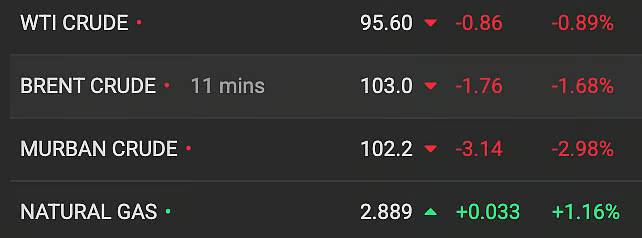
The supplied screenshot shows West Texas Intermediate (WTI) crude oil futures trading at $95.60 a barrel, down 0.89%.
Brent crude fell 1.68% to $103.00 a barrel, while Murban declined 2.98% to $102.20, according to OilPrice.com data as of 8:09 am Tokyo time on Wednesday, November 4, 2026.
Natural gas moved in the opposite direction, gaining 1.16% to trade at 2.889.
These figures represent displayed market quotes rather than independently verified closing prices. The screenshot does not specify the contract months or identify the data provider.
The decline in crude prices is largely driven by a reduction in the geopolitical risk premium — the additional amount investors factor into oil prices when conflict threatens future supplies.
Qatar-mediated negotiations have fuelled hopes that a diplomatic breakthrough could improve shipping access and help stabilise energy exports from the Middle East.
Brent crude settled 7.63% lower at $104.77 a barrel on Monday, while West Texas Intermediate (WTI) fell 7.36% to $96.46.
Market analysts also pointed to Iranian President Masoud Pezeshkian’s statement that Supreme Leader Mojtaba Khamenei had authorised the government to pursue peace negotiations.
The downward trend continued on Tuesday, with Reuters reporting Brent at $103.14 and WTI at $95.79 during trading.
Qatar reiterated that both sides remained committed to mediation. However, a senior Iranian official cautioned that the parties were still “far” from reaching an agreement.
The key disconnect is that oil markets are responding to hopes of diplomatic progress even though no settlement has been reached.
At the same time, Reuters highlighted renewed concerns over potential supply disruptions following attacks linked to the conflicts involving Iran and Ukraine.
Any breakdown in negotiations or fresh military escalation could quickly push the geopolitical risk premium higher. Falling prices, therefore, should not be mistaken for confirmation that shipping routes are secure or supplies have returned to normal.
Crude prices are retreating as traders increasingly anticipate progress in Qatar-mediated US-Iran negotiations. However, despite declines in WTI, Brent and Murban, continued attacks and unresolved diplomatic differences leave the market exposed to sudden reversals.
Ultimately, oil prices reflect expectations about future supply conditions as much as the volume of crude currently reaching the market.
Diplomatic progress can drive oil prices lower even before shipping operations return to normal. However, the market remains vulnerable to sharp reversals if fresh attacks, failed negotiations or renewed military threats weaken confidence in a lasting peace agreement.
Why it matters
Falling crude prices could provide some relief to fuel importers, transport companies and households by easing energy-related costs. However, any sustained reduction will depend on the recovery of supplies and the normalisation of shipping routes.
With hostilities continuing, businesses should avoid assuming that current price declines will last or translate immediately into lower fuel bills for consumers.
What’s next
Investors will be watching developments in Qatar’s mediation efforts, official statements from the US and Iran, and confirmed updates on commercial shipping through the Strait of Hormuz.
A formal agreement backed by concrete implementation could put further downward pressure on crude prices. However, renewed attacks or a breakdown in negotiations could trigger another sharp rally.
For consumers, falling oil prices offer the possibility of relief, but do not guarantee immediate fuel-price reductions. Businesses, meanwhile, should reassess their energy costs cautiously rather than assume the geopolitical crisis has ended.
The screenshot reflects prevailing market sentiment and expectations of diplomatic progress, not confirmation of a breakthrough or a return to normal shipping conditions.

