

Emirate steps up autonomous mobility efforts with a new testing facility and expanded RoboTaxi trials.
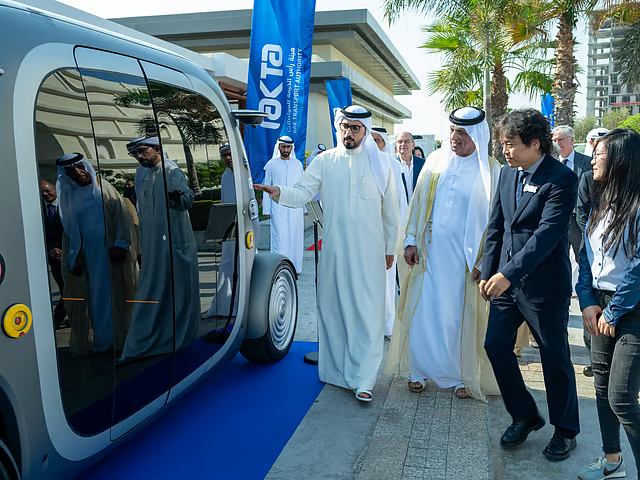
Ras Al Khaimah has launched a dedicated testing hub for autonomous vehicles and extended its RoboTaxi trials to Al Dhait South, advancing plans to integrate self-driving technology into the emirate’s future transport network.
The Ras Al Khaimah Transport Authority (RAKTA) unveiled its autonomous mobility framework and the Autonomous Vehicle Sandbox initiative on Friday, October 30, in the presence of His Highness Sheikh Saud bin Saqr Al Qasimi, UAE Supreme Council Member and Ruler of Ras Al Khaimah.
The initiative is designed to create an integrated environment for testing, assessing and developing autonomous driving technologies. It also aims to attract international companies specialising in self-driving vehicles and smart mobility solutions.
The launch ceremony took place at the InterContinental Ras Al Khaimah Mina Al Arab Resort, with Zeng Jixin, Ambassador of the People’s Republic of China to the UAE, and Ms Ou Boqian, Consul General of China in Dubai and the Northern Emirates, among the attendees. Representatives from government authorities, technology companies, academic institutions and research organisations were also present.
RoboTaxi trials expand after covering 21,000km
Alongside the new initiative, RAKTA announced the expansion of RoboTaxi testing to Al Dhait South. The latest phase builds on initial trials launched on Al Marjan Island in early 2026.
The autonomous vehicles have travelled more than 21,000 kilometres during the testing phases, providing valuable operational data and real-world experience to evaluate their performance, readiness and operating requirements.
Extending the trials to Al Dhait South reflects RAKTA’s gradual approach to assessing autonomous mobility solutions across different locations and road environments. The findings are expected to help determine how these technologies can eventually become part of the emirate’s wider public transport network.
The development also builds on previous autonomous transport experiments in Ras Al Khaimah, including RoboBus trials on Al Marjan Island. These earlier tests provided practical insights into operating self-driving transport services in real-world conditions.
Dedicated facility to test self-driving technologies
The Autonomous Vehicle Sandbox will feature a dedicated testing zone equipped with specialised infrastructure and routes designed to assess self-driving technologies in conditions that closely replicate real-world operating environments.
The facility will enable technology developers and specialised companies to test their solutions, monitor vehicle performance across different scenarios and evaluate their readiness for potential commercial deployment.
It will also serve as a platform to assess the efficiency and safety of emerging technologies before they advance to subsequent testing stages, in accordance with approved regulatory standards and requirements.
Beyond providing testing infrastructure, the initiative aims to bring together technical specialists, research institutions, regulatory authorities and industry partners to establish an integrated ecosystem for autonomous mobility.
RAKTA said the facility would build on the knowledge and experience gained from earlier trials while creating more opportunities to test a wider range of autonomous vehicles and related technologies.
The framework is part of the authority’s broader strategy to establish a smart, integrated and sustainable transport network that adapts to technological developments while enhancing operational efficiency and the quality of transport services.
It also places emphasis on strengthening regulatory, technical and operational capabilities, allowing emerging mobility solutions to be tested and evaluated before their potential introduction on a larger scale.
10 partnerships signed to advance autonomous mobility
The launch event also saw RAKTA sign 10 partnership agreements with government and institutional bodies, autonomous mobility companies, and academic and research organisations.
The agreements are intended to promote collaboration in areas such as technical evaluations, vehicle testing, scientific research and the development of practical operational solutions.
The 10 partners include:
- RAK Properties
- Ras Al Khaimah Economic Zone (RAKEZ)
- Ras Al Khaimah Chamber of Commerce and Industry
- Ras Al Khaimah Innovation City
- AutoLogix
- CargoX
- PixMoving
- Westwell
- American University of Ras Al Khaimah
- Heriot-Watt University Dubai
The partnerships bring together expertise from the public and private sectors, as well as academia and technology developers, to support research, innovation and the wider adoption of autonomous mobility solutions in Ras Al Khaimah.
Government and institutional partners will play a role in strengthening the regulatory and economic environment, while technology companies will explore potential applications of autonomous vehicles across passenger transport, logistics and industrial transportation.
Universities and research institutions will contribute through scientific research, technical evaluations and safety assessments, including the development of methodologies for testing vehicle safety and performance.
RAKTA said the collaboration was intended to go beyond establishing a dedicated testing facility by creating a wider network of partners, expertise and infrastructure to support the full development and deployment of autonomous technologies.
This will cover various stages, including vehicle testing, technical assessments, verification of operational readiness and the evaluation of potential applications in accordance with approved regulatory frameworks and international standards.
The initiative is also expected to open up opportunities for investment, technological innovation and industry collaboration, while enhancing Ras Al Khaimah’s attractiveness to international companies specialising in autonomous mobility.
RAKTA: Developing a future-ready transport ecosystem
His Excellency Engineer Esmaeel Hasan Al Blooshi, Director General of RAKTA, said the introduction of the autonomous mobility framework and the Autonomous Vehicle Sandbox reflected the authority’s commitment to establishing an integrated ecosystem backed by strong regulatory and technical capabilities.
He said the initiative would offer specialised companies access to the facilities, infrastructure and technical resources required to test advanced technologies and evaluate their readiness in environments that replicate real-world operating conditions.
“The Autonomous Vehicle Sandbox represents an important step in this direction. Its role extends beyond providing testing facilities and routes to creating an environment that brings together field testing, technical assessment, and specialised expertise,” Al Blooshi said.
He added that the initiative would enhance Ras Al Khaimah’s capacity to attract international companies operating in the autonomous mobility sector while supporting the development of future transport solutions that comply with established safety requirements and regulatory standards.
Al Blooshi noted that building a comprehensive autonomous mobility ecosystem would require close coordination between government authorities, technology companies, universities and research institutions.
Through the newly established partnerships, RAKTA aims to leverage advanced technologies and specialised expertise, encourage scientific research and technical evaluations, and create the necessary conditions to test emerging solutions and assess their practical applications.
He reaffirmed the authority’s commitment to working alongside its partners to develop a future-ready mobility ecosystem focused on innovation, knowledge sharing and the testing and validation of emerging technologies.
These efforts, he said, would strengthen the emirate’s competitiveness, attract specialised businesses and high-value investments, and contribute to the development of the transport sector and the services available to the community.
RAKTA said it would continue to combine strategic planning, dedicated testing infrastructure, industry partnerships and the phased expansion of autonomous vehicle trials as part of its broader drive to advance innovation and sustainability across Ras Al Khaimah’s transport sector.

