

New MacBook Pro Reviewed: Touchscreen, OLED Display, Nano-Texture and UAE Prices.
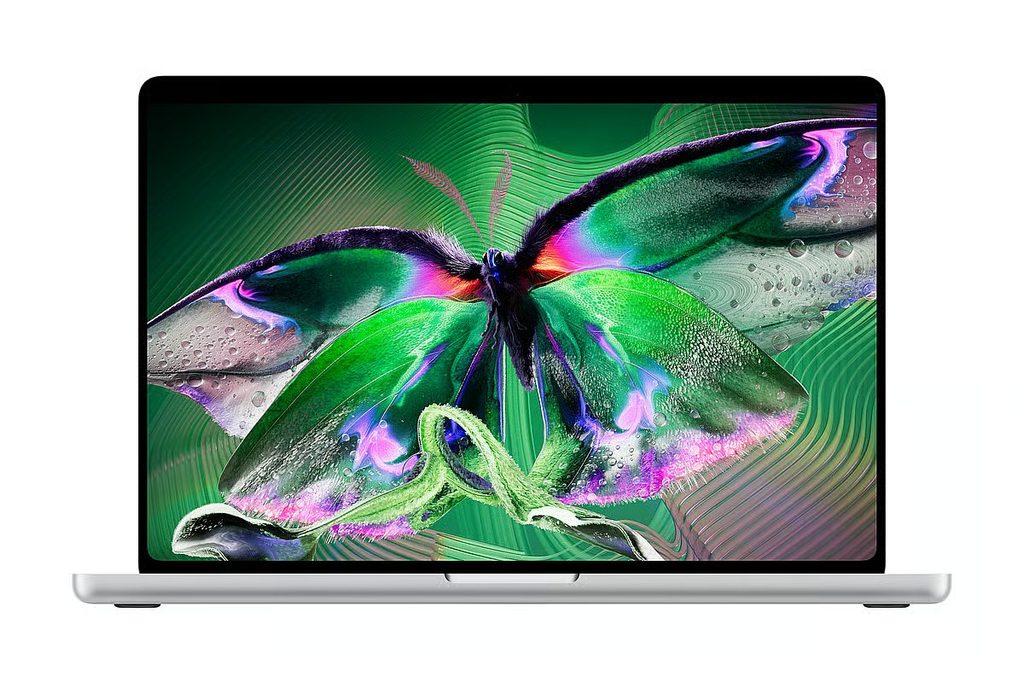
Dubai: Apple kept touchscreens off its Mac computers for years. That changed on Wednesday, when the company unveiled the MacBook Pro with a PROLED XDR display, marking the first time users can tap, swipe and pinch directly on a Mac laptop.
Pre-orders are now open in the UAE, with the new models set to arrive at stores and reach customers on Friday, November 6. The 14-inch model starts at Dh11,999.
So, how well does the touchscreen work? Here is what early hands-on reviews reveal and how much the new MacBook Pro costs in the UAE.
How the touchscreen works
Touch functionality is integrated into a new tandem OLED panel that Apple calls PROLED XDR. According to Apple, the touch sensor is built directly into the display rather than layered on top, helping reduce latency.
Users can scroll, pinch, rotate and draw on the screen. Double-tapping a window expands it to fill the display, while windows can be swiped into position. macOS also converts taps into clicks, allowing most existing apps to work with touch without requiring major changes.
The traditional notch has also been replaced by Dynamic Island, the pill-shaped cutout familiar from recent iPhones. It displays information such as music controls, calls and Live Activities.
The new laptops are lighter as well. The 14-inch model weighs around 1.4kg, approximately 230g less than its predecessor, while the 16-inch version weighs about 1.8kg, a reduction of roughly 320g.
What reviewers are saying
Initial hands-on reviews describe the touchscreen as responsive and useful, but largely an additional convenience rather than a replacement for the trackpad and keyboard. Reviewers have praised the OLED display for its vivid colours, deep blacks and brightness, while noting that touch controls can make everyday tasks such as scrolling, zooming and managing windows more intuitive.
However, the experience is not without limitations. Some interface elements in third-party apps can be difficult to tap accurately, and touching the display may cause it to wobble. The laptop also does not support Apple Pencil input or convert into a tablet, limiting its appeal to users seeking a more tablet-like experience.
Mark Spoonauer, Global Editor-in-Chief of Tom’s Guide, tested the laptop following its launch and found the touchscreen experience smooth. “I found the touchscreen support to be pretty smooth as I navigated between apps,” he wrote.
Pinch-to-zoom performed as expected, while dragging video clips along an editing timeline proved straightforward. Drawing was also easy, although there was one limitation. “I could draw using my finger with ease, though there’s no Apple Pencil support to speak of.”
Nathan Ingraham of Engadget reported similar results, saying that swiping through photos, zooming in and out, and adjusting sliders in the Photos app all worked as expected. However, he pointed out that macOS has undergone few changes to accommodate touch. Beyond window controls that grow slightly when touched, there are limited interface adjustments designed specifically for fingers.
Tech YouTuber Marques Brownlee, widely known as MKBHD, made a similar observation on X. He noted that many demonstrations involved occasional mis-taps and awkward movements, reflecting the fact that the Mac remains primarily designed for keyboard, trackpad and mouse input. Even so, he acknowledged that the touchscreen felt responsive and smooth.
For now, the keyboard and trackpad remain the primary ways to operate the MacBook Pro, with touch serving as a complementary feature rather than a replacement.
The OLED screen
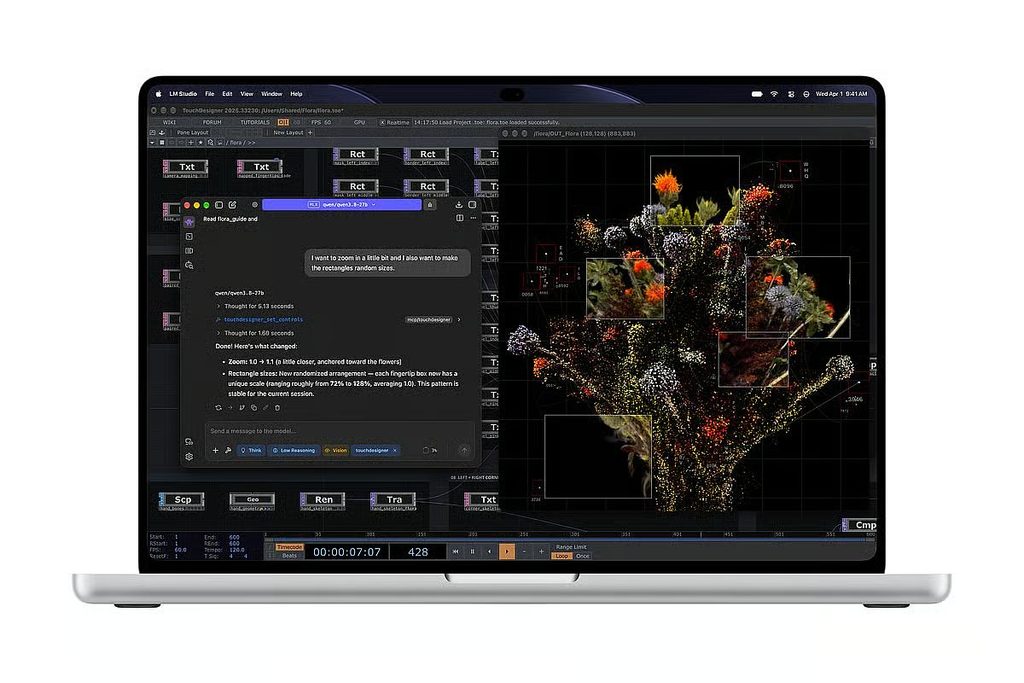
Beyond touch functionality, one of the most significant upgrades is the display itself. Earlier MacBook Pro models used mini-LED technology, which illuminates the screen from behind using thousands of tiny LEDs. OLED panels work differently: each pixel produces its own light and can switch off entirely, delivering true blacks and stronger contrast.
Apple has opted for a tandem OLED panel, featuring two stacked OLED layers and using the same technology introduced with the iPad Pro. The company says this design allows the display to achieve greater brightness while improving its longevity.
Engadget’s Nathan Ingraham was particularly impressed, describing it as the best display he had used on an Apple device and highlighting its deep blacks.
The screen offers peak brightness of up to 2,000 nits, an adaptive refresh rate of up to 120Hz and, according to Apple, a contrast ratio of 10,000,000:1. It also supports both the P3 and Adobe RGB colour spaces, catering to photographers, designers and other creative professionals. Buyers can choose between two screen finishes.
Glossy or nano-texture?
Customers can opt for standard glossy glass or a nano-texture finish. The latter features a microscopically etched surface designed to scatter light and reduce reflections and glare.
With a touchscreen, however, the choice affects more than visibility. MKBHD noted that the nano-texture surface feels smoother and softer under the finger, while the glossy glass creates slightly more friction when swiping.
He also found that both finishes were surprisingly effective at concealing fingerprints.
The Steve Jobs question
The launch marks a departure from a position Apple maintained for more than a decade. In 2010, the company’s late co-founder Steve Jobs argued that touchscreens were poorly suited to vertical displays, warning that holding an arm up to interact with a screen could quickly become tiring.
“It doesn’t work, it’s ergonomically terrible,” Jobs said at the time.
Whether users will frequently interact with the screen remains to be seen. Apple is highlighting more specialised applications, including testing iPhone apps directly on the display through Xcode, rotating 3D objects in Blender, and controlling faders and virtual instruments in Logic Pro.
UAE prices and availability
According to, the new touchscreen MacBook Pro models have the following starting prices in the UAE:
- 14-inch with M5 Pro: Dh11,999
- 16-inch with M5 Pro: Dh14,499
- 14-inch with M5 Max: Dh19,299
- 16-inch with M5 Max: Dh20,999
In the US, prices start at $2,899 (approximately Dh10,646) for the 14-inch model and $3,399 (around Dh12,483) for the 16-inch version. These US prices exclude sales tax, whereas UAE prices include 5 per cent VAT.
The previous M5 Pro MacBook Pro models, launched in March without touchscreens, started at Dh9,299 for the 14-inch version and Dh11,499 for the 16-inch model. This means the new touchscreen versions cost Dh2,700 and Dh3,000 more, respectively.
For buyers who do not need touch functionality, Apple has also introduced a separate standard 14-inch MacBook Pro powered by the base M6 chip. Starting at Dh8,499, this model does not feature a touchscreen or the new OLED display. Deliveries for it are also scheduled to begin on November 6.
Pre-orders for the touchscreen MacBook Pro opened on October 28, with education pricing available across all four configurations.

