

A crisis communications expert emphasised that while a swift response helps establish an organisation’s presence, accurate information is essential to maintaining credibility and avoiding later corrections.
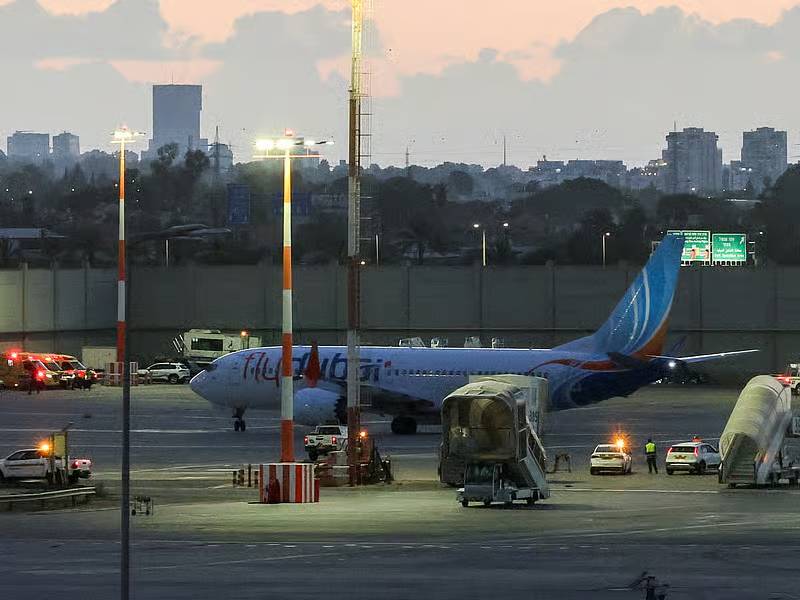
Dubai: The UAE’s response to the flydubai flight FZ1073 cockpit attack has been highlighted by crisis communication specialists as an example of how authorities can balance timely public updates with the need to provide verified information.
The incident occurred on September 30, when a co-pilot reportedly assaulted the aircraft’s captain with a crash axe during the flight.
The General Civil Aviation Authority (GCAA) responded within hours, confirming that an incident had taken place while urging the public to avoid spreading unverified information.
Rather than immediately releasing every available detail, the authority limited its initial communication to confirmed facts as investigators worked to establish the circumstances.
Kevin Abdulrahman, Principal of Executive Authority, said this measured approach reflects internationally recognised principles of effective crisis communication.
“A blank in the facts is not an invitation to fill it with words,” he said.
“The first statement does not need to answer every question. It needs to establish that the institution is present, that the situation is being handled.”
In its first official update, the GCAA confirmed that the aircraft had been diverted to Tabuk, that crew members had sustained injuries and that an investigation had been launched.
The authority refrained from addressing unverified claims circulating in the immediate aftermath of the incident.
Flydubai CEO Ghaith Al Ghaith subsequently issued a statement expressing appreciation to the captain and passengers who helped the crew manage the “challenging situation.”
Hervé Verhoosel, a former United Nations Director of Communications and crisis communication specialist, said the airline’s initial statement, released approximately 45 minutes after the aircraft landed, represented a reasonable timeframe for responding to a serious aviation incident.
“Crucially, it confirmed that the aircraft had landed safely and that passengers were safe, without speculating about the causes,” he said.
Why accuracy matters as much as speed during a crisis
Both specialists emphasised that organisations must distinguish between responding quickly and releasing information that has been properly verified.
While prompt communication reassures the public that authorities are aware of an incident and taking action, factual accuracy is essential for maintaining long-term confidence.
“Speed establishes presence. Accuracy protects credibility,” Abdulrahman explained.
“The fastest statement is useless if the next statement has to undo it.”
According to the experts, releasing incomplete or inaccurate information too early can create confusion, fuel speculation and damage an organisation’s credibility if subsequent statements contradict earlier claims.
The UAE’s communication strategy involved providing information in stages as investigators established additional facts.
On October 3, UAE Attorney-General Dr Hamad Saif Al Shamsi announced that investigators had determined the co-pilot had attempted to carry out a “terrorist act.”
The announcement marked a significant development in the investigation, providing more detailed findings while making clear that inquiries were continuing.
Verhoosel stressed that although caution is essential when communicating during sensitive investigations, authorities must also recognise the risks associated with remaining silent for too long.
He warned that “prolonged silence can leave an information vacuum,” potentially allowing rumours and misinformation to spread.
In his assessment, the UAE’s handling of the incident demonstrated an effort to maintain transparency and public accountability without compromising the integrity of the ongoing investigation.
The experts said the broader lesson for organisations managing high-profile incidents is that effective crisis communication requires both a timely initial response and a commitment to releasing accurate, verified information as it becomes available.
Why releasing verified information gradually builds public trust
According to Kevin Abdulrahman, one of the most important lessons from the flydubai FZ1073 incident is that organisations can communicate effectively during a crisis without disclosing every detail immediately.
He explained that major incidents often generate intense public attention, with news reports, social media discussions, leaked information and conflicting accounts circulating simultaneously.
“In a high-attention situation there will be headlines, leaks, social media posts, commentary and competing accounts moving at different speeds,” he said.
“An institution should not try to compete with all of them. It can become the source whose information remains dependable as the picture develops. That is what makes the communication sequence here useful to study.”
Abdulrahman praised the UAE authorities for adopting a measured communication strategy, providing updates as investigators confirmed additional details rather than rushing to release incomplete information.
He said this approach helped maintain the reliability of official statements while allowing the investigation to progress.
“They did not empty the file on day one,” he said. “They opened it one verified page at a time.”
In a further development last week, UAE Attorney-General Dr Hamad Saif Al Shamsi confirmed that the 29-year-old Omani co-pilot had allegedly planned to hijack the aircraft and carry out a “suicide attack”.
Authorities have said investigations into the incident remain ongoing.

